
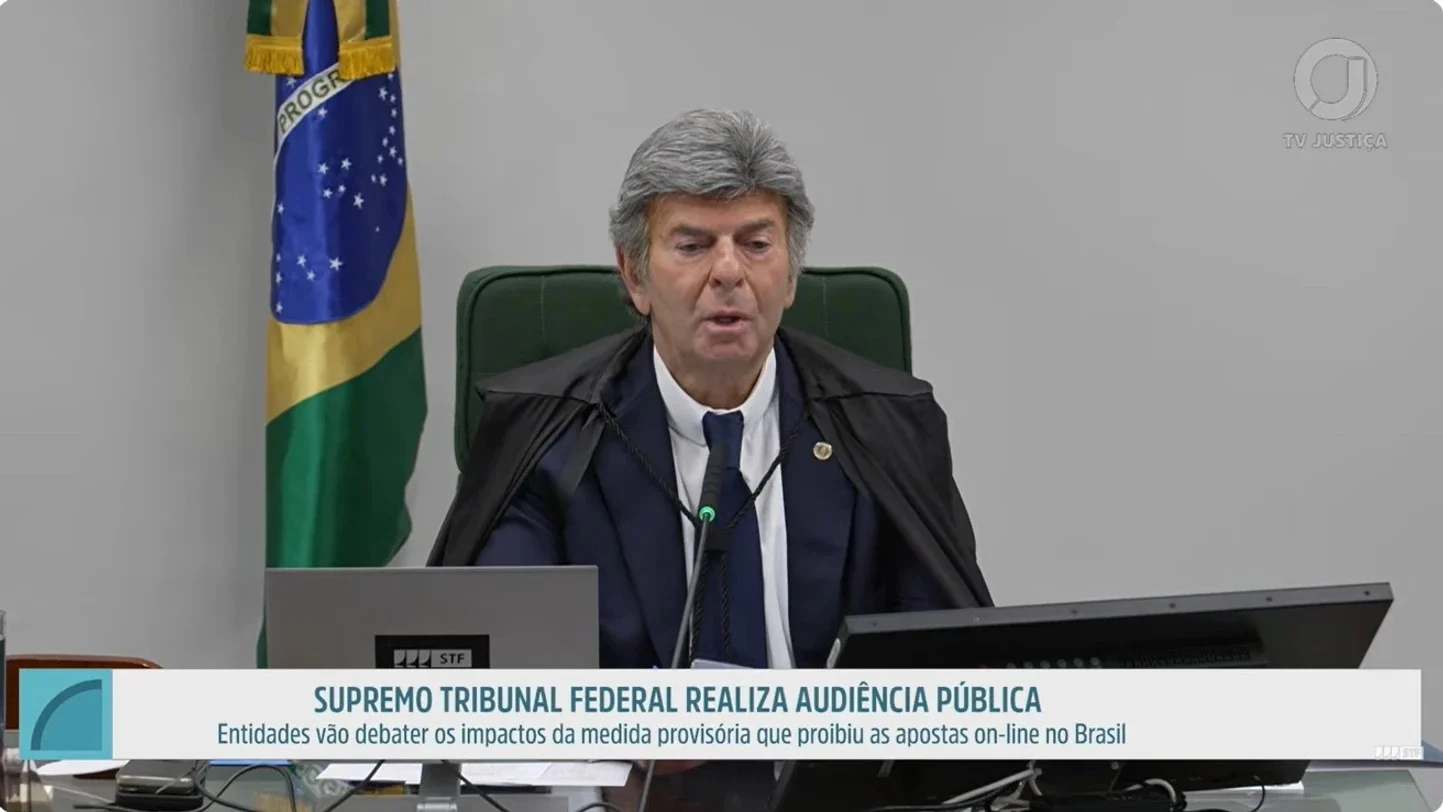
Brazilian officials defended their ban on betting during a public hearing at the Supreme Federal Court (STF), while representatives from the betting industry, sports organizations, and football clubs stressed the importance of maintaining a regulated market. The session, led by Minister Luiz Fux, included 34 participating entities and focused on Provisional Measure 1.394, which prohibits betting in the country. This measure faces a challenge in Direct Action of Unconstitutionality 8027, instigated by the National Association of Games and Lotteries (ANJL), seeking to suspend the ban's effects.
Officials from the Ministries of Justice, Health, and Finance, alongside the Attorney General's Office (AGU), supported the ban citing the need to shield families from the adverse effects associated with gambling. Justice Minister Wellington César Lima e Silva called betting platforms a “architecture of unspeakable dependency” and described the ban as both “relevant and urgent.”
Jorge Messias, head of the AGU, defended the government's stance, arguing that the previous regulatory system fell short in protecting citizens. He noted, "Recognizing this effort does not oblige us to close our eyes to its limitations," while emphasizing the state's obligation to review policies in light of their outcomes. He maintained that the previous framework had become “materially unconstitutional due to insufficient protection of constitutionally protected assets.”
In response, the betting industry highlighted the necessity for legal clarity and stronger regulatory measures. The Brazilian Institute for Responsible Gaming (IBJR) urged Fux to suspend the prohibition until Congress reaches a decision or the STF delivers a ruling. Celso Mori, representing the IBJR, remarked, “The country, through its Congress, opted for regulated gambling, but it didn’t happen overnight.”
The Economic Regulation Laboratory at the State University of Rio de Janeiro (UERJ) proposed eight measures that could accompany the reopening of the legal market, including restrictions on financing bets and checks on user eligibility. Marcello Trindade Paulo from UERJ suggested implementing a structured transition should the ban be lifted, which would involve specific tasks and reviews at 180 and 360 days.
Other stakeholders emphasized the need for targeted reforms. The Brazilian football club Flamengo advocated for improved regulation instead of a full ban, while Corinthians expressed willingness to partner in tackling gambling addiction. The Brazilian Paralympic Committee called for age restrictions and greater responsibility for operators to prevent compulsive gambling.
The government’s shift in policy also raised concerns regarding its treatment of firms that had previously secured licenses. Representatives pointed out that the state encouraged investments only to later change its stance abruptly. They questioned the handling of BRL30 million ($5.5 million) authorization fees and the sudden end to betting advertisements.
Gustavo Binenbojm from the Brazilian Association of Radio and Television (Abert) criticized the government’s abrupt reversal of established policies, arguing it could lead to increased illegality and organized crime in the betting sector. He highlighted the broader issue of whether the government could effectively implement such a sudden measure, disrupting policies established by both the Executive Branch and Congress.
Minister Fux will determine the future course concerning the ban, following this hearing which did not conclude on whether to suspend, enforce with added safeguards, or transition the ban further.

