
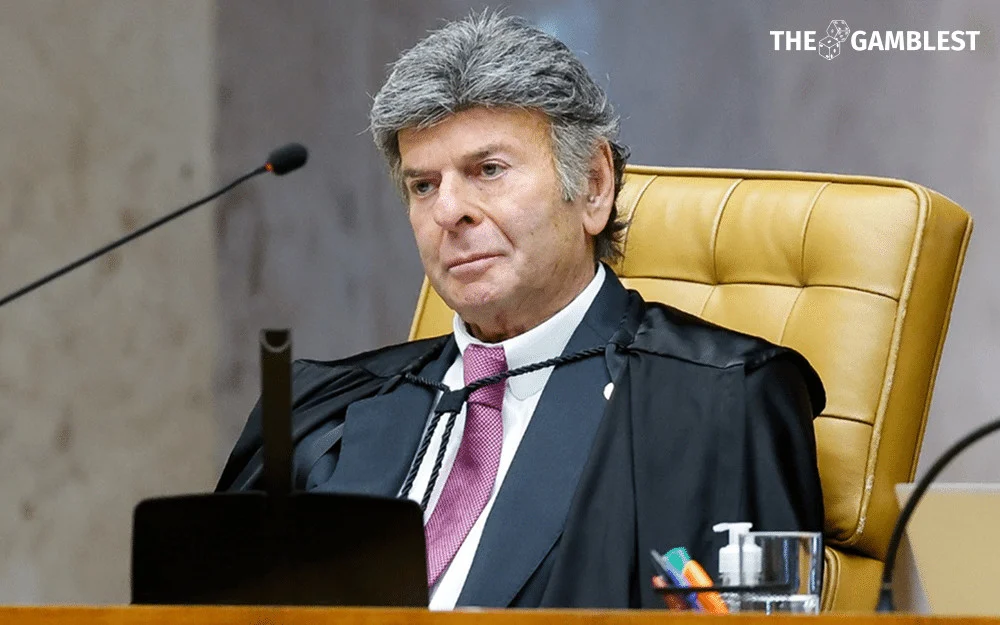
During a public hearing on November 3, Justice Luiz Fux indicated that Brazil's Supreme Court (STF) might defer the resolution of the proposed betting ban to the country's legislative and executive branches, opting against an immediate ruling. The Attorney General’s Office (PGR) did not disclose its stance on this issue.
Deputy Attorney General Luiz Augusto Santos Lima acknowledged that the PGR has yet to review the legal challenge concerning the provisional measure that limits fixed-odds betting. He noted that the discussions from the latest hearing would aid the Attorney General in evaluating the matter.
Lima stated, "I cannot, in any way, anticipate a value judgment, as I am not the natural prosecutor for the case; that is the Attorney General's role."
At the conclusion of the hearing, Justice Fux proposed that the Supreme Court might hand the issue back to the government and Congress. He recognized that the judiciary may not possess the necessary institutional capacity and expertise to address certain facets of the betting dispute. Nonetheless, Fux pointed out that the Court still needs to deliberate on eight constitutional challenges related to the ban.
Fux remarked, "I hold the view that the great virtue of the Courts, at certain times, is to decide not to decide and to return the resolution of these issues to the proper forum." He emphasized that any decision would be reached collectively by the justices and not solely by him.
The hearing raised various critical questions regarding the economic impact of gambling legislation, the prevalence of illicit gambling, and organized crime involvement. Other topics included player remuneration, the status of football in Brazil, legal assurances for business operations, and the risks of frivolous litigation. Fux highlighted differing opinions on women's gambling behavior and its potential effects on household spending. He assessed the hearing as a success, noting that the insights gathered would be shared with his colleagues. While he found the discussions productive, he suggested that more hearings could be held in the future.
As of now, the Supreme Court has not issued any ruling on the provisional bill.

