
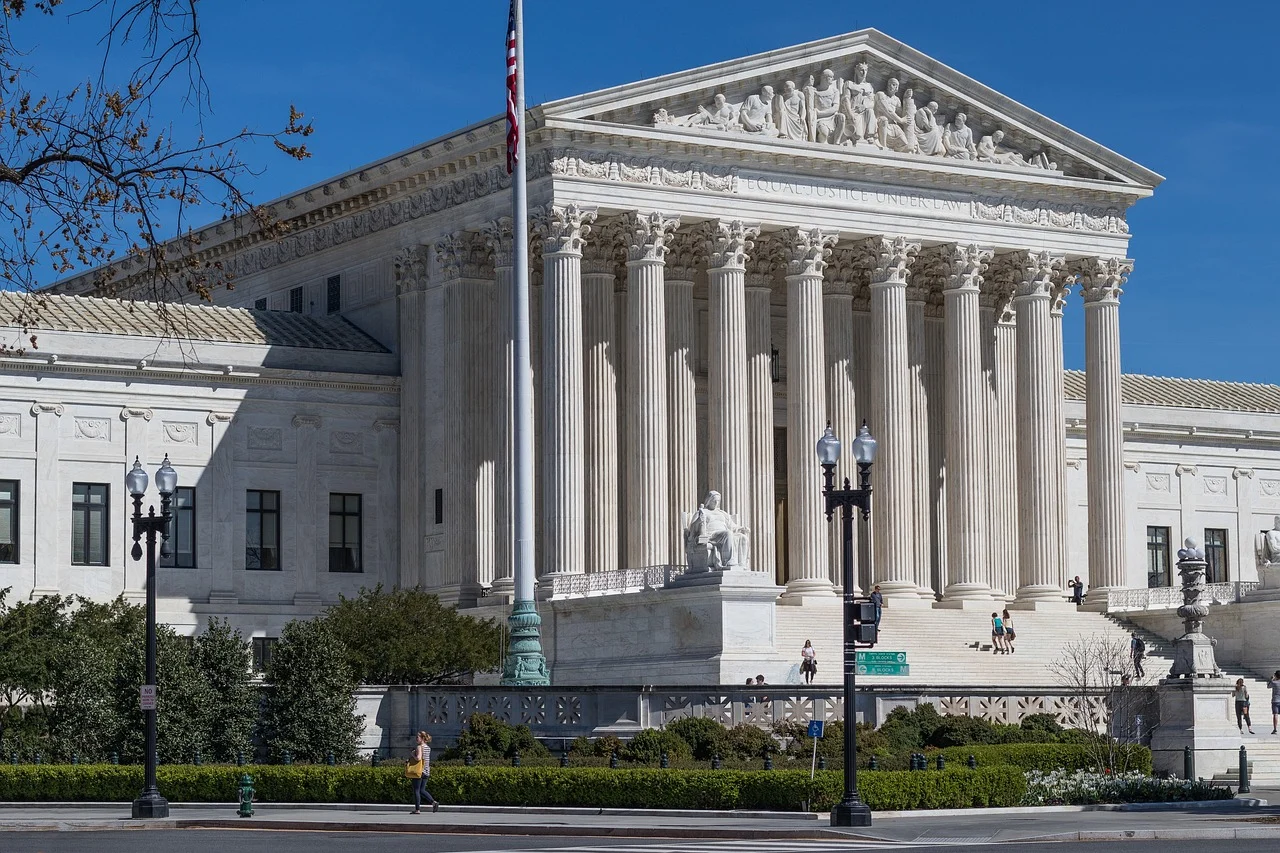
The sudden demise of Supreme Court Chief Justice Antonin Scalia in 2016 significantly shifted the dynamics of federal judicial appointments in the United States. His death prompted a contentious standoff in Washington, as then Senate Majority Leader Mitch McConnell effectively stalled the nomination of Merrick Garland, a White House appointee, for 293 days, marking the longest such delay in U.S. history. This political chess game ultimately paved the way for President Donald Trump to appoint Neil Gorsuch in early 2017.
Following a decisive "Blue Sweep" in the recent midterm elections, Senate Democrats seem reluctant to move past the controversial Garland episode. Curiously, the potential for renewed fierce political battles surrounding the replacements of Justices Samuel Alito and Clarence Thomas could significantly impact the future of sports event contracts in the U.S.
As election forecasts suggested a 90% likelihood of a Democratic victory, Florida Governor Ron DeSantis shared a troubling tweet that garnered over 3.1 million views, asserting that the chances of confirming a suitable successor to Justices Alito and Thomas during the remainder of Trump's presidency are nearly "zero."
Justice Clarence Thomas, appointed by former President George H.W. Bush shortly before the Professional and Amateur Sports Protection Act (PASPA) took effect in 1992, holds the record as the longest-serving justice on the Supreme Court. A pivotal case concerning federal preemption over sports event contracts could arrive at the court as soon as next year. The potential delay in appointing a new justice could considerably influence the hearing's timeline.
Looking back, Alito was appointed by President George W. Bush in 2005, taking over from Sandra Day O’Connor. Both Alito and Thomas have received praise from Trump for their support in several critical rulings, including those related to international tariffs.
This year, prediction markets have flourished under Trump's administration, with notional trading volumes exceeding $185 billion in the third quarter alone. The midterm elections saw a tremendous $1.4 billion in transaction volume, substantially outpacing non-presidential election activities. Michael Selig, nominated by Trump to lead the Commodity Futures Trading Commission (CFTC), has faced criticism from state and tribal gaming authorities regarding states' rights. Despite this, Selig maintains that the CFTC retains exclusive authority over regulating sports derivatives. Detractors have alleged nepotism, as Trump's son, Donald Trump Jr., holds board positions at Kalshi and Polymarket, but Selig insists that family interests do not influence CFTC policy.
As the implications of the midterm results unfold, the Supreme Court's composition ahead of the 2028 election remains uncertain. One possible scenario could see pressure from the White House on Justices Alito and Thomas to retire prior to the next presidential election, allowing Trump to nominate a ideologically similar successor. However, as DeSantis indicated, such a maneuver could face substantial opposition from Congressional Democrats, introducing uncertainty for cases that could result in judicial splits.
In the lead-up to the Super Bowl, former New Jersey Governor Chris Christie expressed satisfaction with the Court's stance on states' rights issues, but these comments were made before the tight Senate race became apparent.
On Polymarket, a trading contract exists that allows investors to bet on whether the Supreme Court will accept a case regarding the legality of sports event contracts by year’s end. The Court grants certiorari to review lower court rulings when significant circuit splits arise. Recently, the U.S. Court of Appeals for the Ninth Circuit rejected Kalshi’s request for reconsideration regarding the legitimacy of their sports event contracts, classified as "swaps." They now have 90 days to seek Supreme Court review.
After listing this contract, Polymarket traders showed significant optimism early in the year; odds of the Court granting cert peaked at 82% between the Super Bowl and March Madness. However, those odds have dropped to 21% as of Wednesday, having previously plummeted to 14% just before Halloween. In the last day, two traders on Polymarket placed small bets on the option of the Court not hearing the case, with each order capped at $16.

