
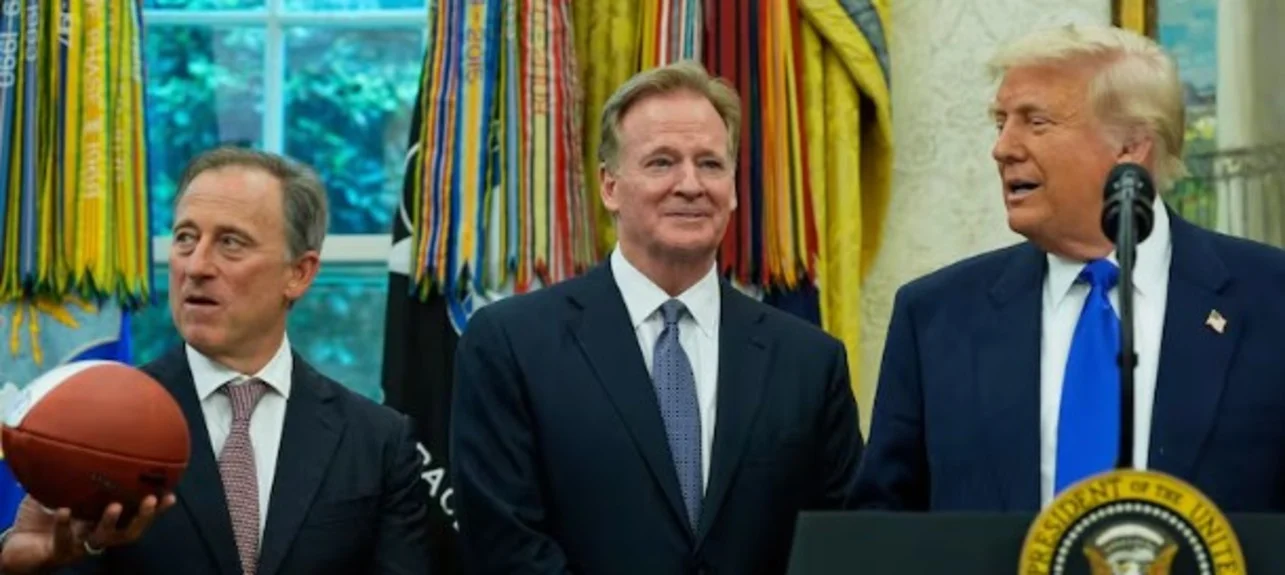
As Super Bowl 60 approaches in February, NFL Executive Vice President Jeff Miller has shown a general openness to the concept of sports event contracts, although he has not fully embraced them. In a conversation with Front Office Sports, Miller labeled the asset class as "innovative," while expressing the need for clearer regulations before the league could decide on a definitive approach. Last December, during testimony to the US House Committee on Agriculture, he noted the league's ongoing concerns regarding contracts that exist outside the control of state regulators, which traditionally impose necessary safeguards within the industry.
This week, the NFL sent a letter to the Commodity Futures Trading Commission (CFTC) just before the public comment window closed on proposed regulations for sports event contracts on July 27. The CFTC's draft proposal, released in June, spans 267 pages and sets forth extensive guidelines designed to determine if these contracts engage in unlawful activities or contravene public interest.
While the NFL acknowledges some constructive aspects of the proposed rules, it contends that the draft fails significantly in safeguarding sports integrity and protecting fans participating in these markets. The league is advocating for a complete prohibition on micro-bets, player props, and award markets, as it considers these areas particularly vulnerable to manipulation by individual players. Additionally, the NFL is urging the CFTC to implement stronger insider trading regulations and create a registry for bettors prohibited by the league.
"It is surprising that further common-sense integrity and consumer protection measures provided in the prior league comment letter were not adopted," the NFL asserted.
In another collaborative push, the NFL, along with the NBA and NCAA, is lobbying for a minimum trading age of 21 for contracts, driven by their experiences with insider trading incidents over the past year.
In New York, the Mets made headlines on Thursday by announcing a partnership with prediction market operator Novig. This multi-year agreement marks a pioneering relationship between a Major League Baseball team and a prediction market exchange. The partnership follows a Memorandum of Understanding established between the CFTC and MLB in April, focusing on protecting the integrity of sports prediction markets.
CFTC Chairman Michael Selig emphasized that the MOU signifies a joint effort between MLB and the derivatives regulator to shield baseball-related markets from fraud and manipulation. He praised MLB Commissioner Rob Manfred's leadership in these integrity safeguards.
Commenting on the growing focus on prediction markets, American University professor Matt Bakowicz pointed out that they sit at the intersection of finance, gaming, and fan engagement, making them intriguing to teams but also scrutinized by regulators. As pro sports franchises expand their businesses through sponsorships and media ventures, ensuring that all components fit legally and strategically is crucial.
The Mets finalized this partnership just one day before New York Governor Kathy Hochul, accompanied by state Attorney General Letitia James, unveiled a major lawsuit against Kalshi, seeking $36 billion in damages. The state aims to contest prediction markets, alleging that Kalshi’s operations fall under the legal definition of gambling due to the unpredictable nature of outcomes beyond participant control. Furthermore, by not securing a New York license, Kalshi allegedly avoids tax obligations that licensed casinos and sportsbooks must adhere to.
Hochul and James highlighted that tax revenue generated from gambling supports public schools and various programs aimed at aiding underserved youth and addressing problem gambling. Since the initiation of mobile sports betting in New York in 2022, the state has accrued approximately $3.5 billion in tax revenue, leading the nation with a sports betting handle of $26.3 billion last year, according to the American Gaming Association. They noted that the rise of sports event contracts may have cost U.S. states over $1.2 billion in potential tax revenue.
In the Midwest, developments are taking a different turn as a Minnesota federal judge issued a preliminary injunction on Monday against the state’s attempt to enforce the first outright ban on prediction markets. US District Court Judge Kate Menendez concluded that federal law supersedes Minnesota statutes for certain event contracts. Her decision upholds the stance that states cannot impose bans over issues that exceed their jurisdiction.
Meanwhile, a federal judge in Wisconsin has allowed the state to resume enforcing gambling laws against Kalshi and other prediction markets, marking a conflicting approach to prediction market regulation. In his earlier statements, Wisconsin Attorney General Josh Kaul indicated a preference for shutting down prediction market platforms without pursuing financial compensation but left the door open for potential damages in the future.

