
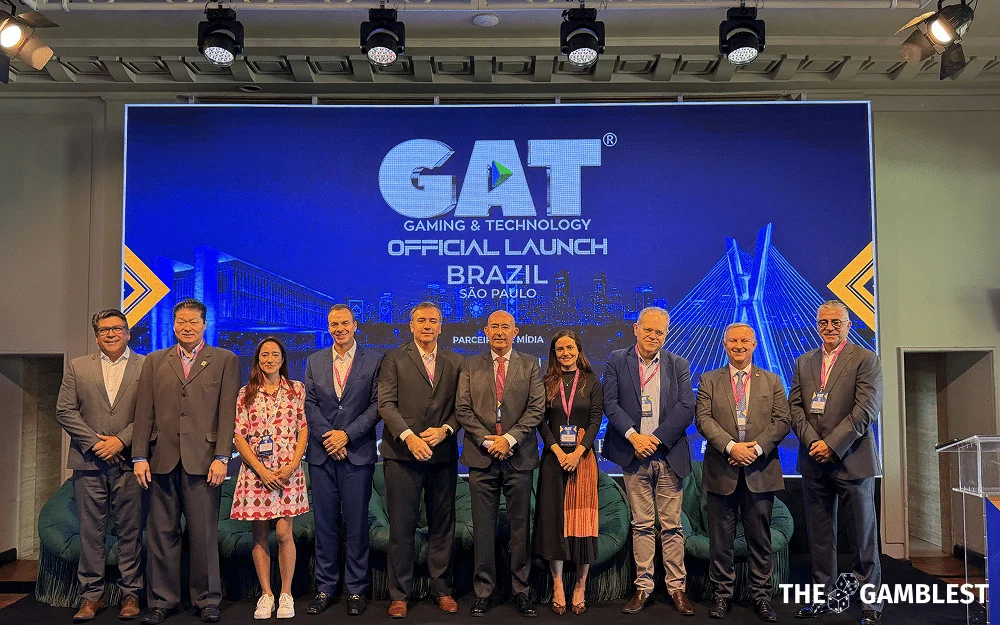
Experts in the gaming industry recently evaluated the landscape and future likelihood of legalizing land-based casinos in Brazil. The first edition of GAT Brazil, which concluded on July 30, gathered key figures from the gaming and betting sectors to discuss the industry's current status and its trajectory. Participants emphasized the crucial roles of governance, compliance, legal certainty, and responsible gaming practices as pivotal for sustainable sector growth.
At the event's opening, GAT Brazil Ambassadors were introduced, representing a distinguished group of leaders committed to fostering knowledge exchange and dialogue between public and private sectors as part of GAT Events in São Paulo.
José Aníbal Aguirre, the Founder and CEO of GAT Events, expressed the strategic importance of Brazil as Latin America’s largest gaming market. He announced the 1st Latin American Responsible Gaming Congress, set for October 20–21, 2027, in São Paulo.
Liliana Costa, the LATAM Director of World Gaming Business, highlighted Brazil's promising potential for growth and reaffirmed her organization's commitment to enhancing its international profile. "For World Gaming Business, it is an honor to serve as Media Partner for GAT’s official launch in Brazil at such a decisive moment," she said, noting their plans for significant engagement at ICE Barcelona.
In his opening presentation, Alex W. Pariente, Chair of GAT Official Launch Brazil 2026 and Principal of Pariente Advisory, set the stage for the conference which saw 200 executives from across the region in attendance. He noted that while Brazil had established a regulated market in 2025 generating R$37 billion in gross gaming revenue (GGR) in its first year, there remained a parallel market of the same size flowing through illegal channels, undermining the sector's integrity.
“Channelization remains incomplete,” Pariente concluded, urging the need for a stronger regulatory framework to enhance market credibility.
The first panel, led by Neil Montgomery, aimed at exploring strategies to encourage illegal operators to shift to the regulated market. He remarked, "Ideally, the entire market should be regulated. Reaching a 90% channelization rate would be monumental for Brazil."
Panelist Caio de Souza Loureiro identified this as a critical moment for sector reorganization, stressing the necessity of coordinated action among government bodies to reinforce the struggling Secretariat of Prizes and Betting (SPA).
Ludmer, from BetMGM, underscored that the regulatory measures introduced have benefited licensed operators by creating clarity, while responsible advertising is essential for consumer awareness.
The World Cup was also discussed, with panelists noting it as a chance to boost the visibility of the regulated market rather than an increase in betting volumes. They identified the need for further responsible gaming campaigns beyond simple advertising, promoting a culture of safe gaming.
Participants acknowledged the crucial role of payment processors in deterring illegal operations, stressing that providers shouldn’t engage with both licensed and unlicensed platforms. Baptista from Pay4Fun indicated his company’s focus on compliance amid risks presented by others in the space.
Moving on to B2B licensing, Leite of Gaming Laboratories International emphasized the importance of certifying the supply chain to support regulatory sustainability. Costa pointed out that payment services that meet stringent regulations can act as a barrier against illegal gaming.
Discussions regarding integrated resorts and the pending Bill PL 2234 highlighted the importance of a clear regulatory framework for casinos, transforming Brazilian tourism while recognizing the necessity for responsible gaming standards.
Pariente noted, "Brazil's experience with online gaming positions it well to establish regulations for land-based venues," while Omori projected that legalization could yield an economic impact of up to R$70 billion.
The final panels addressed prediction markets distinguished from sports betting, emphasizing the need for regulatory clarity, while Fabíola Esteves from LOTERJ discussed efforts toward achieving legal certainty and the role of digitalization in optimizing lotteries.
In closing, Aguirre and Pariente celebrated the event's success and reiterated their commitment to supporting Brazil’s gaming sector development under principles of Responsible Gaming. They announced the next GAT Brazil event slated for October 20–21, 2027, showing optimism for the future of the industry.
GAT Brazil has positioned itself as an essential platform for discussion and development, shaping a more transparent and sustainable gaming environment across the nation.

