
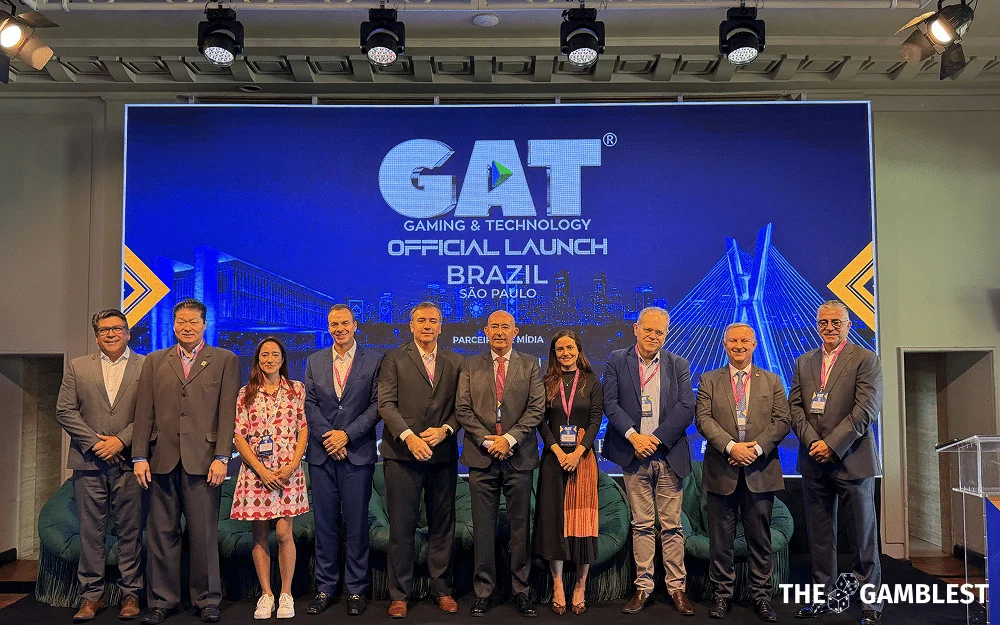
Industry experts conducted a thorough examination of the gaming sector, focusing on the prospects for legalizing land-based casinos in Brazil. The inaugural GAT Brazil event wrapped up on July 30, marking a significant occasion that gathered professionals from across the gaming and betting industries to evaluate both current conditions and future possibilities. During the conference, attendees unanimously highlighted the vital roles of governance, compliance, legal clarity, responsible gaming strategies, and institutional strengthening in fostering sustainable industry growth.
The event commenced with the master of ceremonies inviting the GAT Brazil Ambassadors to the stage. This exceptional group of industry leaders pledged to support GAT Events' introduction in São Paulo, aiming to promote knowledge sharing and enhance dialogue between public and private sectors.
At the Luiz Nazareno Hall in the Jockey Club, José Aníbal Aguirre, Founder and CEO of GAT Events, underscored Brazil's strategic significance as Latin America's largest gaming market. He announced the forthcoming 1st Latin American Responsible Gaming Congress, set to occur on October 20–21, 2027, in São Paulo.
Liliana Costa, LATAM Director of World Gaming Business, reiterated Brazil's position as a promising market, reaffirming the company's intent to boost its international presence. She remarked, "For World Gaming Business, it is an honor to serve as Media Partner for GAT’s official launch in Brazil at such a decisive moment."
The opening keynote was delivered by Alex W. Pariente, Chair of GAT Official Launch Brazil 2026 and Founder of Pariente Advisory. Pariente set the conference's tone, noting that Brazil established a regulated market in 2025, achieving R$37 billion in Gross Gaming Revenue (GGR) within the first year. He remarked on the issue of channelization, emphasizing that a parallel illegal market of similar size also exists, which undermines sector credibility.
Pariente praised the Secretariat of Prizes and Betting (SPA) for its effective efforts in creating a sustainable market but pointed out that the channelization process remains incomplete, stating, "Mirror domains outpacing takedown efforts and an SPA that still operates with limited staff necessitate strengthening of the regulator for market benefit."
In the initial panel, Neil Montgomery, Founder of Montgomery and GAT Ambassador, asked panelists André Santa Ritta, Caio de Souza Loureiro, and Eduardo Ludmer about encouraging illegal operators to transition to the regulated market. Montgomery suggested that achieving a 90% channelization rate would represent significant regulatory progress.
Loureiro emphasized that coordinated actions across government agencies are crucial, noting that the SPA currently lacks adequate institutional structure to tackle this challenge. He declared, "This issue is of paramount importance because it is in the interest of both society and the industry."
Santa Ritta viewed the SPA's warnings to licensed operators as constructive. He remarked, "Clarifying regulatory issues contributes to market sustainability,

