
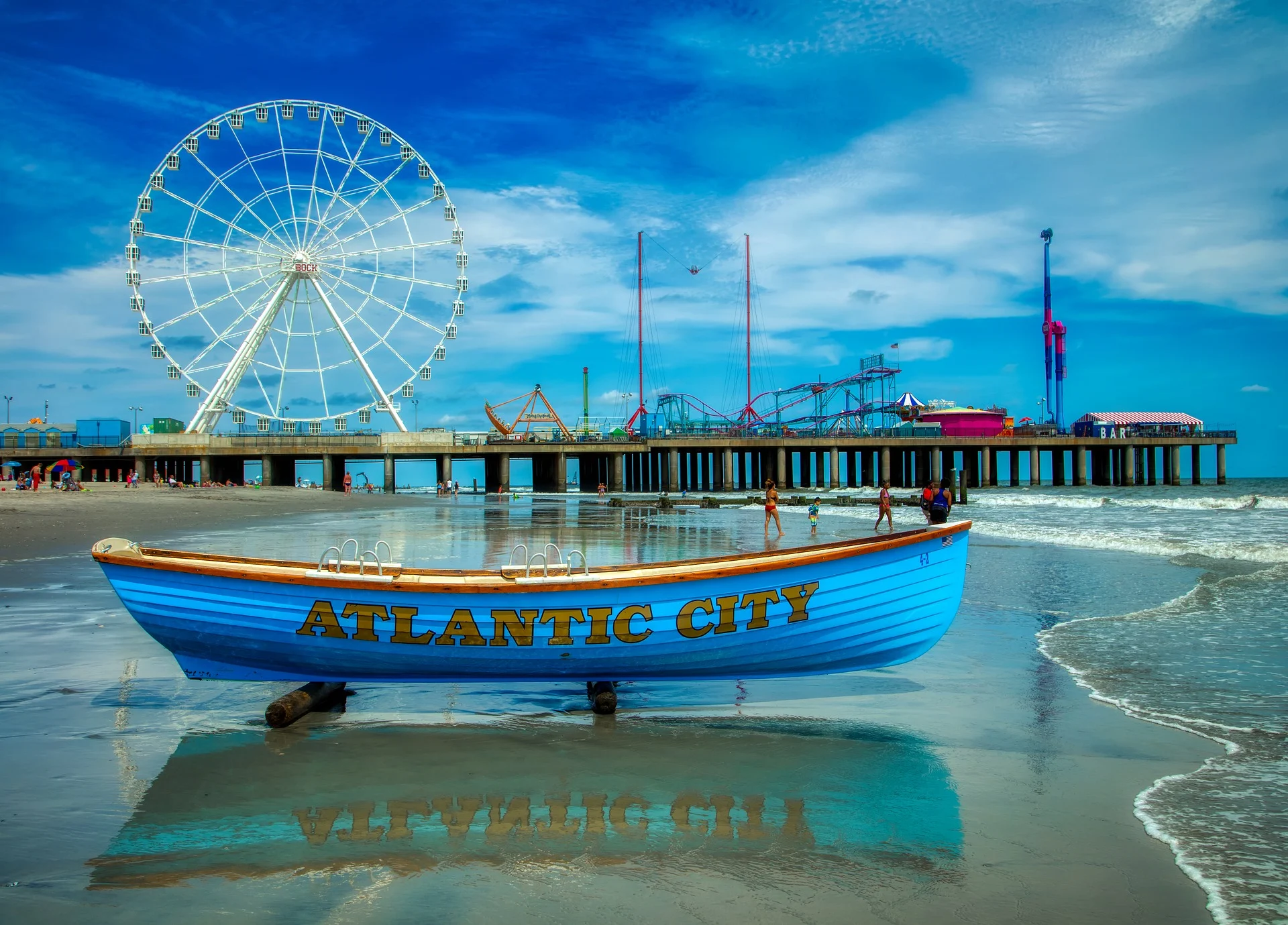
This week, UNITE HERE Local 54, Atlantic City’s primary union, finalized a new labor agreement with Bally's Atlantic City, marking the conclusion of recent negotiations involving all nine casinos in the city. These contracts are notable for their short duration of just one year.
This brevity reflects the uncertainty permeating the market as it grapples with increasing competition from New York City’s burgeoning casino industry and New Jersey’s substantial online gaming sector. In contrast, most labor agreements in the casino industry typically extend for three or more years, with the previous negotiations occurring in 2022.
Donna DeCaprio, President of Local 54, expressed pride in the union's negotiating committee, stating, "We are proud of our negotiating committee, our members and our staff who stood up and fought to maintain and improve the contractual pay, benefit and employment standards that make these jobs good union jobs."
As for New York’s impact, the one-year agreements might offer clearer insight into the competitive environment ahead. Currently, Resorts World NYC is the only casino operational in the area, averaging around $30 million per week in gross gaming revenue (GGR) over its first three months. If this trend continues, it could lead to approximately $1.5 billion in annual GGR from a single property. For context, Atlantic City’s nine casinos reported $2.8 billion in GGR in 2025 and $1.5 billion in the first half of this year.
While Resorts World poses a challenge to Atlantic City, the anticipated openings of the other two licensees, Metropolitan Park and Bally's Bronx, may be delayed. Both are targeting single-phase openings in 2030, but updates earlier this year revealed Metropolitan Park was behind schedule, while Bally’s is struggling with financing its estimated $4 billion project. These timelines may shift in the coming year.
In conjunction with the new labor agreements, a recent economic report has raised concerns about potential job losses in Atlantic City. The Greater Atlantic City Casino-Hotel Employment Exposure Assessment, published by the Atlantic County Economic Alliance, warned that upwards of 8,000 jobs could be at risk due to NYC competition by 2035 under a worst-case “Stress” scenario. This figure represents more than a third of Atlantic City’s casino workforce, which currently stands at around 21,100.
In less severe scenarios, such as the “Central” scenario, the report estimates around 5,100 jobs could be impacted. The most optimistic “Blue Sky” scenario suggests roughly 1,500 jobs might be affected. The current employment levels in Atlantic City are at their lowest point in nearly a decade, even lower than those seen in the early aftermath of the COVID-19 pandemic.
The report evaluates several factors but models only four:
– Competition from the three New York casinos;
– The possibility of a recession in the U.S. economy;
– Potential local expansion from new casinos at the Meadowlands and Monmouth Park, though these initiatives have been previously rejected and will not be presented to voters until 2026;
– Competition from in-state online gambling.
Dr. Max Slusher, who compiled the report, clarified, "This analysis is an exposure assessment, not a prediction. It does not say that a specific number of jobs will disappear on a specific date. It asks a planning question: how much of Atlantic City’s 2025 bricks-and-mortar casino-floor revenue base is exposed if several pressures land on the region at the same time?"
The challenge from New York’s competition is compounded by the growth of New Jersey’s iGaming sector. Despite Atlantic City casinos keeping pace with online revenue, the consistent double-digit growth from iGaming has led to ongoing questions about revenue cannibalization.
In 2025, New Jersey reported $2.9 billion in online revenue, marking the first year that iGaming outperformed retail casinos. As of July, online revenue reached $1.8 billion, reflecting a 14.5% increase compared to last year, which was itself a record.
Critics of cannibalization contend that iGaming serves as a growth engine for the industry. However, casino operators in Atlantic City are still facing challenges; operating profits dropped 15% in the first half of 2026 compared to 2025, despite increased revenue.
James Plousis, chair of the New Jersey Casino Control Commission, noted, "The casino hotels encountered their highest second-quarter costs and expenses in nine years, significantly constraining reported gross operating profits."

