
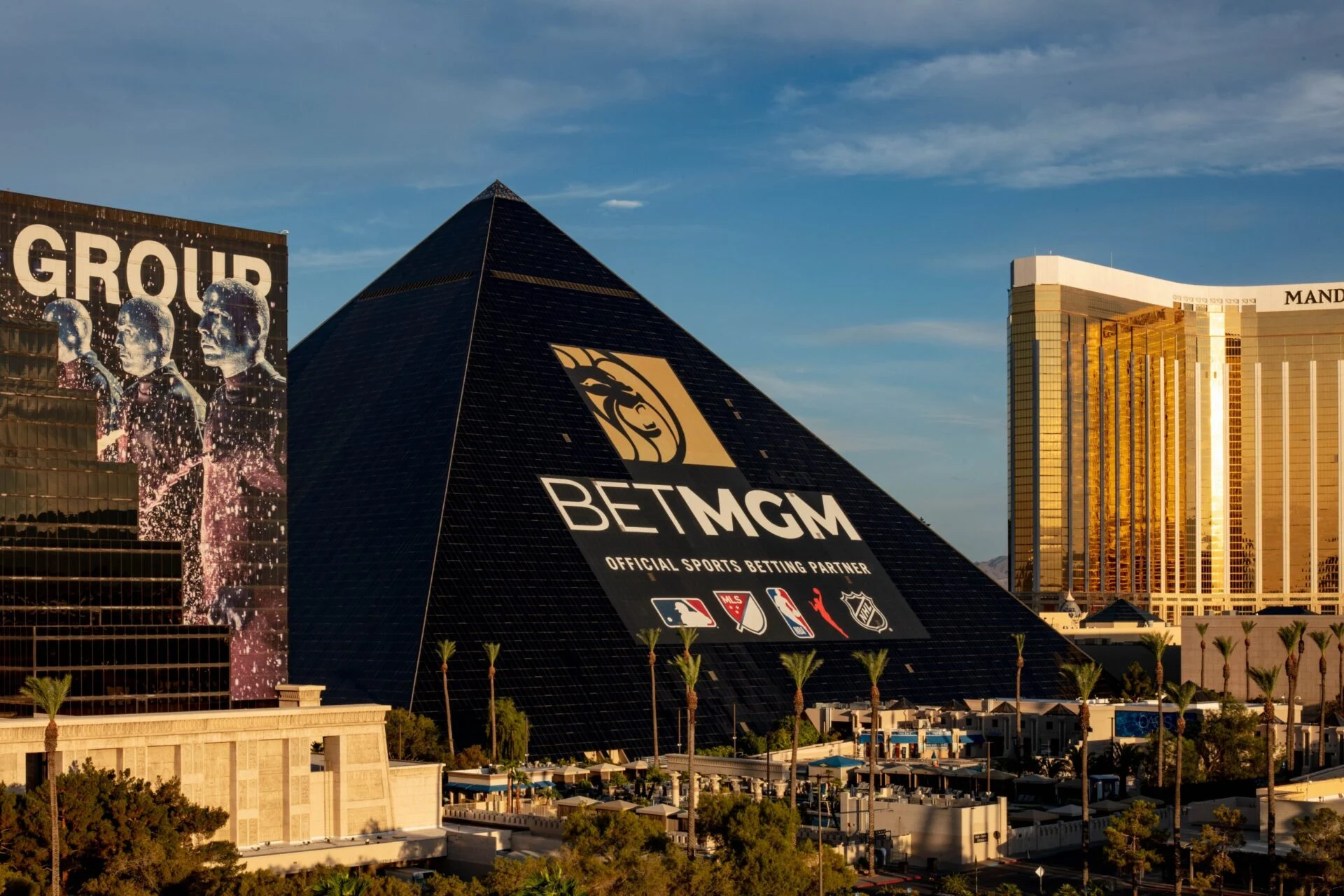
MGM Resorts announced on Wednesday that the $18 billion takeover bid submitted by its largest shareholder, Barry Diller's People Inc, has been withdrawn. This decision highlights both companies' confidence in MGM's potential as an independent operator.
Trading updates reflected the news, with People Inc's shares remaining relatively unchanged, while MGM's stock dropped 11%, settling at approximately $33.50. Diller had aimed to acquire the 73% of MGM not already owned by People Inc for $48.30 per share, which temporarily raised MGM's stock to around that price following the public disclosure of the bid. However, the stock has since fallen nearly 25% over the past month, reflecting waning optimism. Diller's proposal would have transitioned MGM into a private entity, albeit under the broader public portfolio of People Inc.
When the bid was initially made, the 84-year-old Diller praised the value of MGM's tangible assets, especially in an era increasingly influenced by technology and artificial intelligence. Despite the deal's collapse, Diller stated that People Inc remains “open to” future talks.
In his statement, Diller explained, “There are lots of ingredients that go into a proposal of this kind on its way to completion. We didn’t feel the mix was coming together in the way we had hoped and have decided not to pursue taking the company private at this time.”
MGM's chairman, Paul Salem, expressed enthusiasm for MGM's direction as an independent company. He emphasized the operator's strong market presence in Las Vegas, its high-quality regional properties, and the ongoing success of BetMGM, adding, “Our leading position in Las Vegas, our best-in-class regional properties, and BetMGM’s continued momentum highlight the value we bring to our shareholders.” Salem also pointed to MGM’s established interests in Macau and the upcoming MGM Osaka, slated for completion in 2030.
Analysts appeared unfazed by the news. Chad Beynon from Macquarie maintained an “Outperform” rating, while Barry Jonas from Truist kept his “Buy” rating, both with a price target of $55. Beynon’s analysis cited the financial challenges tied to executing the substantial deal, suggesting that “the outcome was driven by financing complexity rather than any change in the underlying value of MGM.” He referred to MGM’s implied enterprise value of approximately $5.9 billion as “a striking discount” in light of the company’s diverse assets.
Beynon also noted the complicated financial landscape, referencing high inflation and the Federal Reserve’s recent interest rate hike—the first in three years, with expectations of at least one more increase this year. Treasury yields have risen, with the 30-year yield hitting its highest level since 2004 on Thursday.
Financing considerations are pivotal in comparisons to Fertitta Entertainment’s acquisition of Caesars Entertainment, valued at $17.9 billion, a deal analogous in scale to the proposed MGM transaction. Fertitta maintained its $31-per-share offer despite financing challenges and had indicated to regulators that it was awaiting a more favorable lending climate.
Jonas indicated that the failure of the MGM deal was somewhat anticipated given the company’s stock decline relative to the initial offer price. He also highlighted the regulatory complexities surrounding MGM, which may have overwhelmed People Inc, especially since it lacks similar gaming enterprises.
As MGM moves forward without Diller, it faces several operational challenges. The company has reported strong performance at the higher end of the market in Las Vegas, although its budget offerings have struggled. In the second quarter, MGM posted revenue of $2.2 billion from Las Vegas, alongside adjusted EBITDA of $735 million, but company executives faced questions from analysts regarding market conditions.
COO Ayesha Molino shared that MGM continues to see substantial success within the luxury segment, while lower-tier properties, particularly Luxor and Excalibur, have encountered difficulties. On the regional front, same-store quarterly revenue reached a record $904 million in Q2. MGM National Harbor in Maryland anticipates benefits from a new Sphere venue under construction nearby, projected to open in 2030. MGM Springfield, conversely, is dealing with heightened scrutiny due to a lawsuit from the city over alleged breaches in their host community agreement. Last year, MGM withdrew its application for a full commercial license at its Empire City racino in New York after initially competing for it.
In the digital sector, MGM’s BetMGM joint venture is well-established but may face pivotal decisions ahead. BetMGM has chosen to avoid prediction markets to protect MGM’s casino licenses, unlike competitors such as FanDuel, DraftKings, and Fanatics, which have embraced this market.
In Asia, MGM China has maintained relative stability in Macau, but attention is largely focused on MGM Osaka. This project is significant as it holds the sole license in Japan but is still four years from launching. Furthermore, Japanese officials are set to open another round of license bids next year, which could heighten competition in the region.

