
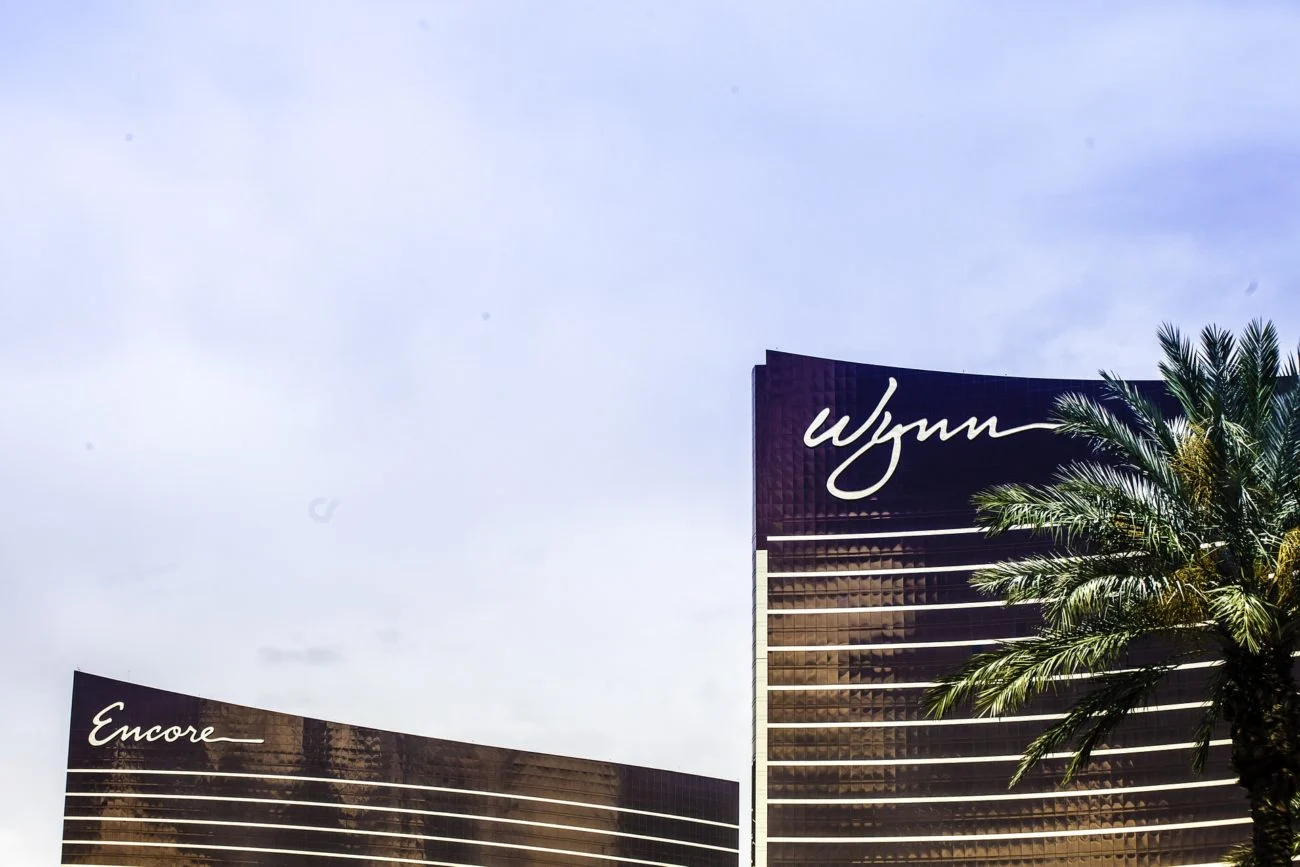
Wynn Resorts announced significant developments in its second-quarter results released Tuesday, highlighted by a six-month delay in opening its resort in the UAE and a budget increase of $600 million due to ongoing conflicts in the Middle East. Despite these challenges, the company reported strong performance during Q2.
The luxury operator reported overall revenue of $1.86 billion for the quarter, marking a 7% increase from the same period last year. Net income surged to $140.1 million from $66.2 million in the previous year, while group-adjusted EBITDA rose by approximately 3% to $568.3 million.
Macau emerged as a key growth area for the company, with Wynn Palace in Cotai showing remarkable performance. Revenue from this property climbed 21% year-over-year to $653.4 million, while adjusted EBITDAR soared 28% to $201.5 million. Interestingly, this growth was driven primarily by the mass market, contrary to the company's traditional focus on VIP customers. In fact, Wynn Palace experienced a 32% drop in VIP turnover and a 29% decline in VIP table games win; however, mass market table game win improved by 37%.
In the first quarter, Wynn announced plans for The Enclave, a proposed 432-suite hotel tower at Wynn Palace with a projected cost between $900 million and $950 million, indicating a response to significant demand. Wynn CEO Craig Billings revealed that construction of The Enclave will commence before the year concludes. Additionally, he confirmed that work on a long-planned event center and theater at Wynn Palace will begin shortly. The event center is expected to open in 2028, while The Enclave is projected for completion in 2029.
"We kind of just continue to stick to our knitting [in Macau]," Billings said in reference to the company’s focus in the region. "We're very focused on one particular customer type that is driving the market at the moment, and we continue to double down."
Meanwhile, in Las Vegas, the company reported nearly flat total revenue at $643.2 million, though casino revenue increased by 6.5% to $158.1 million. Segment-adjusted EBITDAR decreased by 8% year-over-year to $215.2 million amid heightened competition for high-rollers in the area. MGM and Caesars are pursuing different strategies in Las Vegas, where MGM has seen gains, while Caesars faces challenges and plans to go private under Fertitta Entertainment.
"We believe the best way to earn and retain the highest value customers in Las Vegas is to continually raise the bar on what we offer them," said Wynn CFO Craig Fullalove.
Regarding a potential NBA franchise in Las Vegas, which could be finalized by year-end, Billings mentioned the company owns a 38-acre plot of land on the Strip that could be utilized for an arena. While competitors MGM and Caesars are also eyeing this prospect, he noted that the NBA, with its numerous home games, does not draw the same type of tourism as the NFL. Regardless, he expressed optimism, stating, "We would love to see an NBA franchise in Las Vegas…We tend to get folks affiliated with the league and the opposing teams when they’re in town, and those are great customers, and they’re good for our business."
In contrast, the Encore Boston Harbor reported a 3% year-over-year dip in revenue to $209.2 million, along with a 12% decline in adjusted EBITDAR to $56 million. Casino revenue also faced a 6% drop, largely driven by a 12% decrease in table game win.
Despite these challenges, Billings remarked that Encore Boston Harbor achieved record highs in revPAR (revenue per available room) and hotel revenue during Q2, with overall demand remaining robust and slot handle slightly ahead of last year.
A potential development on the horizon involves the legalization of historical horse racing in Massachusetts, which would permit patrons to bet on anonymized previously run horse races. This legislation, included in an economic bill that passed the Massachusetts House earlier in July, is still pending before the Senate. Suffolk Downs, located five miles from Encore Boston Harbor, is expected to be one of the beneficiaries if this bill is enacted.
Wynn concluded the quarter with $1.5 billion in cash and equivalents, against total current and long-term debt of $10.7 billion. The company repurchased shares worth $75 million during the quarter and has approximately $326 million remaining in repurchase authority. Shares rose by 3% to $101.15 on Wednesday, although Wynn's stock price has dropped about 17% since the beginning of the year.
Chad Beynon, an analyst at Macquarie, upheld an outperform rating for Wynn, setting a target price of $143. He suggested that the market is not fully recognizing the resilience of earnings in Las Vegas and Macau, while he continued to support the company’s prospects for its UAE resorts, despite recent setbacks. "We think Wynn should greatly benefit from 1) 5%+ forecast Macau market growth; 2) luxury positioned assets in Las Vegas; 3) Al Marjan Island (UAE) launch, which may not have competition for several years; and 4) capital allocation strategy, which includes repurchases," Beynon noted.

