
"Everything is Bigger in Texas" not only speaks to the vast size of the state, which covers 268,820 square miles and ranks second in the U.S. behind Alaska, but also reflects the pride and identity its residents hold. As event contracts become increasingly prevalent, this saying resonates in prediction markets where Texas is emerging as a leader. A striking example occurred last Sunday, when trading activity for an NFL game between the Dallas Cowboys and the New York Giants reached over $208 million across U.S. markets, according to Aldrin Research. At Kalshi, the volume for this NFC East matchup was greater than any NFL regular-season game in the previous year.
This trend extends beyond the NFL. College football, a passion for many Texans, saw considerable engagement when Ohio State competed against Texas in a highly anticipated game on September 12, with over 50.7 million contracts traded. This surge in activity set the stage for a significant legislative hearing just three days later in the Texas Senate.
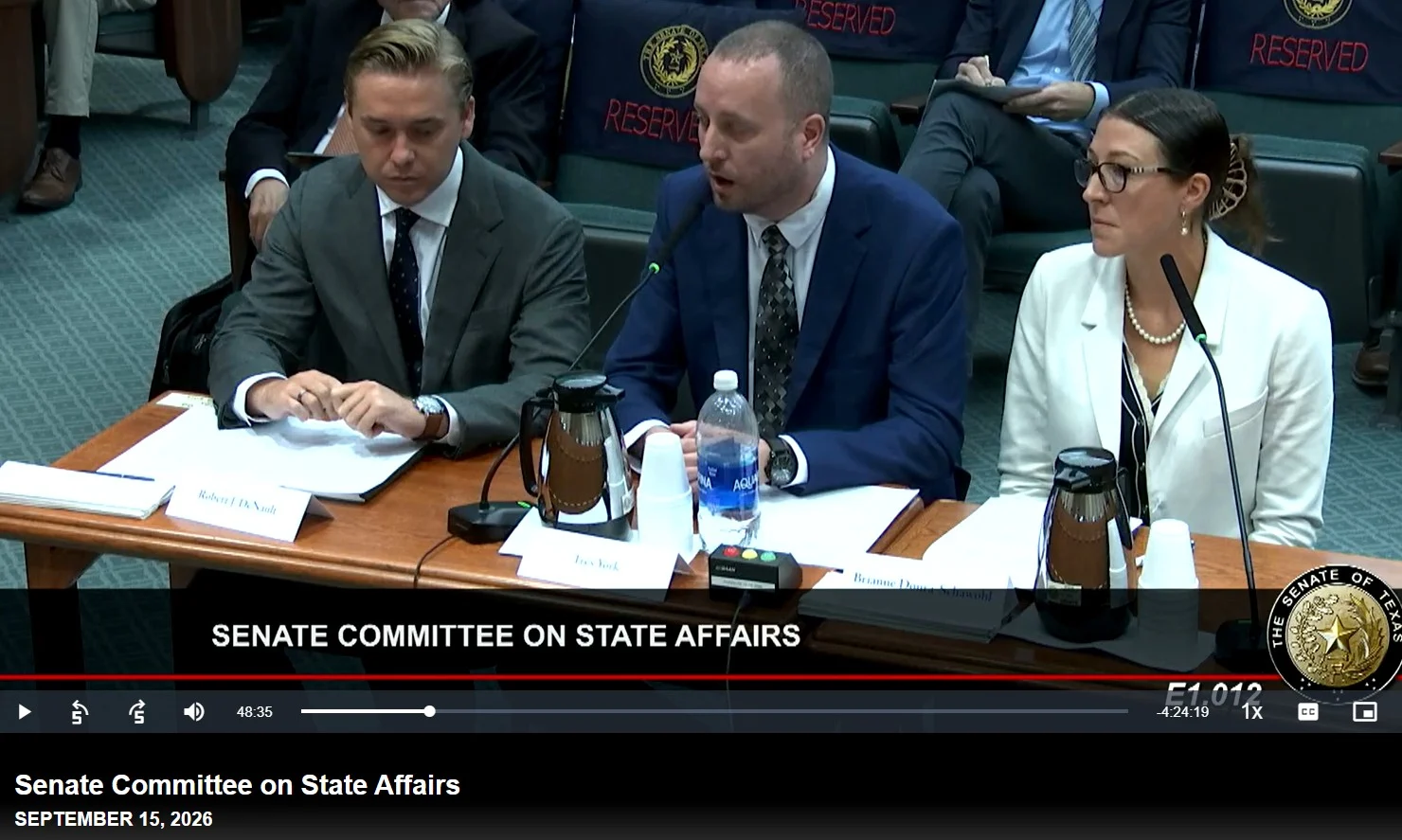
Convened by state Senator Bryan Hughes, the 62-minute session focused on the intersections of federally regulated derivative markets and state gambling laws. A report from Eilers & Krejcik Gaming revealed that Texas and California accounted for 43% of sports event contract activity, although specific data for Texas alone was not disclosed.
At the hearing, AGA Vice President Tres York and Robert DeNault, head of enforcement and legal counsel at Kalshi, presented their arguments. The AGA, a vocal opponent of prediction markets, contended that an event contract on the Cowboys to beat the Giants is fundamentally the same as a wager at a sportsbook. In Texas, where sports wagering is illegal, these markets draw scrutiny.
Governor Greg Abbott, facing re-election in November, is joined by Lieutenant Governor Dan Patrick, who has staunchly opposed sports betting and presides over the Texas Senate. Efforts to legalize sports wagering have repeatedly stalled under his leadership since the repeal of PASPA in 2018.
Texas Attorney General Ken Paxton is currently running a competitive campaign for the U.S. Senate against Democrat James Talarico. Paxton will be succeeded as attorney general either by state Senator Mayes Middleton, a Republican from Galveston, or Nathan Johnson, a Democratic state Senator from Dallas.
Senator Bob Hall, who represents Senate District 2, expressed skepticism about the distinction between event contracts and traditional sports wagering, likening them to gambling in varying disguises.
"They’re different costumes on gambling," Hall stated. "Some have high heels and a tiara, and others have miniskirts or a bikini."
In response to Hall's question about Texas's future course, York suggested the state pursue regulations that would geofence prediction markets from operating within state lines. He also advocated for litigation against these markets in state courts, arguing that federal courts have often not favored state AGs in similar cases.
“Prediction markets think they can mess with Texas,” he said. “I hope you prove them wrong.”
DeNault countered by asserting that federally regulated prediction markets overseen by the CFTC are a safer option compared to many unregulated offshore operations.
"You can go the combative route and ban something that’s federally regulated," he said. "But what you’ll end up with is a bunch of customers in Texas just going offshore."
The committee also heard from Brianne Doura-Schawohl, a recognized expert in problem gambling, who noted that 52% of Gen Z respondents included sports betting and prediction markets in their long-term financial strategies. She criticized a Kalshi competitor for allowing minors over 17 to link investment accounts for trading event contracts, describing it as a "very dangerous" opportunity for teens at risk.
In a significant development outside Texas, Kalshi achieved a milestone on Friday by becoming the first prediction market to partner with a federally recognized sovereign nation. The Tunica-Biloxi Tribe of Louisiana announced a new tribal prediction market app, to be launched in conjunction with Kalshi through SaltTrade Derivatives, a segment of a tribal enterprise. Tunica-Biloxi Chairman Marshall Pierite emphasized that this partnership represents an opportunity for tribes to become leaders in the modern economy.
The same week, as the tribe prepared for an upcoming game between the University of Mississippi and Louisiana State University, discussions were held between leaders of the Indian Gaming Association and CFTC Chair Michael Selig, though IGA Chair David Bean deemed those discussions unproductive. Meanwhile, a ruling from the Ninth Circuit Court reversed a lower court's decision in a case concerning Kalshi, clarifying that Kalshi's sports event contracts constituted unauthorized gaming under the Indian Gaming Regulatory Act when accessed on tribal land.
"Today’s decision reinforces a fundamental principle: when sports wagering occurs on Indian lands, federal Indian gaming law matters," Bean remarked.

