
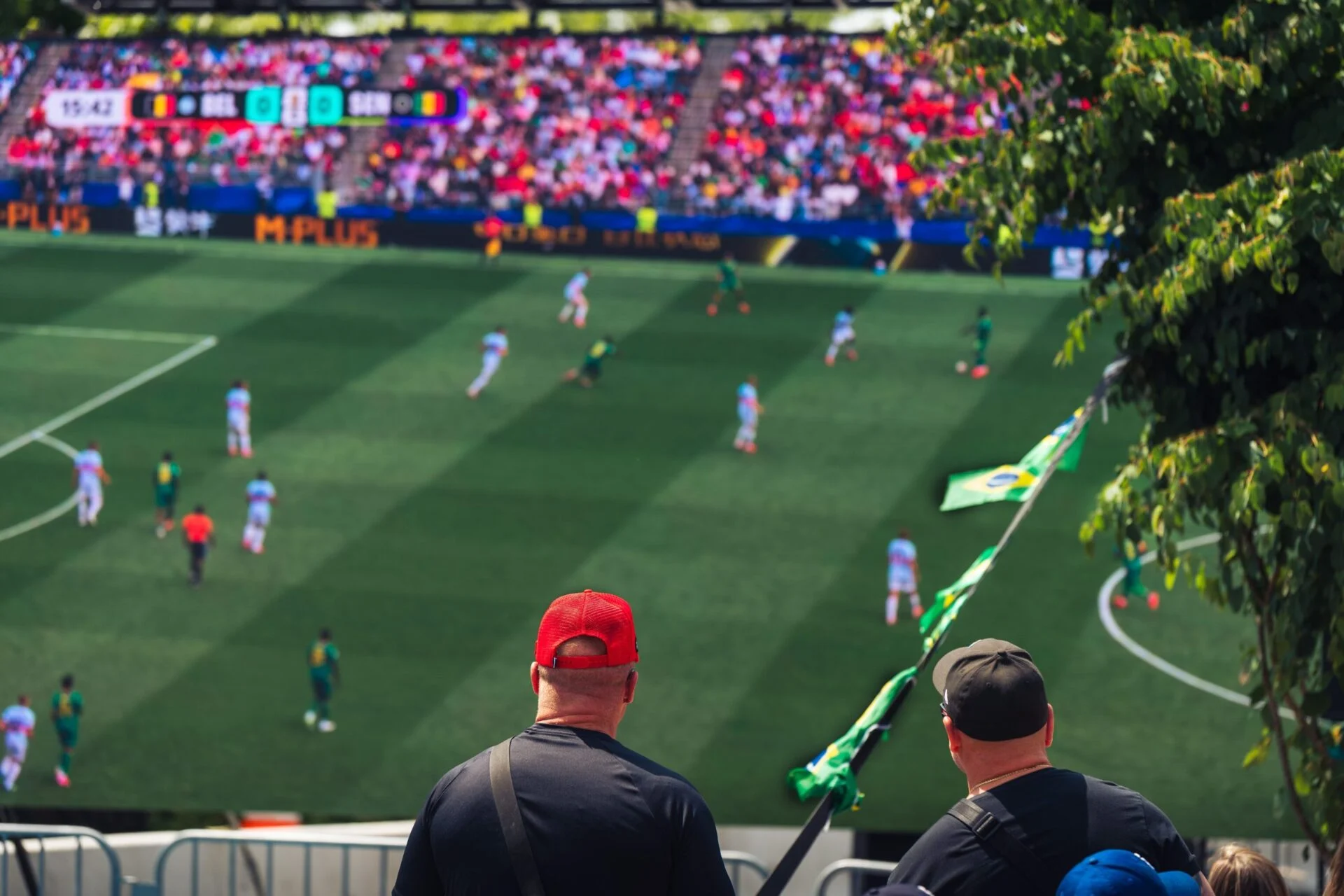
As the World Cup approaches its conclusion across the US, Mexico, and Canada, gambling operators are set to evaluate whether the mega event has met its financial expectations. A key question remains: does the true value of such a significant tournament arise only after the final whistle?
Before the tournament began, investment bank Macquarie projected that global betting could hit $50 billion. During Entain's FY’25 earnings call in March, CEO Stella David offered insights into how much revenue they anticipate from the tournament, which raised inquiries about its actual financial benefit.
David remarked, "It’s not as big a thing as you might think," when asked about the World Cup’s contribution to annual revenue. She estimated it would account for about 1% of revenue annually for Entain, noting, "It’s bigger than the Euros, but it’s not as dramatic as you would think.”
While this figure may appear low, Ed Birkin, managing director of H2 Gambling Capital, stated that major sporting events often give operators a chance for customer acquisition rather than just a source of immediate revenue. He mentioned, “Overall in markets that report it, [the World Cup is] accounting for around 7% of sports turnover. However, it really depends on the outcomes of games in terms of what is going to be done.”
Birkin explained that if operators make only 1% from the Cup, it would be disappointing, but noted that operators placing a greater focus on sports will likely benefit more significantly.
Performance on the field plays a crucial role. This year’s World Cup expanded to include 48 teams, resulting in over 60% more matches. However, many group-stage games featured football giants facing less dominant teams, with several first-time qualifiers.
Birkin highlighted that operators' success could correlate closely with whether these underdog teams manage to upset some of the favorites. For instance, first-time qualifiers like Cape Verde drew with Spain and achieved another tie against Uruguay, while traditional powerhouses like Brazil and Germany dropped points.
Chad Beynon, managing director and senior gaming analyst at Macquarie Group, pointed out the significance of these outcomes, stating, "If England makes it to the final, then you’re going to see those numbers completely smash what Entain had been saying." He emphasized that having top teams advance is vital; upsets by underdogs could negatively impact results.
The tournament's potential value may also derive from cross-selling opportunities. Beynon and Birkin share the views of Super Group CEO Neal Menashe, who mentioned prior to the event that the early rounds might be shaky due to mismatches. Menashe considers the true significance of the World Cup lies in its ability to drive cross-sell opportunities from sports betting into casino offerings, which he suggests could reach around 60%-70%.
Beynon agreed, noting, “In terms of iGaming cross-sell, I think that is the ultimate goal.” However, he expressed uncertainty about the same levels of cross-sell success with new customers who may not have prior engagement with iGaming.
Birkin raised doubts about the extent to which operators could effectively cross-sell into casinos, especially in the US where iGaming expansion has stalled. He stated, "In the US, it’s only relevant for five states. Casino is where you monetize players, but I’ve had a few people say to me that this idea that sports betting customers want to go to the casino just doesn’t work particularly well.”
Instead of purely maximizing revenue from this quarter, operators may see the World Cup more as an opportunity to build a customer base for sustained success. Bally’s Intralot CEO Robeson Reeves, during the operator's Q1 earnings call, indicated that his company wouldn’t heavily invest in World Cup-related spending. Instead, he foresaw focusing on attracting competitors’ customers once marketing costs from others diminish.
Birkin found this strategy reasonable given Bally’s casino-centric focus, noting that rampant spending among other sportsbook operators drives customer acquisition costs higher. “All the sportsbook operators are spending a load of money, so all the customer acquisition costs are going up,” he explained.
Beynon concurred, suggesting Bally’s is likely to adopt a more measured approach to customer acquisition, emphasizing profit margins over aggressive marketing. He noted, "They've done an incredible job with their business in the UK and throughout Europe, and their strategy seems to be acquiring players at lower rates and retaining them effectively.”
As the World Cup is hosted in North America for the first time since 1994, Beynon described the commercial potential as substantial. DraftKings, a prominent player in the market alongside Flutter Entertainment’s FanDuel, is keenly awaiting the outcomes as well.
Greg Karamitis, DraftKings’ EVP and GM of sports, expressed optimism about customer engagement opportunities surrounding the World Cup, stating, “We’re very excited about the customer acquisition and engagement opportunities that the 2026 World Cup presents.” Although he refrained from offering specific financial forecasts, he underlined the World Cup's capacity to deepen fan engagement and broaden the customer base.
However, high marketing expenses during such significant events pose a risk of overextension. Birkin noted that operators face pressure to elevate marketing spending to maintain competitiveness. “You can argue the industry does [spend too much on marketing] as a whole, but if you’re an operator, it’s pretty difficult with what all your competitors are doing,” he remarked.
DraftKings’ Karamitis acknowledged the rising marketing costs but believes the potential for improved acquisition efficiency, along with the long-term customer value gained, justifies the investment.
The emergence of prediction markets in the US poses another layer of competition for traditional betting operators, as Beynon recognized the notable wagering activity in states where sports betting remains illegal. He projected that while legal sports betting might achieve around $3 billion in gross gaming revenue during the World Cup, prediction markets could account for approximately $2 billion.
Yet, Birkin doubted prediction markets would significantly impact traditional betting revenue due to limited availability in Europe, citing a recent crackdown by multiple European regulators targeting the legality of these markets. He asserted that the actual influence might remain minimal in Europe due to legal constraints.
As the tournament progresses toward its climax, the real victory for betting operators may revolve around their ability to leverage this brief surge in engagement into lasting player loyalty and revenue generation. According to Beynon, sportsbooks typically reach profitability on new customers between months 12 and 18, underscoring the importance of ongoing engagement beyond the World Cup.
For Karamitis at DraftKings, the marker of the tournament's success will largely rest on the company’s execution across various areas, including technology and marketing efficiency. “This is especially key as we work to ensure that we operate at the speed of sports,” he concluded.
The World Cup represents not just a fleeting event but rather a foundational opportunity for long-term growth for operators willing to embrace the ensuing developments.

