
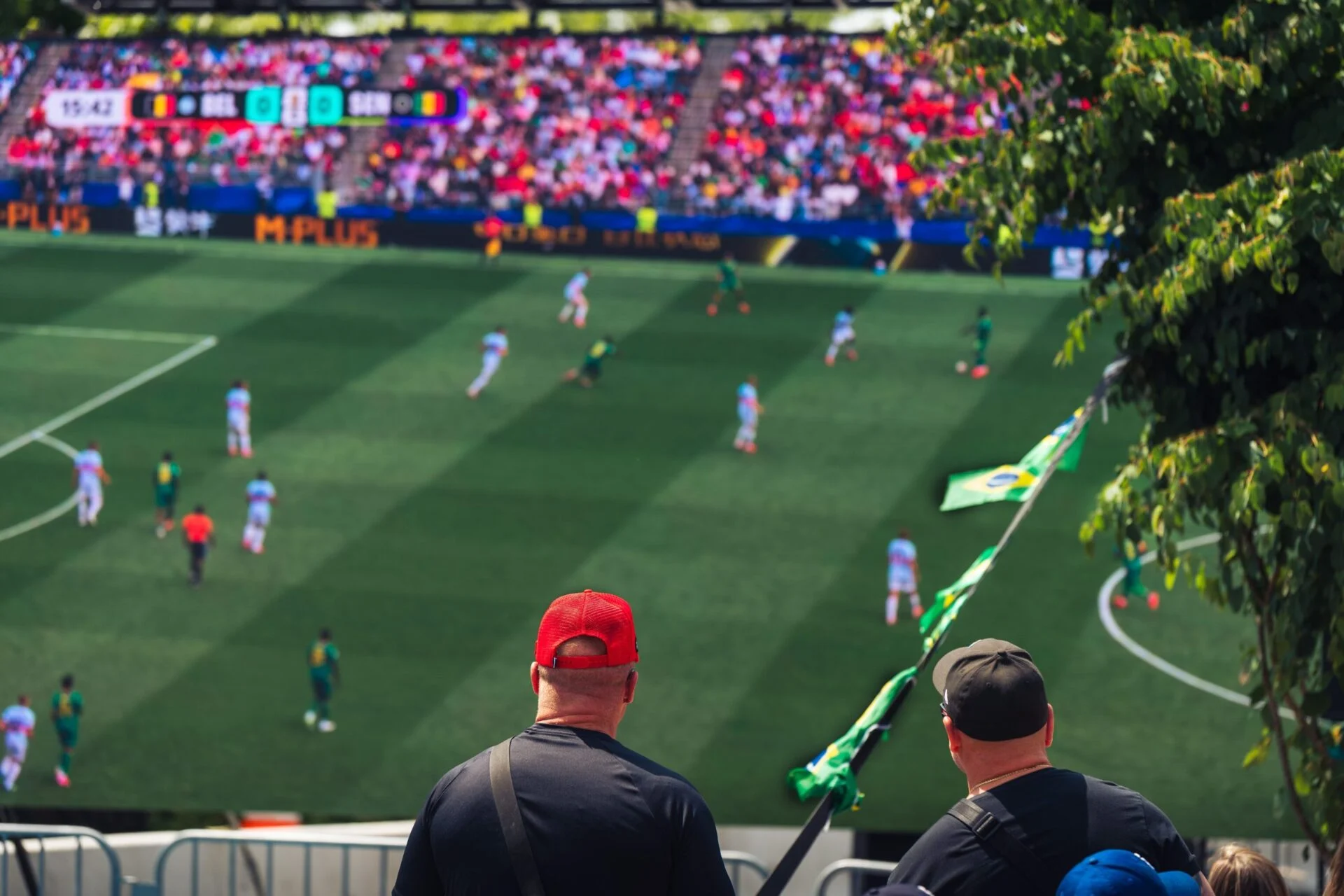
As the World Cup approaches its finale in the United States, Mexico, and Canada, betting operators are preparing to evaluate the tournament's financial impact. A key question remains whether the true value of such major sports events is realized following the conclusion of the games.
Investment bank Macquarie had earlier predicted that global wagering for the event could reach a staggering $50 billion. However, during Entain’s FY’25 earnings call in March, CEO Stella David's remarks on the operator's estimated revenue from the tournament provoked a reevaluation of its actual worth. "It’s not as big a thing as you might think," David stated when addressing analysts about Entain’s anticipated gains. "I mean, it’s probably worth about 1% or something like that across the year is really where we would anticipate that to be as an upside. It’s bigger than the Euros, but it’s not as dramatic as you would think."
The perceived low percentage prompted Ed Birkin, managing director of H2 Gambling Capital, to suggest that major sports tournaments often function more as tools for customer acquisition rather than engines for substantial revenue growth. "Overall in markets that report it, [the World Cup is] accounting for around 7% of sports turnover," he remarked. "However, it really depends on the outcomes of games in terms of what is going to be done."
For instance, during the group stages, unexpected results involving underdog teams, like Cape Verde drawing with Spain and a tie against Uruguay, could heavily influence operator performance. Birkin added that success for operators is often linked to the outcomes of games, stating, "If England makes it to the final, then you’re going to see those numbers completely smash what Entain had been saying."
With this year’s tournament expanded to 48 teams, there were over 60% more matches. This led to a mix of results, raising the stakes for betting operators associated with powerhouse teams like England, France, and Argentina. Birkin’s observations about potential upsets underscored the unpredictability of the games’ outcomes.
Neal Menashe, CEO of Super Group, anticipates most of the event's value lies in cross-selling opportunities from sports betting to casino gaming, a transition he estimates sits at around 60%-70%. Beynon echoed this sentiment, stating: "We’ve always thought about poker and sports betting as the top of funnel, and then iGaming as the money printer."
However, Birkin raised concerns about the extent to which operators can effectively cross-sell, particularly in the U.S., where iGaming has not expanded significantly. "In the US, it’s only relevant for five states," he explained. He noted that the engagement of sports betting customers with casino offerings is not as strong as desired.
For many operators, the World Cup may be less about immediate revenue and more about securing long-term customer loyalty. Robeson Reeves, CEO of Bally’s Intralot, during a recent earnings call, expressed that their UK B2C business would focus more on attracting competitors’ customers post-tournament rather than competing in marketing during the World Cup itself.
Beynon remarked on Bally's strategy: "Why would you spend money at a time when all the advertising costs are sky high?" As the bidding war for attention heightens during the World Cup, this cautious approach could lead to better customer acquisition and retention as marketing costs drop following the event.
This World Cup marks a significant opportunity for DraftKings and FanDuel, who stand out as market leaders in the U.S. Although Greg Karamitis, DraftKings’ EVP and GM of sports, was hesitant to disclose anticipated financial data, he emphasized the importance of engaging customers. "We view the World Cup as a significant opportunity to deepen fan engagement and expand our customer base," he affirmed.
However, there are concerns over ballooning marketing costs that may be unsustainable. Birkin acknowledged the industry-wide pressure to spend heavily during such events. If operators do not invest comparably, they risk losing market share, a sentiment echoed by Karamitis, who articulated that while marketing expenses would surge, the potential for acquiring engaged customers justifies the investment.
Competition may also intensify from prediction markets, particularly in places where traditional sports betting is limited. Beynon noted that Kalshi, a leader in prediction markets, recorded approximately $15 billion in wagers just in May. He anticipates that traditional sports betting in the U.S. could generate around $3 billion during the World Cup, while prediction markets could account for about $2 billion. However, Birkin posited that these markets would have a limited effect on betting revenues, specifically in Europe, where recent regulatory actions have cracked down on their legality.
Ultimately, as the tournament nears its conclusion, the true test for betting operators will be their ability to convert this heightened engagement into sustainable revenue streams. Beynon concluded, "Generally, sportsbooks become profitable on the customer between months 12 and 18, so it takes that long to get through the promotions to see if that new active user is going to redeposit." Karamitis emphasized that the tournament's success hinges on effective execution across multiple operational dimensions, reinforcing DraftKings' commitment to providing a seamless user experience during such high-profile events.

