
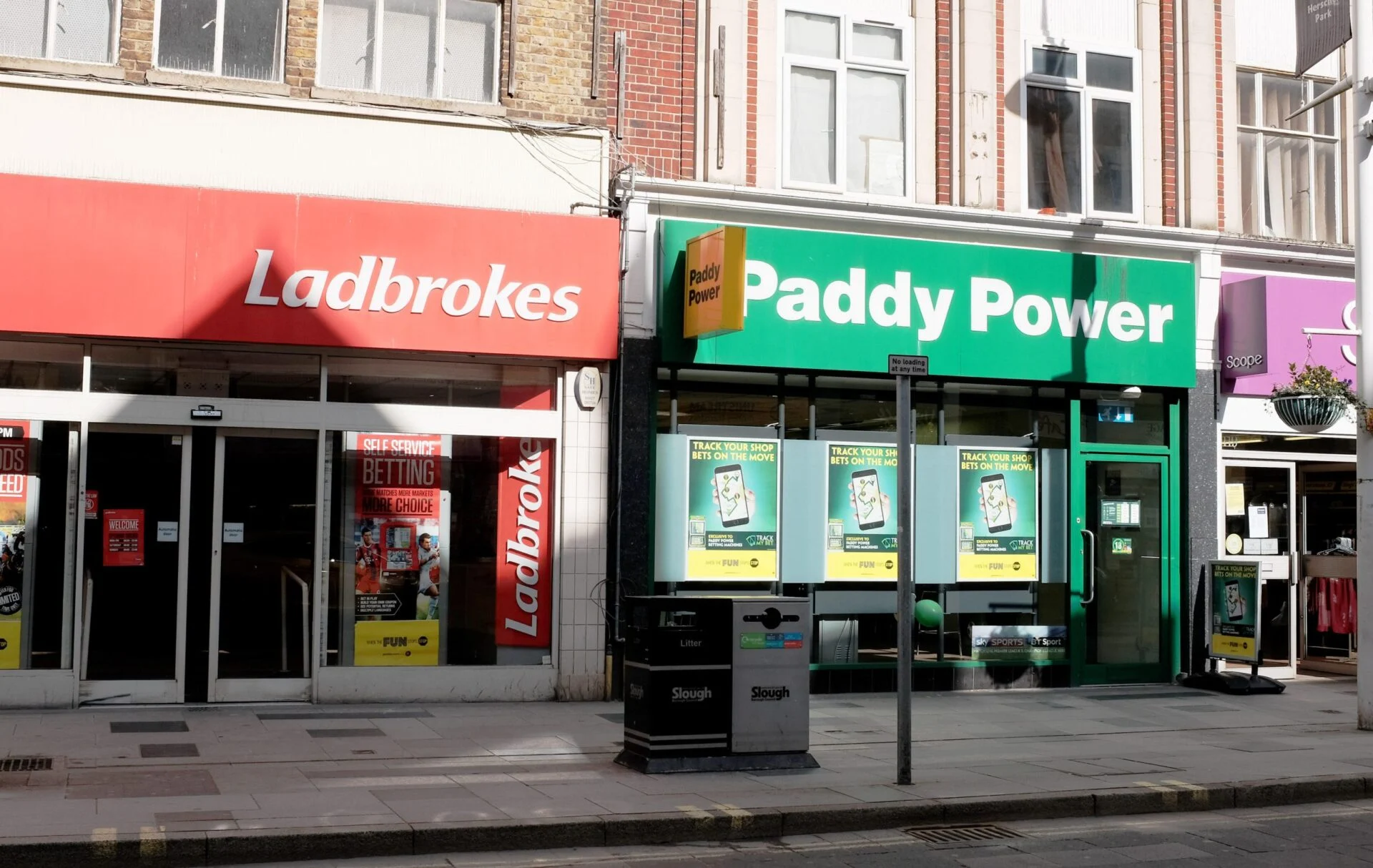
The gambling industry has expressed its discontent over Prime Minister Andy Burnham's remarks that liken betting shops to vape shops and unregulated businesses in his assessment of struggling high streets in Britain. Burnham's administration plans to amend the Gambling Act 2005 by eliminating the principle that allows for automatic permissions for gambling premises, thereby granting local authorities more authority to deny application requests. Additionally, new adult gaming centers (AGCs) will now require planning approval.
However, it was Burnham's choice of words that drew the ire of industry leaders. He suggested that betting and vape shops were displacing traditional businesses and community spaces, framing the policy as a crackdown on “dodgy businesses.”
Industry representatives strongly objected to this narrative, asserting that it misrepresents the reality. In fact, the number of betting shops in the UK has decreased to fewer than 5,900 from nearly 9,000 in 2015, signaling a contraction rather than unchecked proliferation in the sector.
JenningsBet's CEO, Greg Knight, characterized the comparison as insulting. He questioned, "What sort of ‘dodgy’ business provides employment for 40,000 people, finances the entire British horseracing industry… and pays billions in taxes and rates?" His own company has seen modest growth this year, opening four shops but closing three, leading to minimal net expansion largely through acquisitions rather than organic growth.
Knight expressed concern that council discretion over licensing could lead to a halt in new openings. He pointed out that there seems to be confusion among politicians regarding the differences between betting shops and AGCs.
The AGC sector also pushed back against the narrative. Alistair Gair, communications director of Bacta, noted a decline in these venues, from 1,610 in 2015 to 1,502 in the previous year. He emphasized that AGCs provide essential services by occupying vacant units, creating jobs, and offering regulated low-stake entertainment in safe environments. He warned that restrictive measures could push customers towards illegal options where no protections exist.
The issue of high street decline is complex; simply closing commercial units may not bring back traditional businesses like banks or bakeries. Councils can only choose among businesses that are viable and willing to operate in such spaces.
Christopher Snowdon of the Institute of Economic Affairs pointed out that the root cause of high-street decline has been misidentified. He argued that betting and gaming businesses haven't displaced a thriving retail economy but have moved into vacant spaces left by traditional retailers due to decreased demand.
Snowdon asserted that the survival of the high street will increasingly rely on services demanding in-person interaction, such as cafes and repair shops, with unoccupied premises likely converted into housing.
Restricting legitimate businesses will not reverse these changes, he warned. Initiating new laws targeting illegal activity in certain sectors may mistakenly replace the enforcement of existing regulations.
Rank's chief executive, Richard Harris, defended the gambling industry's role, describing venues as “community assets” that provide safe entertainment. He asserted, "We try and look after our customers really, really well. That is the game that we are in. We will continue to offer them the best entertainment, the best fun that we possibly can.”
Some industry members are advocating for a more proactive approach. Patrick Jay, a former executive at William Hill, believes the sector has suffered from a leadership gap and has struggled to counteract a prevailing narrative set by opponents.
He stated, "What we have fundamentally misunderstood is how to fight back. The goalposts have moved." Jay called for a dedicated social media strategy to tackle health lobby critiques proactively, arguing that statistics alone do not fully address public sentiment regarding the high streets.
As the challenges facing retail betting transition to Vicki Foxcroft, the new minister responsible for gambling, she takes over an industry that feels misrepresented, facing a prime minister who has indicated his stance, and an announcement reflecting more complex legislative issues.

