
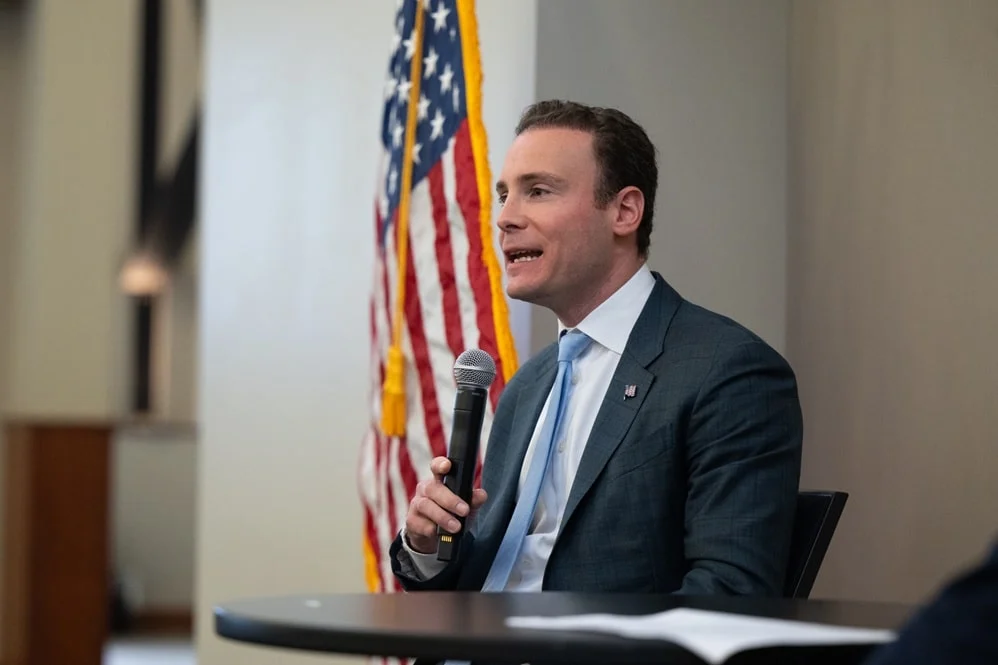
Michael Selig, the Chairman of the Commodity Futures Trading Commission (CFTC), has warned that allowing states to create their own regulations for prediction market operators could compromise the integrity of federal markets in the U.S. His remarks came during the Flyover Fintech conference in Lincoln, Nebraska, where he shared the stage with Congressman Mike Flood.
This statement follows a recent ruling by a federal judge in Utah, permitting the state to enforce its gambling laws on the prediction market platform, Kalshi. Selig emphasized that state-imposed restrictions, such as additional requirements or criminal penalties, could fragment the market environment. "If states can impose certain additional requirements or certain criminal penalties on exchanges, then we don’t have a federal, national market system here in the United States," he stated. "I think this is very concerning. And it’s really important that we fight these attempts by the states to nullify federal law."
Additionally, New York has ramped up its legal pursuits against Kalshi, issuing subpoenas related to transactions connected to residents under 21, amounting to $36 billion in potential liabilities.
Selig criticized state attempts to regulate CFTC-approved prediction markets, warning that such actions could lead to a "race to the bottom." He explained that states offering looser regulations could attract exchanges away from states with stricter laws. "What we have is essentially a race to the bottom," he said, indicating that exchanges might choose locations based on favorable regulatory environments.
In a clear distinction, Selig noted the fundamental differences between prediction markets and the gambling landscape dominated by casinos. He highlighted that prediction markets, unlike casinos, involve an order book for matching bids and offers and defined margin contracts.
Despite ongoing state disputes with various operators including Kalshi, Selig assured that the CFTC would continue to engage in separate legal actions against states rather than intervening in ongoing cases. "We’ve sued a number of states, really in reaction, as opposed to being the one going on the offensive," he explained, aiming to present clear legal cases focused on specific issues.
Legislators opposing greater regulatory freedom for prediction markets have criticized Selig’s legal strategies. A group of senators recently proposed a bill seeking to restrict CFTC access to federal funding for its state litigation efforts. Nevertheless, Selig maintained the necessity of pursuing these legal actions, asserting, "We believe this litigation is vitally important to protecting the agency’s mandate to regulate these markets on a national scale."
On social platform X, detractors have expressed concern with Selig’s view, suggesting that states primarily object to prediction markets because they can involve sports-related contracts. One user suggested simply excluding sports from these markets to alleviate tensions. Selig reiterated that prediction markets should not be conflated with gambling, emphasizing that prediction market contracts feature settlement terms and guarantees that differ significantly from conventional gambling arrangements.
He described prediction markets as a "novel kind of derivative" helpful for diverse users, including agricultural producers, by providing alternatives to standard futures contracts.
As the legal battles persist, the situation remains dynamic. Just last month, a Minnesota judge sided with prediction market operators against the state's efforts to restrict their event contracts. Legal experts indicated that regardless of the outcome of these current challenges, further legal disputes appear inevitable.

