
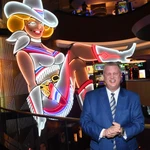
Derek Stevens, an outsider in the gambling industry, first found success in the auto parts business in Michigan before entering the casino sector with the purchase of the Golden Gate in 2008. He candidly notes that the lack of income tax in Nevada was a significant factor in his decision to relocate to Las Vegas. "The key thing that brought me to Vegas was the fact there’s no income tax in the state of Nevada," he states, highlighting how beneficial this was for managing his investment portfolio. Stevens sees himself primarily as an operator and relished the challenge of acquiring a casino during the onset of the Great Recession. During this period, he developed a deep appreciation for downtown Las Vegas while renovating and expanding the Golden Gate. "As far as downtown Vegas goes, I’m a big fan of entertainment and music and really pushing the Fremont Street experience with more and more concerts and things like that," he notes. He later expanded his portfolio by acquiring Fitzgeralds in 2011, which is now known as the D, named after his nickname and home city of Detroit, and was then the tallest building downtown.
With the transformation of Bill’s Gamblin’ Hall and Saloon into The Cromwell, Stevens became one of two individuals to have a casino named after him in Las Vegas. As he continued to see success with the D and Golden Gate, Stevens and his brother Greg pursued opportunities to acquire the Las Vegas Club, Glitter Gulch, and Mermaids. This prompted them to expand further and to build a new property, Circa Resort & Casino, which marked the first new construction in downtown Las Vegas in 40 years.
Circa Resort & Casino opened in late 2020 and stands above the D, representing a significant milestone as the first new hotel-casino built in the Fremont Street area since 1980. "It was the first time we ever got to design something from scratch, so there were a couple of key elements that we wanted to add in," Stevens explains. He aimed to create destination venues and experiences, leading to innovations such as the world’s largest sportsbook and Stadium Swim, a pool area with a vast screen overhead. Additionally, the Legacy Club offers panoramic views of the city and showcases Fremont Street history with the iconic Vegas Vickie sign.
Circa boasts a sportsbook that Stevens claims is the largest in the world, spanning three stories and featuring a 78-meter pixel screen with a capacity for up to 1,000 viewers. As a sports enthusiast and bettor himself, Stevens viewed this development as a way to create something superior for betters. "I’ve always thought that if we designed something that sports fans would like, the people would come," he states. The sportsbook also offers competitive odds and an impressive viewing atmosphere akin to that of a cinema or concert venue. Stevens emphasizes the importance of catering to both professional and novice bettors, finding value in building a customer base that includes high-earning individuals who contribute to the market.
Before launching Circa Resort & Casino, Stevens established Circa Sports, which began accepting bets at the Golden Gate in 2019. This venture operates the sportsbooks at his properties and extends to other locations, including mobile offerings in Colorado and Iowa. Stevens stresses the necessity of mobile betting to stay competitive, remarking on shifts in consumer behavior and the rising popularity of in-game betting while acknowledging that the retail component remains significant. "[Having] the world’s largest sportsbook helps our mobile business," he says, recognizing potential for cross-promotional opportunities.
Circa is preparing to launch mobile and in-person betting in Illinois in collaboration with Full House Resorts. This will mark its first retail sportsbook outside of Nevada, situated at American Place in Waukegan, with plans to go live in the first quarter of 2023. Stevens expresses a desire to further expand Circa across the U.S., targeting states like Michigan, Ohio, and New Jersey, while noting the challenges presented by high sports betting tax rates in states like Tennessee and New York that would not align with his business model.
Reflecting on the future, Stevens believes there is significant growth potential within the sports betting sector. "I believe that all the sportsbook operators out there today, plus additional sportsbooks can thrive in this space," he states, emphasizing the potential for market expansion. However, he acknowledges the uncertain economic climate and the potential impact of a recession. "I would say when you have a situation like what we’re seeing here in the United States with the rising interest rates and you see some of the macroeconomic worries, the inflationary worries, the way you handle it is trying to make sure you protect your balance sheet," he advises. Stevens recalls how he successfully navigated the 2008 recession, which allowed him to enter the casino business during a period of reduced land prices.
Having revitalized Fremont Street, some speculate Stevens may potentially leverage his experience statewide, with past mentions of him as a wildcard candidate for Nevada governor in the 2022 midterm elections. As he considers future opportunities, he remarks, "When a recession comes, remember that sometimes the greatest opportunities come during that time period too. We’re trying to prepare for the next steps of growth if something like that were to happen."

