
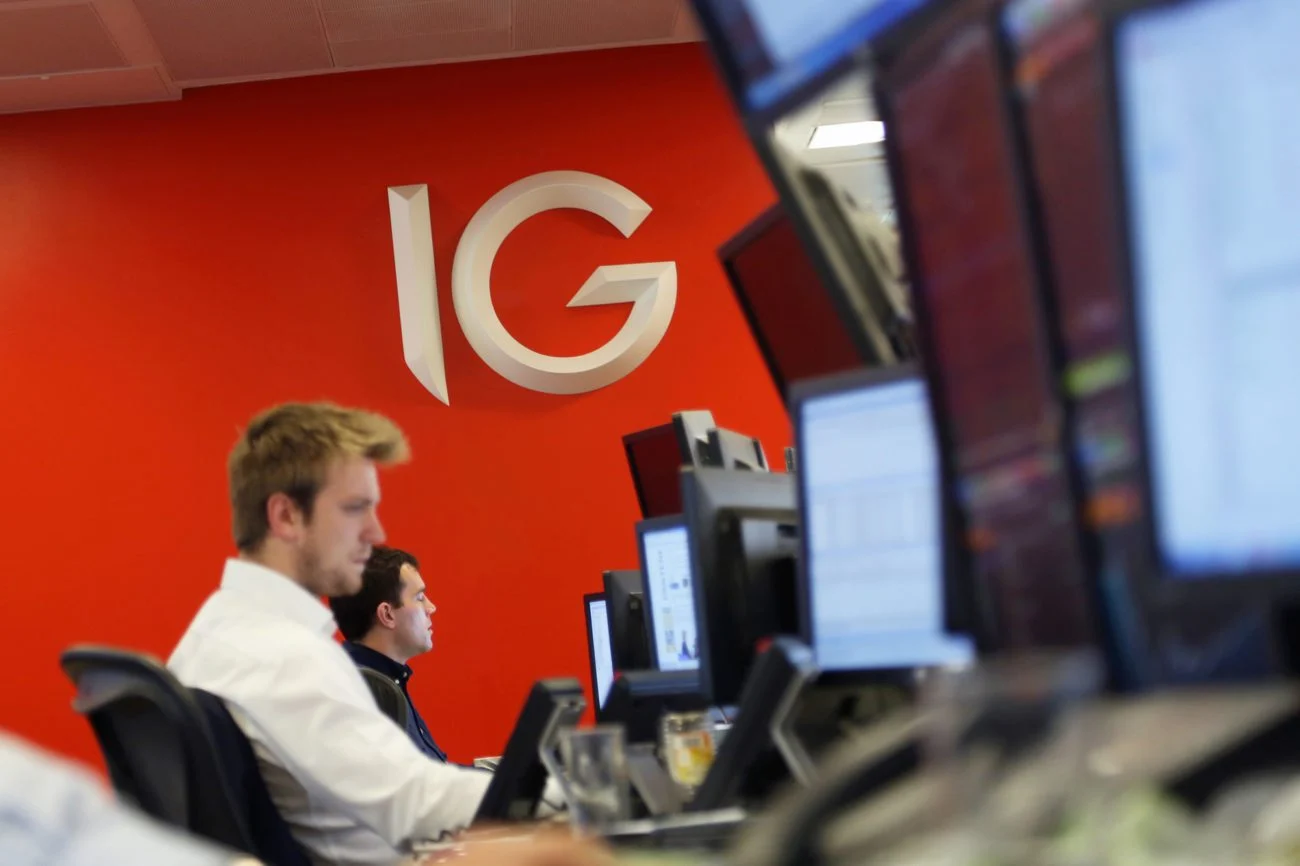
IG Group’s recent acquisition of Underdog Sports Holdings reflects an ambitious strategy focused on prediction markets. This move goes beyond just betting on an emerging industry; it also suggests a belief that a financial-trading company can address vital needs in the gaming sector, such as capital infusion, risk management, and a willingness to explore non-traditional markets.
The deal is substantial. On July 30, IG Group announced reaching an agreement to acquire Underdog for an upfront enterprise value of approximately $1.1 billion, alongside a potential earn-out up to $200 million for shareholders. In addition, Underdog's employees could earn up to $850 million through a management incentive plan (MIP), contingent on the company achieving extraordinary future earnings. The acquisition is anticipated to finalize by late 2026 or early 2027.
While the overall figure of $1.3 billion is accurate, it can also be somewhat misleading. The $850 million MIP is structured as an incentive for management rather than direct compensation to Underdog’s sellers. This distinction is vital. Ben Robinson, a partner at Corfai, points out that IG is effectively paying $1.1 billion, roughly 2.4 times Underdog's revenue from the last twelve months. Even factoring in the full seller earn-out, the valuation only increases to about 2.8 times revenue, which, while significant, does not indicate an exorbitant wager on the prediction market sector right out of the gate.
As a comparison, PrizePicks was acquired by Allwyn at an upfront enterprise value of $2.5 billion, which equated to about 2.9 times its last-12-month revenue and 7.4 times its EBITDA. Though Underdog's valuation is lower relative to revenue, it has a higher multiple related to earnings due to its lower profit margins. Robinson notes, "It’s paid a sensible DFS revenue multiple for a business whose earnings are still catching up, and structured most of the expensive upside around performance.
An important aspect of the agreement is that the most optimistic valuations hinge on the future performance of Underdog. For instance, the first earn-out tranche in the MIP kicks in at $140 million of 2028 EBITDA, compared to a current run-rate of around $115 million. To realize the maximum payout for 2028, EBITDA must reach $400 million, while for 2029's maximum payout, it needs to hit $700 million.
Despite Underdog’s impressive growth—net revenue reached $466 million for the twelve months ending June 2026, reflecting a 21% year-on-year increase—there are indications that this growth is slowing down. Robinson observes a dip to about 11% growth in the first half of 2026, raising questions about whether the prediction market boom generates new revenue or merely attracts spending from existing daily fantasy sports (DFS) customers.
Reaching $400 million in EBITDA by 2028 would require a marked acceleration in growth, resulting in IG imposing significant value in earn-outs and incentives. Additionally, Sam Martin, a lawyer at Wiggin, suggests that this structure may reveal both high expectations for growth and a protective strategy against regulatory challenges looming over the prediction market space. Regulators, tribes, consumer advocates, and established gaming factions have challenged the classification of federally regulated prediction-market sports contracts as financial instruments rather than gambling, leading to ongoing legal disputes.
Ed Birkin, managing director at H2 Gambling Capital, expresses caution, suggesting that the valuation depends heavily on continued market growth. "If the market gets shut down in numerous states, that changes everything," he warns.
Jeremy Levine, founder of Underdog, holds a notable connection with IG's CEO, Breon Corcoran. Levine's previous venture, DFS company DRAFT, was acquired by Corcoran’s Paddy Power Betfair in 2017. This background might suggest a level of confidence and familiarity, though Robinson highlights that the structure of this deal indicates even a well-informed buyer remains conservative in how fully they bet on future success.
Competitive dynamics add another layer of complexity to the deal. Underdog reportedly trails behind competitors like Kalshi and Robinhood based on regulated trading volume in the U.S., having only launched its prediction-market exchange recently. IG Group believes its financial expertise can enhance Underdog's value capture, yet the critical element of liquidity remains a challenge. Analysts like Robinson and Oliver Jones, vp of Partis Capital, emphasize that institutional know-how won't necessarily equate to competitive superiority.
Despite the strengths Underdog holds with a considerable customer base and reputation, IG’s acquisition undoubtedly alters the competitive landscape for existing players in the market. Companies like DraftKings and FanDuel are already testing new models, illustrating a shift toward controlling broader sections of the value chain in the prediction market.
As IG Group moves forward with this multi-layered investment, aiming to capitalize on both current trends and future developments in the U.S. retail trading and prediction markets, it remains intertwined with regulatory uncertainties, operational execution, and evolving market dynamics. The company's acquisition is not simply about acquiring a platform; it's about recognizing and adapting to the complex and rapidly changing intersection of finance and gaming, while also betting on a founder it knows well and expects significant growth.
As a final note, IG's stock fell approximately 20% following the deal announcement, highlighting a divide between investor appraisals and the bullish outlook of its management team. This underscores the inherent risks and opportunity costs associated with large-scale investments in emerging sectors.

