
Nevada officials have criticized Kalshi's recent acceptance of a tax on its revenue in North Carolina, labeling it as "a stunning about-face" that suggests state authority over prediction markets. Abigail Pace, Nevada's Senior Deputy Attorney General, articulated these claims in a legal filing connected to Nevada's ongoing dispute with Kalshi.
Kalshi is currently appealing a ruling from a lower court that favored Nevada's gambling regulators, who earlier in March became the first to prohibit the company from operating in their state. Following Nevada's lead, Michigan and Washington state have also restricted Kalshi's user access.
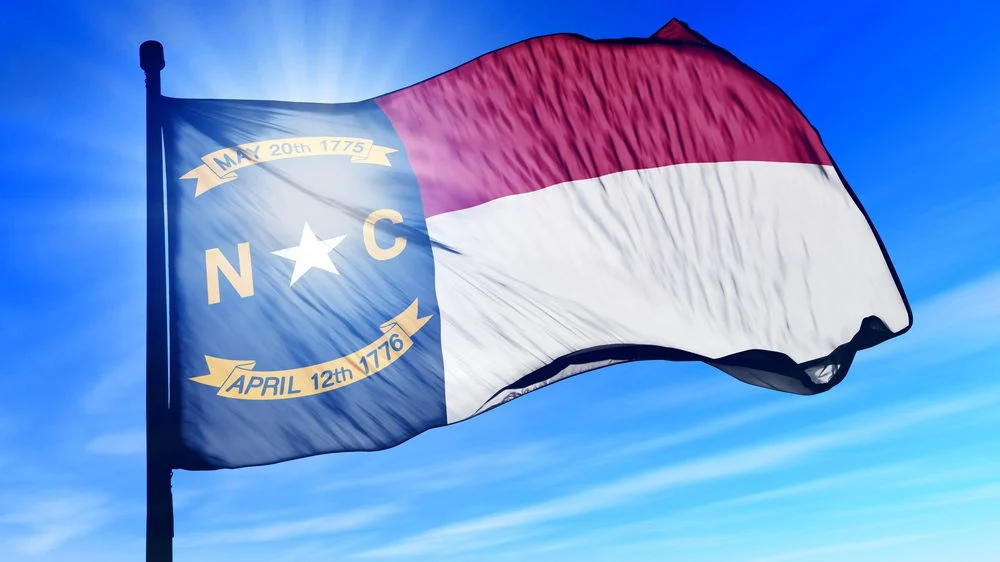
In a move that sparked controversy, Kalshi publicly supported North Carolina's new taxation measures. The state legislature passed Bill SB257 in July, implementing a 6% tax on revenues from prediction market platforms. Kalshi observed that this law acknowledges the Commodity Futures Trading Commission (CFTC) as having "exclusive federal regulatory authority" over prediction markets that are registered and licensed with the CFTC. They stressed that the tax does not impose any regulatory obligations on prediction markets.
North Carolina's approach of recognizing the CFTC as the governing body while levying taxes on the revenue from prediction markets could serve as a potential model for other states. Kalshi has encouraged other regions to consider similar measures, which could lead to tax benefits.
Despite Kalshi's stance, Nevada contends that the acceptance of the North Carolina tax contradicts the company's argument that states lack authority to regulate event contracts. Nevada argued that Kalshi's attempt to draw a line between taxation and regulation is merely a technicality, asserting both are regulatory forms. The state posits that Kalshi's acceptance implies an admission of state regulatory power over its operations, indicating at least that Kalshi cannot avoid Nevada's tax provisions.
Nevada currently imposes a tax rate of 6.75% on online sports betting, one of the most competitive rates nationwide. Given the influence of casino operators within Nevada, it is likely they would resist allowing Kalshi to operate under a similar tax rate.
North Carolina lawmakers recently increased the tax rate on sports betting revenues from 18% to 23%, raising concerns that the 6% tax on prediction markets may drastically reduce the state's gambling revenue. Senator Julie Mayfield expressed concern that the funding for athletic programs, which relies on betting tax revenues, could diminish significantly because of this tax structure.
Companies like DraftKings and FanDuel dominate the betting scene in North Carolina, controlling approximately 70% of total wagers. Both are pivoting towards prediction markets, potentially finding the reduced tax rate in this new area more advantageous. They have even pulled their betting licenses in Nevada to focus on prediction markets.
The varied models of prediction markets complicate the tax collection process for regulators. In traditional sports betting, operators generate revenue directly from wagers, contrasting sharply with prediction markets, where the operator takes only a small fee per transaction. Andrew Gonzalez, the founder of ParlayX, noted that while sportsbooks maintain an 8% to 12% hold, Kalshi's fee per trade is only 1% to 2%, resulting in less tax revenue being generated from substantial volumes.
State regulators face challenges in accurately tracking revenue generated within their borders since market creators often hedge risks across state lines. Gonzalez highlighted that market makers bear the risk and margin, indicating that true regulatory hurdles arise when considering how to manage these entities across multiple states. Unlike sportsbooks that can separately manage operations, prediction market models complicate liquidity distribution across state boundaries.
In light of many states debating the legality of prediction markets, North Carolina has earmarked this opportunity as a means to bolster tax income. Senate President Pro Tempore Phil Berger acknowledged the potential growth in popularity for prediction markets and recognized the taxation measure as an acknowledgment of an emerging product.
Meanwhile, sports teams in New York are entering into partnerships with prediction market operators, even amid concerns of illegality under current state laws regarding sports markets. Mark Conrad from Fordham University noted that teams are eager to capitalize on the monetization opportunities provided by collaborations with companies like Kalshi and Polymarket.
North Carolina exemplifies how states can harness the burgeoning prediction market sector. The outcome of the Ninth Circuit's interpretation of Kalshi's acceptance of the state tax could significantly influence the future direction of this industry.

