
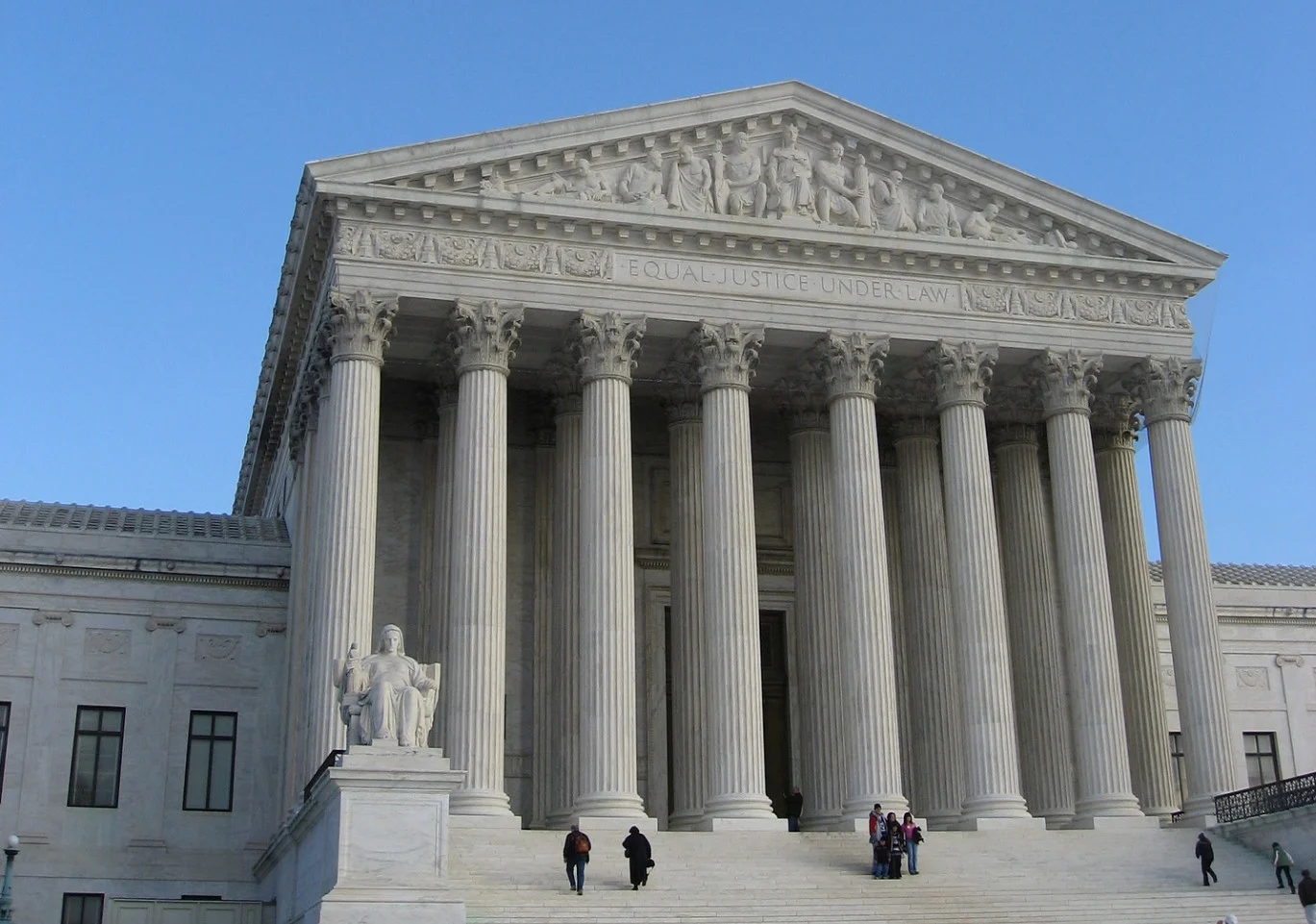
Eight years after New Jersey's successful push to overturn the Professional and Amateur Sports Protection Act (PASPA), the state is seeking to defend its sports betting jurisdiction against the growing presence of prediction markets and sports event contracts. On Wednesday, Attorney General Jennifer Davenport announced that her office filed a petition for a writ of certiorari in the wake of a ruling by the Third Circuit Court of Appeals that favored prediction markets. This crucial ruling, which came down earlier this year in April, prompted New Jersey to act before Thursday's filing deadline.
The heart of the petition lies in whether the Dodd-Frank Wall Street Reform and Consumer Protection Act of 2010 prevents states from regulating sports bets conducted through markets registered with the Commodity Futures Trading Commission (CFTC). Advocates for prediction markets argue that their event contracts fall into the category of financial derivatives subject to CFTC regulation, while states assert that these are merely rebranded sports bets.
While it remains uncertain whether the Supreme Court will take up this case, recent developments might increase its likelihood. A unanimous ruling by a three-judge panel from the Ninth Circuit on August 28 in favor of Nevada created a circuit court split, a situation that often prompts Supreme Court attention.
“We’re calling on the Supreme Court to resolve this issue and recognize that Congress did not silently make the sports-betting industry immune from state law,” Davenport stated.
New Jersey's history with the Supreme Court underlines the gravity of the situation. The state has faced multiple losses in its attempts to advance sports gambling rights, with only one significant victory in its favor—the PASPA case. In her petition, Davenport references that key ruling.
“Just eight years ago, this court reiterated that ‘each state is free to act on its own’ in regulating sports betting,” she highlighted. “But Kalshi has a different view. Kalshi claims to be ‘the first app for legal sports betting in all 50 states’ and believes it can operate without adhering to each state’s laws.”
Responding to the ongoing legal battle, a spokesperson for Kalshi said the platform operates as “an open, nationwide, financial exchange” that isn’t meant to be regulated by multiple state authorities.
“Both the Third Circuit and the District of New Jersey sided with Kalshi because of the CFTC’s exclusive jurisdiction,” the spokesperson added, maintaining that New Jersey's recent filing doesn’t change the prevailing legal understanding.
The Supreme Court's session commences every first Monday in October and typically ends in late June or early July. The Court receives around 7,000 to 8,000 writ petitions each term but accepts roughly 80. For a case to be taken, at least four of the nine justices must agree. Out of the current justices, six were present during the PASPA ruling in 2018.
While there are no SCOTUS prediction market contracts available on Kalshi, Polymarket currently estimates a 41% chance that the Court will consider an event contract case by December 31.
If a hearing occurs, it would signify a critical moment in the evolution of sports betting legislation since the repealing of PASPA. This issue has garnered support from a wide array of stakeholders across gaming companies, Native American tribes, and state regulators. The growing prevalence of prediction markets, particularly during the 2024 presidential elections, has sparked considerable interest and investment, with companies like Kalshi and Polymarket achieving substantial valuations of $40 billion and $21 billion, respectively. Traditional sports betting in the US generated nearly $17 billion in revenue in 2025, amplifying the significance of Davenport’s claims regarding the high stakes involved in this case.
Prediction market platforms collectively reported over $45 billion in trading volume in August, although this was a 15% decline from July, attributed largely to the conclusion of the FIFA World Cup. The American Gaming Association (AGA) estimates that these exchanges have deprived states of approximately $1.3 billion in potential tax revenue. Notably, former New Jersey Governor Chris Christie, who played a pivotal role in the PASPA case, is a key spokesperson for the AGA’s anti-prediction market stance.
The ongoing debate mirrors the federalism vs. states’ rights conflict that surfaced with PASPA, with traditional sports betting under the jurisdiction of state regulators while federal derivatives fall under the CFTC’s authority. Under the leadership of President Donald Trump, the CFTC embraced prediction markets after having previously rejected them.
In this complex legal landscape, Kalshi has been forced to curtail its trading in several states, including Nevada, while the CFTC has actively defended its licensees against state regulations, even initiating lawsuits against multiple states to uphold its authority.
CFTC Chairman Michael Selig, the agency’s sole sitting commissioner, has continuously advocated for the legitimacy of prediction markets and the CFTC’s role in overseeing them. The Commission is currently considering a set of proposals regarding prediction markets, although critics argue these changes may enforce stricter guidelines that could render a Supreme Court review more favorable.
“It’s not a question of whether innovations like blockchain, artificial intelligence, and prediction markets will transform our markets,” Selig remarked during a recent meeting. “It’s a question of where this innovation will take place and who will write the rules.”

