
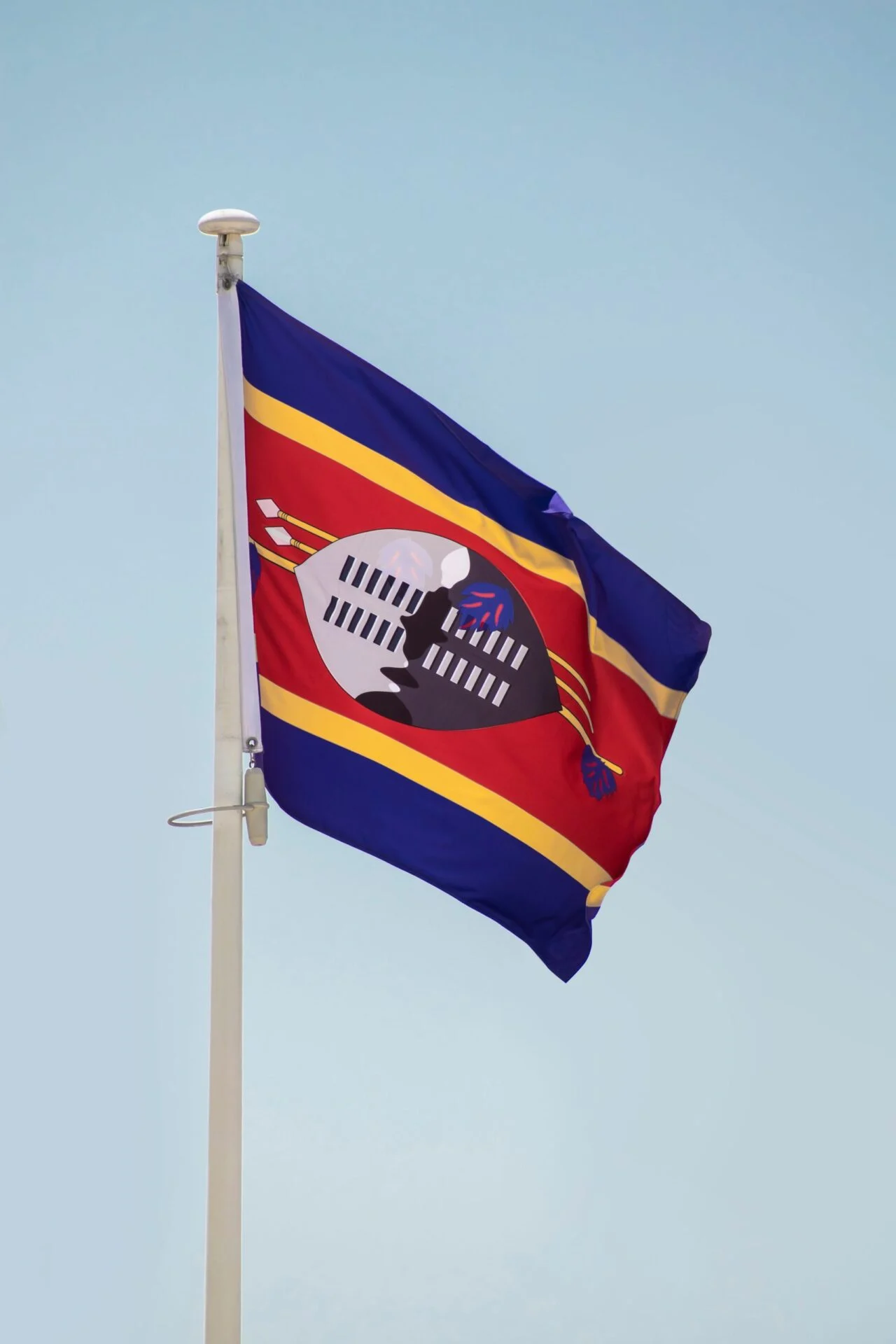
The Royal Eswatini Police Service (REPS) has informed the High Court that its investigation into illegal online gambling in Eswatini has evolved into an international inquiry concerning fraud and organized crime. Detective Constable Ntokozo Dlamini of the Organised Crime Unit submitted an affidavit detailing how evidence gathered from seized devices revealed potential connections between this criminal network and prominent figures, including high-ranking politicians, police personnel, and immigration officials.
More than 400 electronic devices are currently undergoing forensic analysis, with support from INTERPOL. According to INTERPOL's public statement regarding Operation First Light 2026, 240 devices were seized and 82 arrests made in this particular operation within Eswatini.
These devices were acquired following coordinated raids in Mbabane and Ezulwini earlier in 2026, which included a significant operation at the Castle Hotel, a location identified as a key command center for the syndicate. The inquiry originated as a domestic case focused on illegal gambling and immigration violations. In March 2026, police arrested 146 foreign nationals—predominantly from China, Taiwan, Indonesia, Cambodia, and Brazil—and confiscated 313 electronic devices during the initial phase.
Those arrested face various charges under the Gaming Control Act, as well as the Money Laundering and Financing of Terrorism (Prevention) Act and immigration laws. As the forensic investigation progressed, Dlamini indicated that the extracted materials suggested a well-organized operation targeting victims in Brazil and India while operating unlicensed online gambling platforms from Eswatini.
Investigators discovered that the syndicate collected funds, converting them primarily into cryptocurrency, such as USDT, before transferring the assets through financial institutions in Abu Dhabi and the United States, eventually routing them back to Eswatini.
Moreover, the investigation revealed a sophisticated impersonation scam. Officers discovered what appeared to be a fake Brazilian police holding facility at Castle Hotel, complete with uniforms, a bulletproof vest, radios, and a Brazilian Federal Police badge. Members of the network masqueraded as Brazilian Federal Police officers, conducting video calls with victims to falsely inform them of criminal investigations. Victims were coerced into signing deceptive "confidentiality agreements" and transferring money to accounts purportedly managed by the Brazilian Central Bank for "safekeeping."
Approximately 40 Brazilian citizens have been identified as victims of the operation. INTERPOL has deployed its Operational Support Team to Eswatini as part of Operation First Light 2026, which has successfully intercepted illicit assets valued at $293 million across 97 countries.
In response to the ongoing investigation, National Commissioner of Police Vusi Manoma Masango has called for a temporary suspension of gambling license issuance. In a memorandum dated 2 June 2026, he expressed concern that continued licensing during the investigation might allow further infiltration by criminal elements.
Masango affirmed that no individual, regardless of status or influence, is above the law. On 3 August, he emphasized to the Times of Eswatini that, "No individual is above the law, regardless of rank or political influence and we do not fear them."
The investigation has prompted discussions in parliament, with Senate Deputy President Ndumiso Mdluli urging Prime Minister Russell Mmiso Dlamini to evaluate whether politicians have unknowingly been providing accommodations to the foreign nationals involved in these illegal gambling operations. Mdluli stressed that the penalties for offenders must improve to better deter these activities.
In June, 84 of the arrested foreign nationals were convicted solely for immigration offenses, receiving six-month sentences or fines of E500 ($30).
Despite Eswatini’s Gaming Control Act of 2022 being already in effect, the implementation regulations are still pending. Legislators have called to halt new gambling licenses until these regulations are finalized and presented before parliament. The Ministry of Tourism and Environmental Affairs has temporarily paused new applications, renewing only four licenses under strict oversight.
Concerns have been raised that the absence of regulation risks placing Eswatini on international financial-crime watchlists. Forensic examinations of the seized devices are ongoing, with police planning a comprehensive report in the future. The findings from this expanded probe will likely pressure Eswatini to enhance its gambling regulatory and enforcement measures, transforming what began as a small raid into a significant and far-reaching investigation.

