
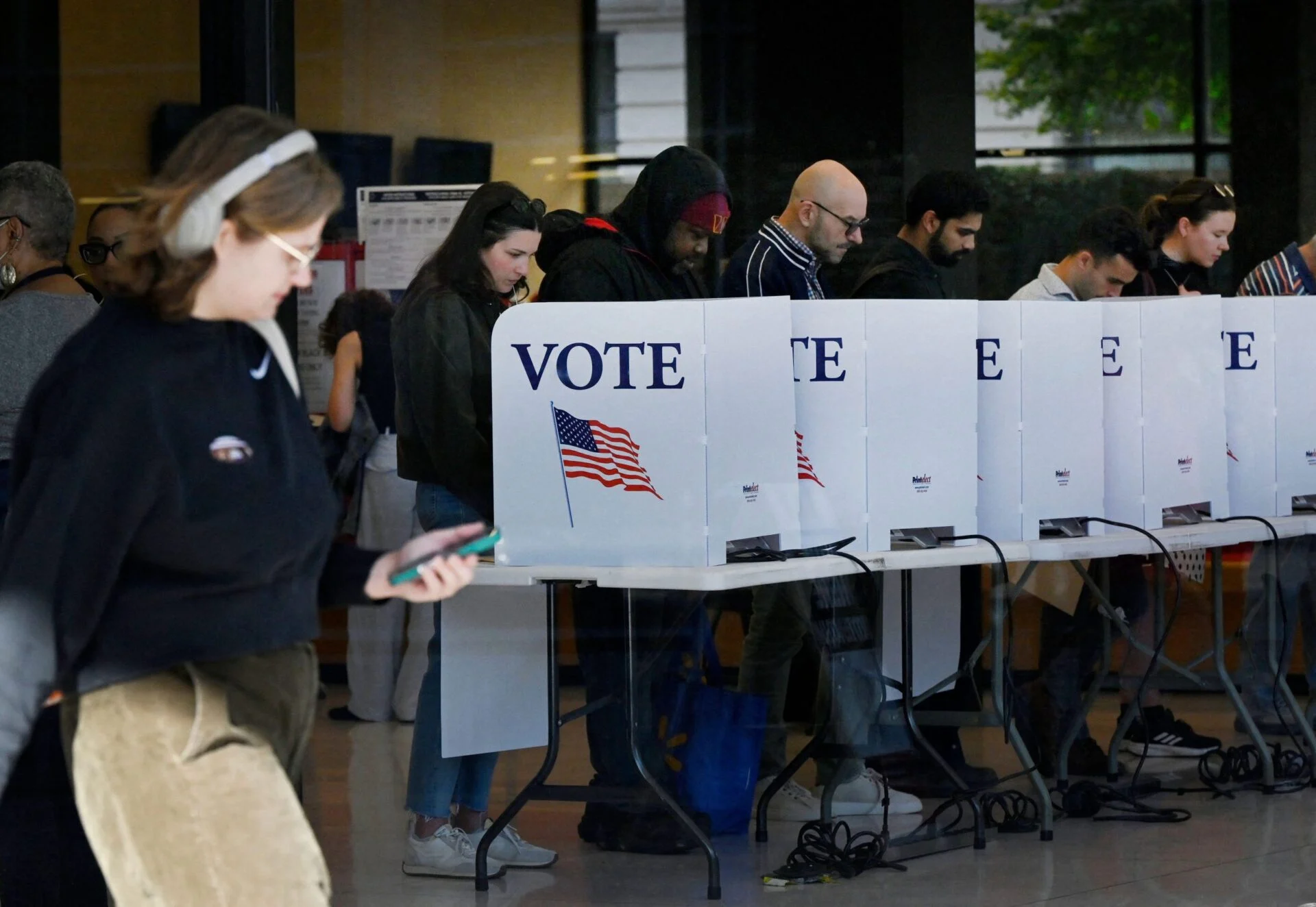
In a decisive showing during the US midterm elections on Tuesday, the Democratic Party secured control of both the Senate and the House of Representatives, positioning them to counter President Trump’s agenda for the remainder of his term.
While this shift in power is significant, experts believe it will not immediately alter the national gambling landscape. Currently, the resolution of issues surrounding prediction markets—one of the most pressing topics in the US gaming sector—is likely to fall more to the Supreme Court than to Congress in the near future.
The current dissatisfaction with President Trump, whose approval ratings have plummeted, along with the Republican Party, may have implications for the future of gambling legislation. Despite their controversies and legal ambiguities, prediction markets have thrived under the Trump administration, particularly due to regulatory allowances by Michael Selig, the Trump-appointed chair of the Commodity Futures Trading Commission (CFTC). Should discontent permeate through to the 2028 Presidential election, a prospective Democratic administration might reverse favorable policies toward prediction markets.
With Democrats controlling the legislature, Trump’s chances to appoint a Supreme Court justice sympathetic to his causes—particularly in the event of retirements among justices such as Clarence Thomas or Samuel Alito—are diminished. Florida Governor Ron DeSantis remarked that the likelihood of confirming a suitable successor to either justice during Trump’s remaining term is “virtually zero.” This could complicate any legal evaluations concerning sports-event contracts if the court decides to take up such cases.
Several local election outcomes also emerged that could affect gaming stakeholders nationwide.
In Nevada, Democrat Aaron Ford won the gubernatorial election, defeating incumbent Republican Joe Lombardo in a closely contested race crucial for the state’s renowned gambling sector. Lombardo had positioned himself as pro-business, controversially asserting the need to support Nevada's gaming billionaires, who provide numerous jobs. He garnered significant political funding from gaming entities, including $3 million from Station Casinos, $2 million from the Fertitta family, and $1 million from Las Vegas Sands. In contrast, Ford received endorsements from labor unions, notably those representing casino staff.
In Ohio, Democrat Amy Acton triumphed over Republican Vivek Ramaswamy for the governorship. Acton expressed support for legalizing online casinos in Ohio but emphasized the necessity of player safety and advertising regulations. Online sports betting and land-based wagering are permissible in Ohio, whereas online casinos remain prohibited. Although Ramaswamy did not publicly state his position on iGaming legalization, his predecessor, Governor Mike DeWine, opposed it, asserting that the state had reached a saturation point after extensive gambling expansion. The Republican-controlled state legislature might present challenges for Acton’s efforts to further iCasino initiatives, contingent on her ability to cross party lines.
In Nebraska, gaming interests closely monitored a ballot measure aimed at legalizing online wagering. The critical Measure 440, intended to authorize online gambling, faced rejection with about 55% of voters against it. Related Measure 441, which would allow regulatory oversight for the proposed online betting, is also anticipated to fail with similar margins.
Turning to Virginia, voters considered localized measures for expanding pari-mutuel wagering. A proposal for such wagering at satellite facilities in Pulaski was rejected with a vote of 56.46% against. Conversely, a comparable measure in Amherst County was narrowly leading with a 50.66% to 49.34% vote count, pending further results.
Meanwhile, in Indiana, three counties appear to have voted against the possibility of establishing a new casino. Allen, DeKalb, and Steuben counties were all asked to permit the application for a casino license, but the only license available could be awarded to just one of the counties even if all three measures succeeded. Initial results indicate rejection rates of approximately 60% for Allen County, 59% for Steuben, and a substantial 65% for DeKalb. Supporters viewed the project as a potential economic boost, whereas opponents cited concerns over the negative impacts of gambling on local communities.

