
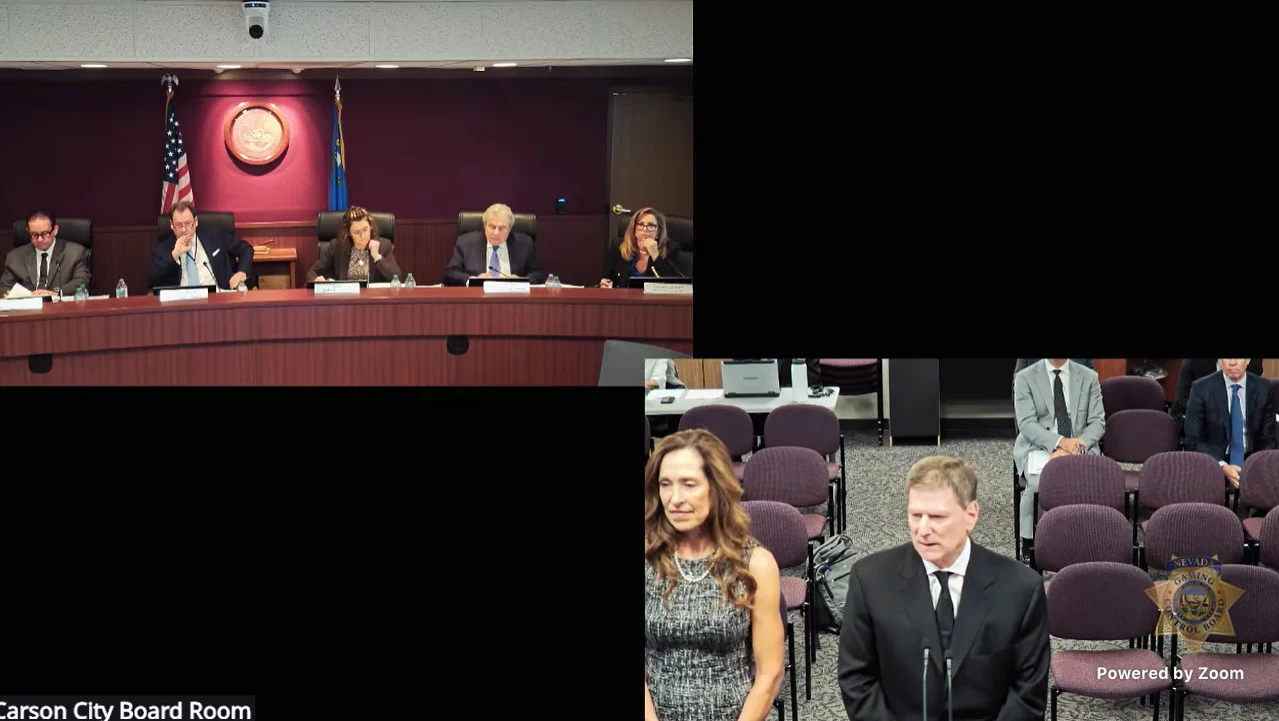
The Nevada Gaming Commission approved the licensing of two Fertitta Entertainment executives, Richard Liem and Steven Scheinthal, on Thursday. This move occurs as Fertitta progresses with its $17.6 billion plan to acquire and privatize Caesars Entertainment. Both executives bring extensive experience, having been licensed multiple times in Nevada since Fertitta's acquisition of Golden Nugget Casinos in 2005.
Despite the Caesars acquisition being a central topic of discussion, details surrounding the transaction remain sparse. Neither Fertitta nor Caesars has released further information following their initial announcement. The go-shop period, which allowed Caesars to seek competing offers, expired on July 11, though there were reports of investor Carl Icahn considering a last-minute bid, but no updates have been provided since the deadline.
When questioned about the status of the deal post-July 11, Liem’s response was notably brief. He stated, “I would say when it comes to Caesars, and that transaction, Caesars is a public company, and so Caesars will make whatever public announcements that they need to make.” Caesars also refrained from commenting on the deal when approached on Thursday.
Before the deal finalizes, it must pass antitrust investigations, which could be a significant regulatory obstacle. Caesars and Fertitta's Golden Nugget brand currently compete in six U.S. markets, including three in Nevada: Lake Tahoe, Laughlin, and Las Vegas. The Nevada Gaming Control Board (NGCB) and the NGC did not address competitive concerns during the licensing approval process for Liem and Scheinthal. Previously, Caesar's acquisition by Eldorado Resorts in 2020 required the divestment of some assets for regulatory approval. The NGCB has indicated it will await federal rulings before making any state-level decisions on the current transaction.
In addition to the executives' licensing, a Hart-Scott-Rodino antitrust application has been submitted to the Federal Trade Commission. Liem confirmed this filing but emphasized the unpredictable timeline of the review process, citing complexities in large mergers illustrated by a recent extension of a restraining order in the Paramount Skydance and Warner Bros Discovery case.
Questions arose regarding Tilman Fertitta's role as U.S. ambassador to Italy and San Marino. Liem clarified that Fertitta is separated from daily business operations due to ethics rules but provides strategic direction. Fertitta maintains some privileges, such as involvement with the NBA's Houston Rockets, but cannot engage in gaming or hospitality matters.
Scheinthal noted that he traveled to Las Vegas primarily for union negotiations, highlighting a positive relationship with the Culinary Union.
Addressing the integration of operations, Scheinthal indicated that the plan is for Golden Nugget to adapt its assets to better fit Caesars’ larger framework, particularly in terms of employee benefits and anti-money laundering compliance. He stated, “They’re much larger than us, the Caesars organization, they have a tremendous number of people, and it’s easier for us to integrate our properties into their system.”
Caesars is still dealing with the repercussions of a $7.8 million fine related to failures in anti-money laundering compliance, connected to illegal bookmaker Mathew Bowyer. Scheinthal expressed confidence that Caesars has a capable compliance department and believes that integrating into Caesars’ system will be more manageable moving forward.
During discussions, Scheinthal also addressed broader issues in the gaming industry, including prediction markets. He suggested that the matter will likely reach the Supreme Court, hinting that state rights advocates have a strong chance of success.
On the subject of gaming expansion in Texas, where Fertitta is based, Scheinthal expressed skepticism about the prospects for casino legalization, citing the current political environment. Despite Fertitta's connections in Houston and interest in potential developments, he said, “I do not envision that gaming would come to Texas based on current state politics.” He speculated that absent significant political changes, actual prospects for gaming expansions could be delayed until past 2032.

