
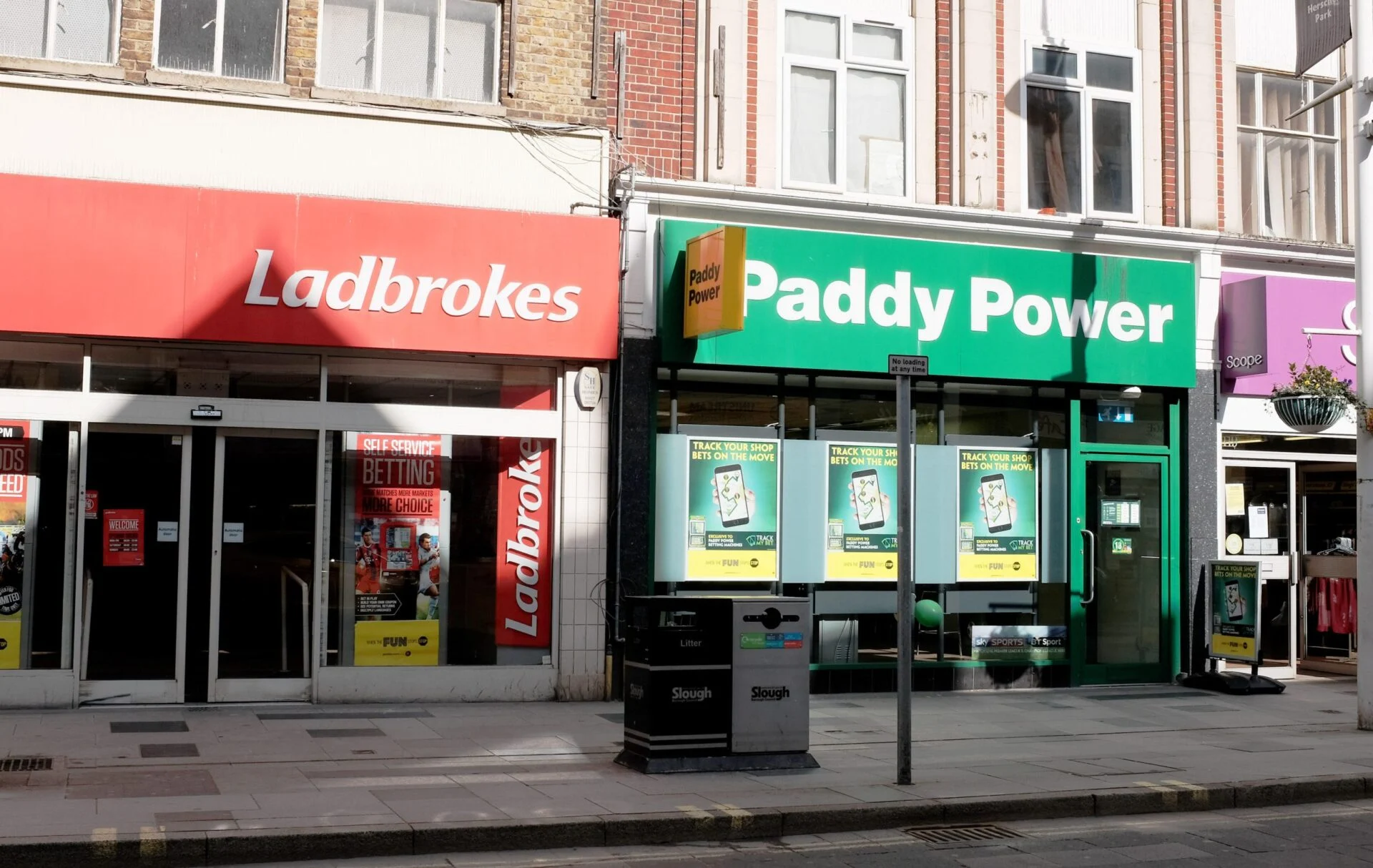
The gambling sector has expressed strong discontent following Prime Minister Andy Burnham's comments linking betting shops to the decline of Britain’s high streets, alongside references to vape shops and dubious businesses.
Burnham's administration plans to eliminate the “aim to permit” principle from the Gambling Act 2005, which would allow local authorities more power to deny applications for gambling venues. Furthermore, new adult gaming centers will now need planning permission to operate.
The most controversial aspect of the announcement was the language used. Burnham argued that betting shops and vape stores have supplanted the stores, services, and community spaces that people truly desire. The prime minister presented the policy as a means to control “dodgy businesses.”
Bookmakers have challenged this narrative, asserting that it bears little connection to actual market conditions. The number of betting shops in Britain has decreased to fewer than 5,900, down from nearly 9,000 in 2015, indicating a contracting retail sector, not one expanding uncontrollably.
Greg Knight, CEO of JenningsBet, expressed that the comparison to illegal businesses is insulting to customers and employees alike. “What sort of ‘dodgy’ business provides employment for 40,000 people, finances the entire British horseracing industry, and pays billions in taxes and rates?” he questioned.
In terms of growth, JenningsBet has opened four new shops this year but has also closed three, resulting in a net gain of just one outlet. Knight warned that new openings may halt altogether if councils gain more discretion over applications, which have already dropped significantly. He suggested that politicians might be conflating betting shops with adult gaming centers (AGCs), which operate under different regulations.
The AGC sector echoed these concerns. Alistair Gair, Bacta’s communications director, highlighted that the number of AGCs fell from 1,610 in 2015 to 1,502 last year, arguing that this industry is characterized by decline rather than dominance on the high streets.
Gair emphasized that AGCs fill vacant units, provide jobs, and offer supervised, low-stake entertainment in regulated, alcohol-free spaces. He cautioned that restricting licensed venues could lead customers towards unregulated, illegal options that lack adequate safety measures.
Christopher Snowdon from the Institute of Economic Affairs argued that Burnham has misidentified high-street decline's root causes, asserting that betting and gaming businesses have not usurped a vibrant retail economy, but rather have become more prominent amid the closure of traditional retail stores.
He pointed out that supermarkets and online shopping have permanently diminished the demand for the traditional retail sectors, leading to a high street increasingly filled with services requiring in-person consumption such as pubs, cafés, and repair shops.
Industry leaders defend their roles within the community. Rank CEO Richard Harris, during a recent year-end results call, stated that Rank takes pride in viewing their venues as community assets that provide supervised gambling and safe entertainment.
Patrick Jay, a consultant and former William Hill executive, believes the industry has struggled with leadership and has often been outmaneuvered by opponents shaping public discourse. He insisted on the need for the sector to better counteract negative narratives with timely, proactive outreach, particularly via social media.
While statistics can illuminate the situation, they alone do not convey the perceptions of those frequenting high streets. Therefore, it’s vital for the gambling industry to establish its local value persistently, especially during times of perceived threat.
The challenges for retail betting now rest in the hands of Vicki Foxcroft, the newly appointed minister in charge of gambling. She takes on an industry she believes has been unfairly portrayed, facing a prime minister who has firmly decided his narrative and a policy that obscures complex legislative questions.
The path ahead will not be straightforward, reminiscent of the classic joke about a tourist asking for directions in Ireland: “If I were you, I wouldn’t start from here.”

