
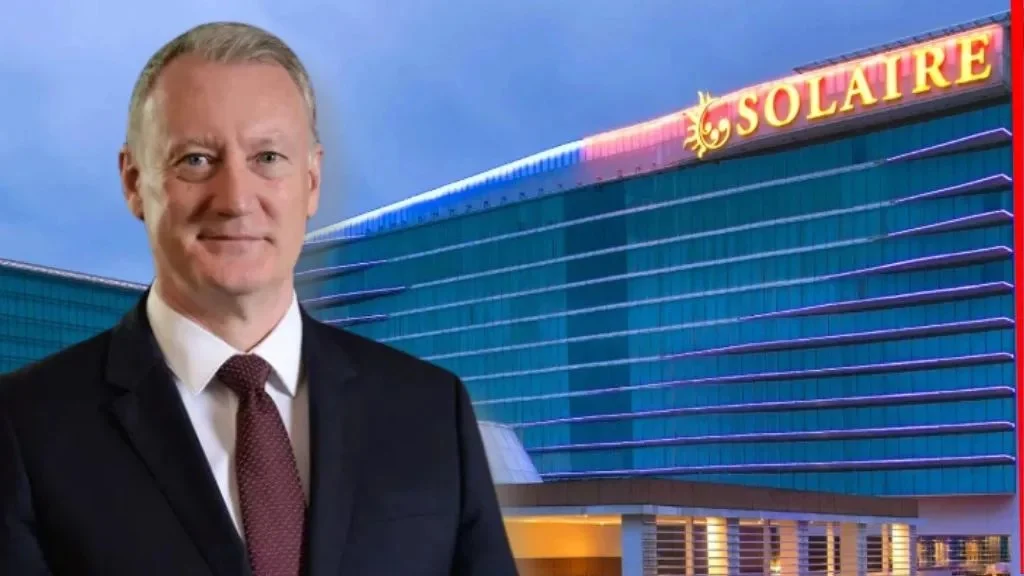
Last year, when asked about the potential impact of online gaming, Greg Hawkins, then Chief Operating Officer at Bloomberry's Solaire North integrated resort, described it as an opportunity rather than a threat. Now serving as Bloomberry's Group President and COO, Hawkins is intensifying efforts in Asia's largest legalized online gaming market.
In a recent interview, Hawkins emphasized the significant potential of online gaming, stating, "Online presents very big upside if we can execute properly. We’re at a point now where technically we have the ability to execute properly, which means effective marketing. So that’s a significant focus."
Bloomberry made a substantial move in July by officially launching FUNaloMAX, a mass market online platform developed using in-house technology. "Online has been about ensuring that we have strong stability on the platforms that support our online consumer experiences," Hawkins explained. He noted that Solaire Online, an established online brand, is complemented by FUNaloMAX, which aims to attract a broader online audience.
Under Hawkins’ leadership, Bloomberry revamped its online operations, launching MegaFUNalo in mid-2025 as a gaming and entertainment platform alongside Solaire Online, which received its regulatory license in 2021, aimed at helping traditional casinos during pandemic-related restrictions.
Despite initially encountering technical issues, particularly regarding guest experience, Hawkins reported that improvements were underway. "We quickly recognized some technical teething problems," he said. Currently, Solaire Online is set to transition to an in-house platform imminently.
As Bloomberry begins ramping up its marketing efforts for FUNaloMAX, Hawkins indicated that branding awareness and direct marketing to customers would be a focus. He described the marketing strategy as involving various offers to engage potential players. According to Blask, a global iGaming market intelligence platform, FUNaloMAX was ranked 70th out of 335 Philippine brands tracked within a month of its launch, positioning it as a growing contender in the fragmented market.
Bloomberry's second quarter reports indicated signs of recovery following a full-year loss of PHP2.8 billion (approximately US$45.4 million) in 2025, despite challenging market conditions. Hawkins is prioritizing the recovery of Solaire Entertainment City, which historically led the Philippine gaming market.
The previous year's quarter saw Solaire Entertainment City's gross gaming revenue (GGR) drop 27% from the previous year, with declines in VIP play, mass tables, and slots. In contrast, the most recent quarter's GGR increased by 18%, including an 81% rise in VIP revenue.
Hawkins highlighted that maintaining healthy margins requires a strong emphasis on cost and capital expenditure management, which he believes is critical for business functionality moving forward.
Discussing broader economic challenges, Hawkins acknowledged the softer economic outlook and the ongoing effects of the post-POGO (Philippine Offshore Gaming Operators) landscape. The POGOs were banned in 2024 by President Ferdinand “Bongbong” Marcos Jr. amid allegations of criminal activity and pressure from Beijing. Hawkins noted that the landscape has changed significantly since the POGOs, which had previously driven revenue across the gaming sector.
He also mentioned the impact of recent global events, most notably the crisis in the Gulf region, which had caused immediate ramifications for their operations. While they have adjusted, rising fuel costs continue to be a concern.
Looking ahead, Hawkins sees significant potential in the local and international markets. "The scale of the market in Metro Manila and in the Philippines generally is still very significant because of population growth and the demand for entertainment."
He expressed optimism about the international market, emphasizing that successful integration requires a collaborative approach between public and private sectors. He pointed to Entertainment City as a model of strategic development aimed at boosting tourism and job creation in the area.
As Bloomberry integrates Solaire into its broader strategy, Hawkins recognizes the importance of adapting their offerings to meet market demands. Recent enhancements include diversifying entertainment options at the resort and leveraging their existing facilities more effectively.
While Solaire faces increased competition with the upcoming opening of Westside City, Hawkins believes that this new property could ultimately benefit the area by increasing awareness and accessibility. He acknowledged the necessary competition in the gaming sector but noted that Solaire's positioning is focused on maintaining its strength and reputation in the premium market segment.
The management team is closely analyzing the property’s market position, considering how to shift resources to better cater to a wider audience in light of changing trends within the gaming sector.
Solaire North, now known as Solaire Quezon City, has been well-received since its opening, showing significant GGR growth despite a flat market for licensed casinos. Under the leadership of Damian Quayle, appointed as COO of Quezon City last year, the strategy focuses on entertainment and enhancing guest experiences. Quayle noted that the gaming environment is designed to be engaging, with a theme-park-like atmosphere.
As part of their expansion strategy, Bloomberry has sought to refresh dining options and entertainment venues at both locations while collaborating across facilities to enhance overall synergy. The company remains focused on maximizing the performance of both Solaire locations as they adapt to an evolving gaming landscape.
Finally, Bloomberry is exploring international expansion opportunities, although Hawkins insists that fixing existing operations takes precedence before embarking on new projects. The company is exploring potential developments, including a resort in Cavite, signaling interest in expanding its footprint outside of established gaming areas.
Michael Cohen, who has covered the casino industry in Asia since 2006, continues to parse the implications of these developments on the market landscape.

