
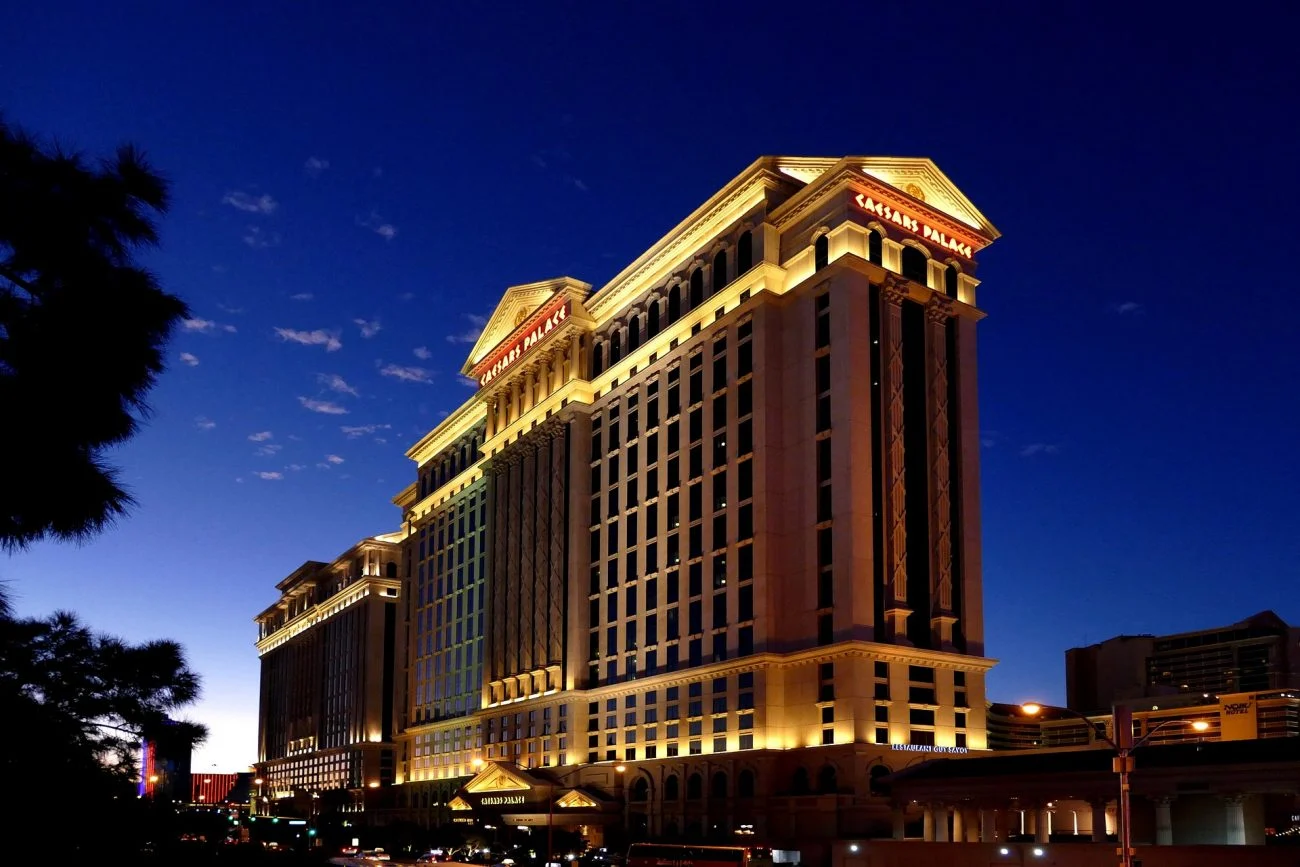
Caesars Entertainment reported mixed financial results for the third quarter of this year, reflecting a decline in its Las Vegas operations while showing growth in its regional and digital segments. The company is in the process of completing its acquisition by Fertitta Entertainment, a $17.6 billion deal announced in May after extensive negotiations with investor Carl Icahn. The acquisition is expected to finalize by the middle of next year. On September 17, the Federal Trade Commission requested further documentation related to the merger, which has delayed the antitrust approval process by at least an additional 30 days. Additionally, on September 22, Caesars' shareholders endorsed the merger, approving it with a 65% majority.
For Q3, Caesars' revenue from Las Vegas dropped 2% year-over-year to $930 million. Adjusted EBITDA fell to $343 million, marking a 10% decline, while net income saw a sharper drop of 40% to $79 million. To date, Las Vegas revenue has decreased 2%, with adjusted EBITDA down 8% and net income off by 21% for the year.
As the company prepares to transition to private ownership post-acquisition, its share price has plunged from its peak of over $100 in 2021 to approximately $29 today. On Wall Street, shares dipped slightly by less than 1% during Tuesday's trading. Analysts were not invited for a call this quarter due to the merger, but CEO Tom Reeg addressed anticipated changes at last month’s Global Gaming Expo (G2E) in Las Vegas. He remarked that operating a business under the pressures of quarterly expectations is unhealthy and emphasized the excitement of merging their extensive hospitality operations into a unified ecosystem.
Caesars' regional performance stood out positively. The regional segment's revenue grew by 6% to $1.6 billion, and adjusted EBITDA increased by 3.5% to $524 million. For the year so far, regional adjusted EBITDA is up 4.5% at $1.4 billion, alongside a 6% rise in net income to $69 million. Currently, Caesars manages 54 properties across 20 North American jurisdictions, with the majority being regional venues outside Las Vegas. Fertitta Entertainment’s Golden Nugget brand operates eight casinos, seven of which are located outside of Las Vegas.
Both companies compete in several regional markets, including Lake Tahoe, Laughlin, Atlantic City, Lake Charles, Danville, and Biloxi. In 2020, when Caesars was acquired by Eldorado Resorts, several properties were sold or divested to expedite regulatory approval. Reeg indicated that he wouldn’t be shocked if a property or two were sold during this transaction.
At the end of the quarter, Caesars reported $864 million in cash and equivalents against a total debt of $11.6 billion, which will be taken on as part of the Fertitta merger.
Caesars Digital provided a positive asset for the company, recording $326 million in Q3 revenue, a 5% year-over-year increase, and a remarkable 57% rise in adjusted EBITDA to $44 million. The net income for this quarter shifted from a $21 million loss in the same period last year to a net gain of $4 million. Year-to-date, digital revenue has grown 6%, adjusted EBITDA has increased by 20%, and net income has nearly tripled, reflecting a 194% surge.
Digital remains Caesars’ most lucrative growth area, with speculation about a potential divestment arising prior to the Fertitta acquisition. The company operates online sports betting in 28 North American jurisdictions and offers iGaming in six. Notably, Caesars is one of the few gambling companies that has avoided engaging in prediction markets, sensing that they could pose risks to retail casino licenses. In contrast, many of Caesars' competitors, such as FanDuel and DraftKings, have integrated prediction markets into their strategies, making substantial investments in customer acquisition.
At G2E, Reeg criticized prediction markets and mentioned that Kalshi had created contracts to wager on whether Caesars would be acquired. He indicated he could have taken advantage of these contracts if inclined, saying, "There was nowhere in their rules that said I couldn’t place a bet."

