
The Gambling Commission has released its industry activity report for the financial year spanning April 2025 to March 2026, revealing a 4.4% increase in gross gambling yield (GGY), which reached £17.5 billion. This growth is primarily attributed to remote gambling, contrasting with a decline in physical gambling venues. Excluding all lottery-related activities, GGY rose to £13.2 billion, marking a 4.7% increase compared to the previous year.
Remote casino, betting, and bingo activities were particularly robust, generating £8.3 billion in GGY, a year-on-year increase of 6.9%, thus accounting for about 63% of the non-lottery industry’s yield. Online casinos alone reported a GGY of £5.7 billion, with £4.8 billion coming from slot games. Remote betting totaled £2.4 billion, led by football at £1.2 billion and horse racing at £769.3 million, while remote bingo contributed £147.8 million.
The trend continued in the first quarter of 2026, where online verticals generated £2.2 billion, with remote casinos responsible for 68.3% of that amount, equating to £1.5 billion. Overall, the first quarter GGY was noted at £4.4 billion, including lotteries, or £3.4 billion when excluding them.
As of March 31, 2026, the UK had 2,154 licensed gambling operators, reflecting a 1.1% decrease from the previous year. However, the total number of separately licensed gambling activities saw a slight uptick of 0.4%, rising to 3,097.
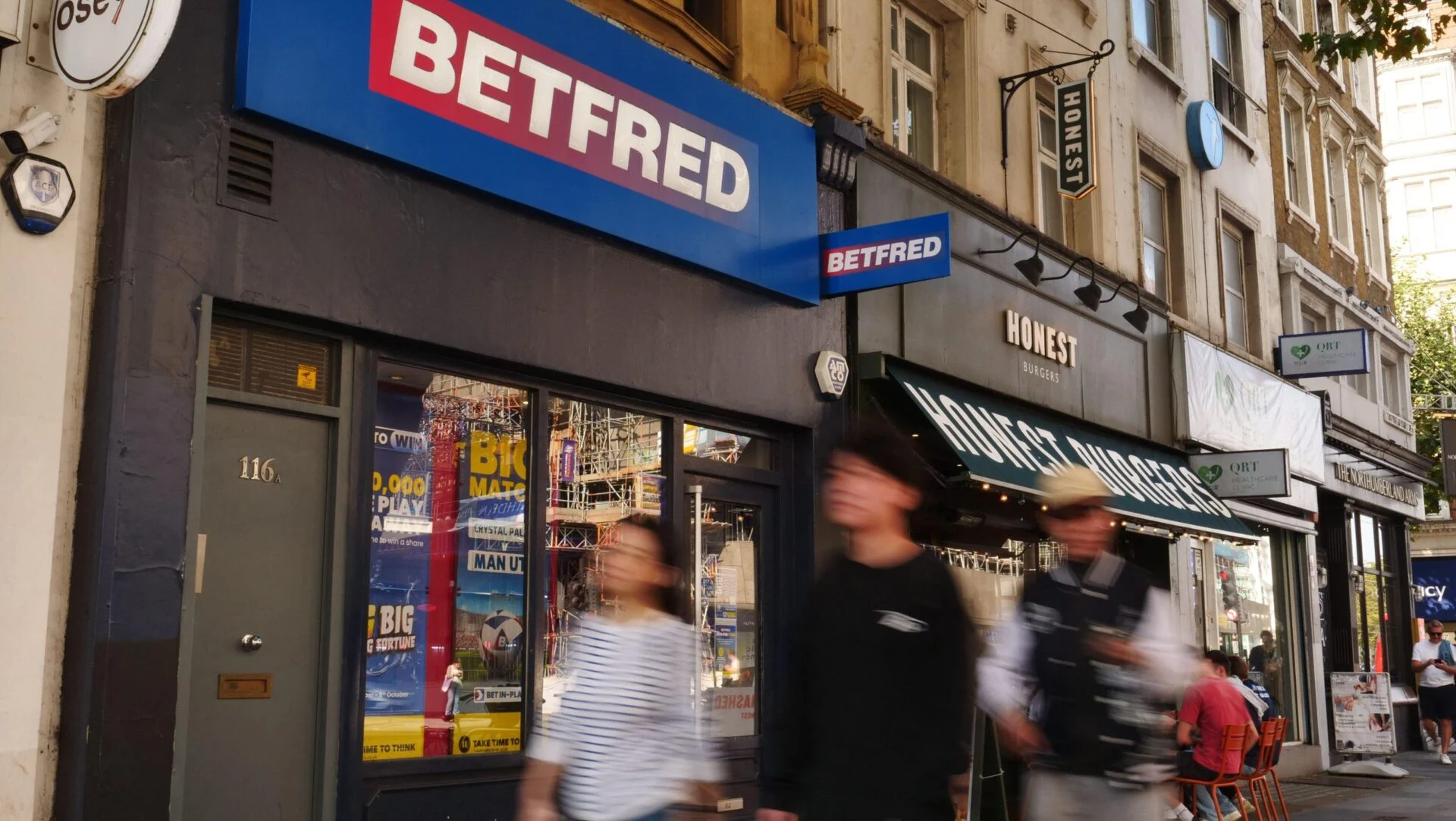
The land-based gambling sector, which includes adult gaming centres (AGCs), betting shops, bingo halls, and casinos, accounted for £4.9 billion in GGY, a modest 1.1% increase from the prior year. The number of licensed gambling premises, however, decreased by 2% to 8,081. Betting shops have faced declines for twelve consecutive periods, totaling 5,617, which marks a 3.6% drop and the closure of 208 shops year-on-year. Major retail operators like William Hill and Betfred have been reducing their footprint by shutting down numerous shops.
In terms of non-remote gambling, betting was pegged at £2.4 billion (down 3.3%), while non-remote casinos generated £933.9 million (up 0.4%) and non-remote bingo garnered £703.8 million (up 8.2%). Gaming machines in arcades reported £800.1 million in GGY, an increase of 10.7%, predominantly from adult gaming centres at £761.4 million, a rise of 11.3%. Overall, gaming machines contributed £2.7 billion to GGY, reflecting a 4.3% upswing. The count of gaming machines in licensed venues was reported at 191,804 in the last quarter.
Prime Minister Andy Burnham has recently proposed measures aimed at repealing the existing "aim to permit" rule governing betting shops and 24-hour slot machine arcades in Great Britain. This will shift the presumption away from granting permissions for such venues. AGCs in England providing round-the-clock access to gambling machines will now require planning approval. Additionally, the Prime Minister is considering a tax increase on gaming machines in the UK as suggested by the Social Market Foundation, which may be featured in the upcoming autumn budget.
The National Lottery also portrayed a positive trend, with ticket sales reaching £7.9 billion, up 0.9%, while prize payouts dipped slightly by 0.6% to £4.5 billion. Contributions to good causes grew by 2.8%, estimated between £1.6 billion and £1.7 billion. Furthermore, large society lotteries experienced a sales increase of 5.7%, reaching £1.2 billion, with prizes up 6.1% to £335.6 million, and contributions up 2.8% to £498.5 million.
Participation in gambling activities remained stable, as indicated by the Gambling Commission's annual Gambling Survey for Great Britain (GSGB), which encompassed 5,277 adults surveyed between January and May 2026. About 49% of respondents reported having gambled in the past four weeks, a consistent figure compared to previous years. Excluding only those who participated in lottery draws, gambling participation was 28%, suggesting that lottery-only players made up roughly 21% of the adult demographic.
Online gambling participation reached 39% over the four weeks surveyed (16% when excluding lottery-only players), while in-person participation accounted for 29% (18% excluding lottery-only players). The most popular non-lottery activities included scratchcards (13%), betting (10%), and online instant win games (8%). Notably, betting preferences skewed male, with 16% of men engaging in betting compared to 4% of women; participation was highest among those aged 45 to 64 (56%-59%), while the 35 to 44 age group had the most significant engagement when excluding lotteries at 35%. Motivations for gambling were largely driven by the desire for large winnings and entertainment, and 42% of respondents reported feeling positive about their recent gambling expenditures.

