
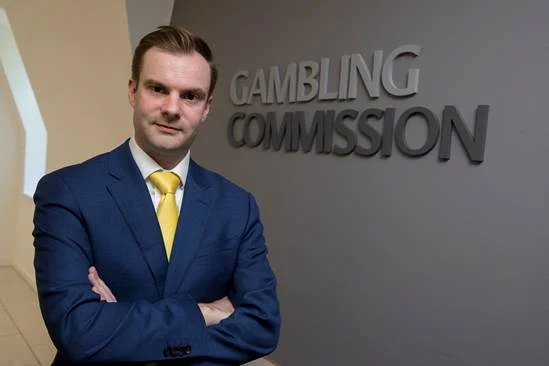
Tim Miller has concluded a decade of service at the UK’s Gambling Commission, where he played a pivotal role in implementing the 2023 white paper reforms covering aspects like age verification, game design, and financial risk assessments. He also oversaw the launch of the Gambling Survey for Great Britain (GSGB).
Among his key achievements is the National Strategy to Reduce Gambling Harms, which successfully involved the financial services sector in harm prevention. This initiative spurred challenger banks, including Starling, to incorporate gambling blocks into their offerings.
Miller announced his departure in June, and it was finalized last month. He now heads GamReg Consulting, with early clients such as Gaming Compliance International (GCI), which offers transaction and market monitoring tools to regulators, and Spectrum Gaming Group. "The reaction since launching, especially at G2E in Las Vegas, has been absolutely fantastic," Miller stated.
Miller's exit came during a critical phase for the Gambling Commission, marked by Chief Executive Andrew Rhodes stepping down in April. The implementation of financial risk assessments (FRAs) was confirmed in July, with full rollout still pending.
Ready for new challenges, Miller clarifies that he was not pushed out by the Commission's direction. "I wasn’t looking to escape the Commission, I was just ready for the next challenge," he explained. While his name circulated as a possible successor to Rhodes, he had never considered the role, citing a preference for flexibility.
He views the Commission's recent senior departures as coincidental rather than indicative of deeper issues. "As important as individual leaders are, they’re not more important than the whole," Miller remarked, highlighting that the Commission employs over 300 people.
Miller identifies the illegal gambling market as the Commission's most significant challenge, emphasizing that expectations of a regulator’s capabilities can be unrealistic. He draws parallels with organized crime, suggesting that expecting a small regulator in Birmingham to tackle illegal gambling alone is impractical. "If people think a gambling regulator will defeat the illegal market by itself, we’re destined to fail," he contended.
He addressed criticisms of the GSGB regarding its portrayal of gambling harm, suggesting that detractors have been silent about the limitations of the Health Survey for England, which indicates rising rates of issue gambling. "If anybody suggests there’s a single survey or a single piece of data that gives you the absolute definitive picture on an issue, then frankly, they’re kidding you," Miller remarked.
FRAs have triggered considerable industry pushback, largely due to branding issues, as Miller notes many opponents have incorrectly referred to them as affordability checks. "For one thing, I think they’d be quite difficult to achieve," he stated, admitting he does not favor affordability checks either.
Regarding financial implications, he discussed the findings of a pilot that revealed a cohort of at-risk individuals often generating considerable revenue without being identified by existing tools. "Once you’ve got data that identifies those people, you need to do something about it, and that clearly could have a financial impact," he explained, emphasizing the potential benefits of reducing documentation requests for consumers.
Miller disputed claims suggesting the Commission delayed decisions on approving FRAs, labeling those reports as inaccurate. The initial phase will apply to larger operators and clients with significant net deposits, with thresholds eventually set at £1,000 within 24 hours or £3,000 over 90 days for further assessment.
He acknowledged concerns over high-value customers moving to unlicensed sites following FRA implementation but maintained that such risks often stem from operators' commercial decisions that push players towards the illegal market.
Responding to speculation about conflict of interest after Andrew Rhodes accepted a consultancy position at Hawkbridge, Miller rejected any similar implications regarding his own consulting work. "No, not at all. I was very clear that I didn’t want to move into roles that would compromise my independence," he said.
He accepts that while he has access to confidential information from the Commission, his expertise remains his own. "I don’t think there’s any industry where you can say somebody can’t make use of the skills they’ve built up," he stated.
Miller’s new role will focus on three main priorities: sharing insights with emerging jurisdictions, especially in the US; pressing tech platforms like Meta about illegal gambling advertising; and facilitating communication between developers and regulators. He recalls past experiences with vendor pitches laden with jargon, underscoring his desire to improve informative exchanges.
He aims to maintain distance from the UK's currently contentious debates in the gambling sector, describing the discourse as occasionally "toxic". "I’ve had situations on social media where threats have been made against my own family. That is simply unacceptable," he remarked.
Miller's advice to the sector is to "keep your passion, but find a way to work with people who have different views."

