
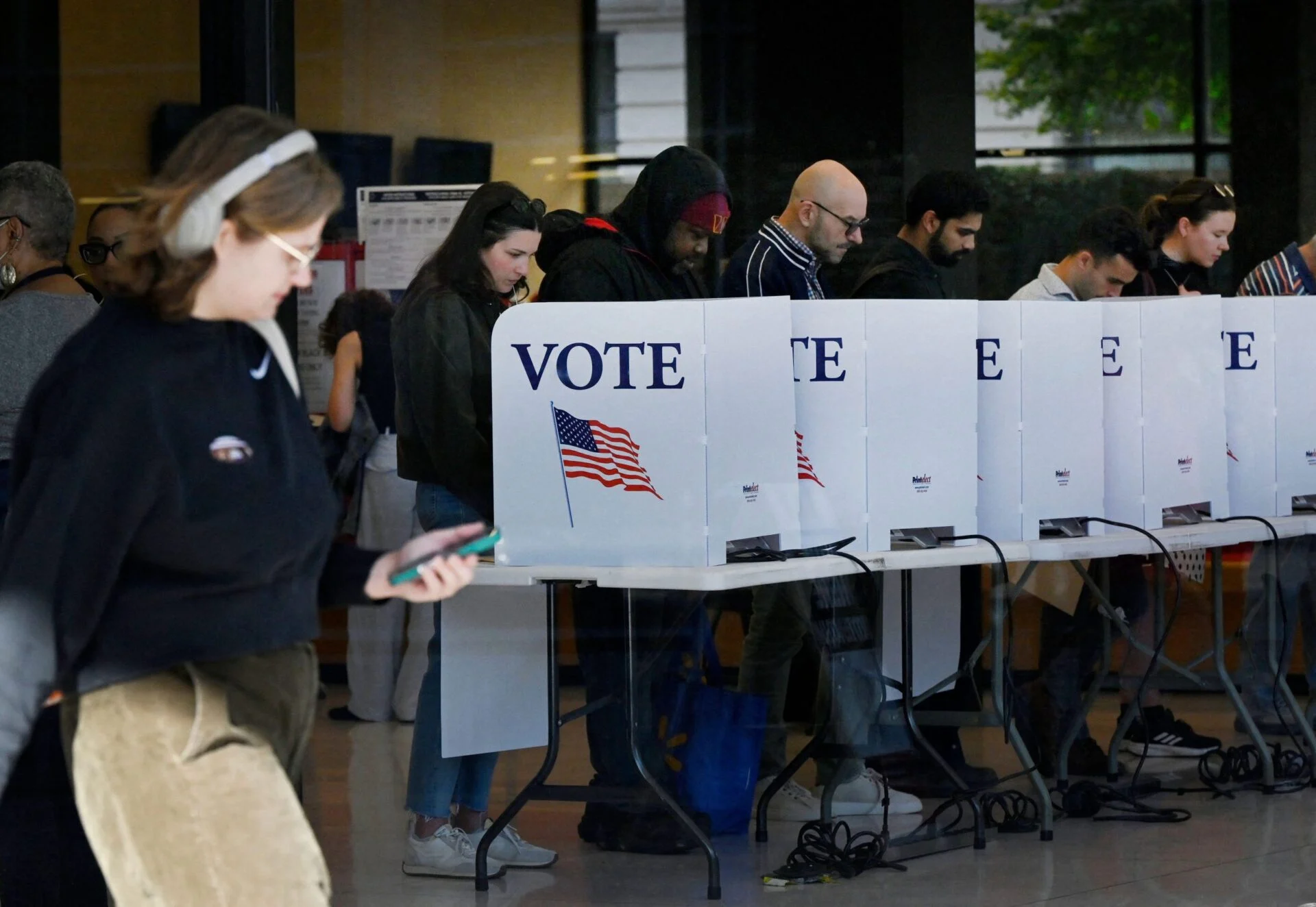
In the recent midterm elections, the Democratic Party achieved a significant victory, securing control of both the Senate and the House of Representatives. This development will enhance their ability to challenge President Trump’s initiatives during the remainder of his term.
While the national results might not have an immediate effect on the gambling industry, discussions surrounding prediction markets are anticipated to be resolved more through the Supreme Court rather than through congressional action in the near future.
The current dissatisfaction with Trump, whose approval ratings have plummeted, and with the Republican Party may become more pertinent in the coming years. Under Trump's administration, prediction markets received considerable backing despite their contentious legal status, thanks to Michael Selig, the CFTC chair appointed by Trump, who offered broad regulatory support. However, if public discontent persists through to the 2028 Presidential election, a future Democratic presidency could pose challenges for this emerging sector.
Moreover, if Democrats maintain control, they could inhibit Trump from appointing a Supreme Court justice aligned with his views, particularly if Justices Clarence Thomas or Samuel Alito retire. Florida Governor Ron DeSantis has expressed that the likelihood of confirming a suitable successor during Trump’s presidency is almost nonexistent, which could complicate forthcoming legal challenges surrounding sports betting contracts if such cases reach the Supreme Court.
Several significant local elections, however, reflected outcomes relevant to gambling stakeholders across the country.
In Nevada, Democrat Aaron Ford won the gubernatorial race, defeating incumbent Republican Joe Lombardo in a close contest critical to the state's gambling sector. Lombardo, who promoted a pro-business stance, had controversially stated his intention to support the state's gaming billionaires. His campaign received substantial funding from gaming interests, including $3 million from Station Casinos and $1 million from Las Vegas Sands. Conversely, Ford garnered support from unions, notably hospitality unions representing casino workers.
In Ohio, Democrat Amy Acton triumphed over Republican Vivek Ramaswamy for the gubernatorial position. Acton has been a proponent of legalizing online casinos, emphasizing the importance of player safety and responsible advertising. While online sports betting and land-based casinos are permissible in Ohio, online casinos currently remain illegal. Although Ramaswamy did not take a public stance on iGaming legalization, his Republican predecessor, Mike DeWine, opposed it, claiming the market had hit saturation. The future of iCasino legalization now hinges on Acton’s capacity to foster bipartisan cooperation in her term.
Meanwhile, Nebraska saw a highly anticipated ballot measure aiming to legalize online betting face anticipated rejection. Two referenced measures were required for licensed racetracks to associate with online gambling operators for remote wagering. Measure 440, which would enable online wagering, is projected to fail with about 55% of the vote against it, and Measure 441 may also meet a similar fate.
In Virginia, two local measures concerning the expansion of physical wagering were on the ballot. A proposal for pari-mutuel wagering at satellite locations in Pulaski was defeated, while a similar measure in Amherst County was narrowly ahead, the vote standing at approximately 50.66% in favor with 92% of ballots counted at the time of reporting.
In Indiana, preliminary results indicated that voters in three counties rejected proposals to grant permission for new casinos. Allen County, DeKalb County, and Steuben County sought approval for a casino license that would only be awarded to one of the counties if all three measures had passed. According to reports, Allen County rejected the proposal by about 60%, Steuben County by 59%, and DeKalb County by 65%. Local business groups had supported the project as a means of economic development, while opponents voiced concerns over the implications of gambling on community wellbeing.

