
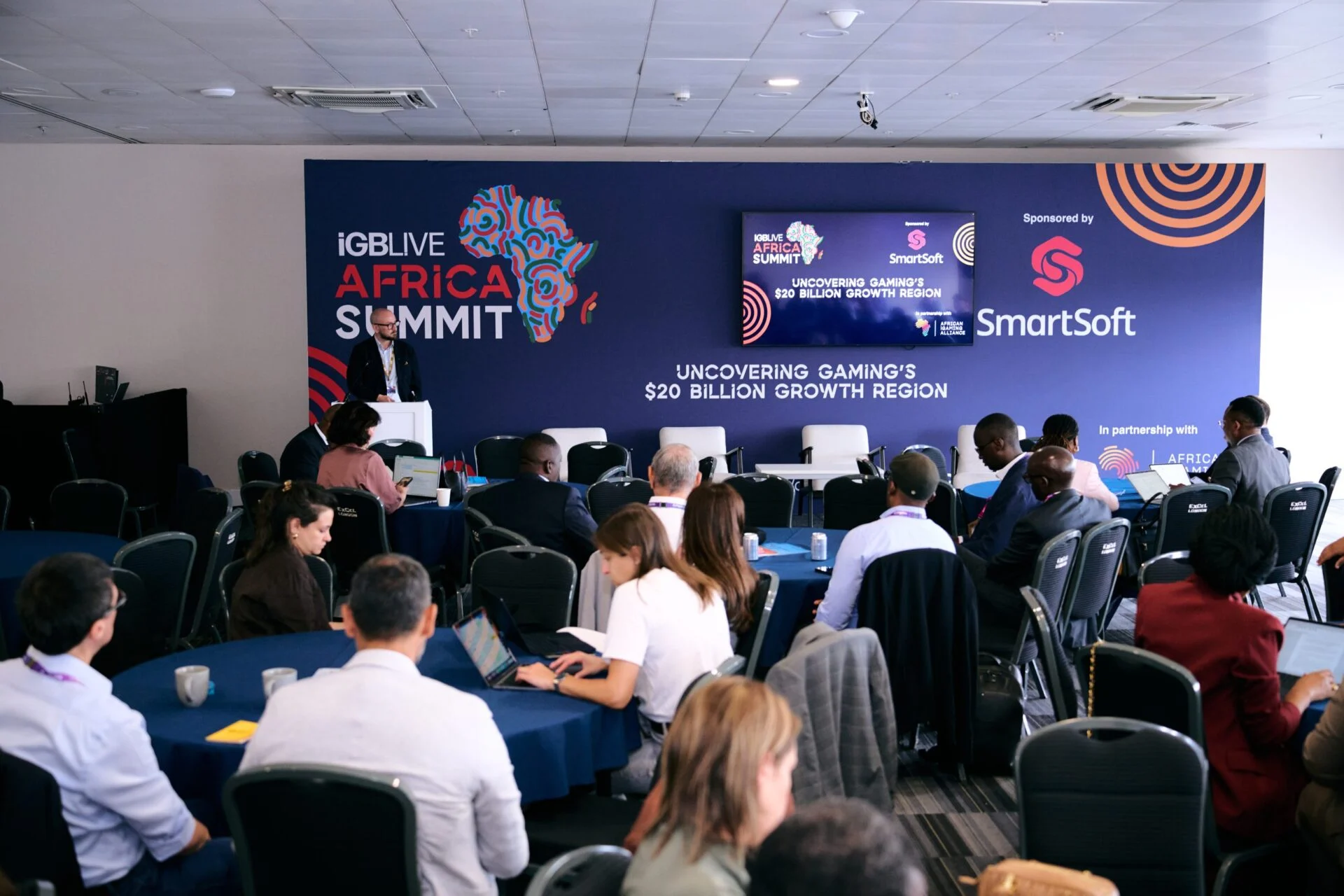
The Africa Summit at iGB L!VE 2026 dealt with crucial topics surrounding the continent's gaming sector, emphasizing localisation, collaboration among industry players, payment solutions, the future of sports betting, and strategies to combat the illegal market.
The first panel, moderated by Robin Harrison, Global Content Director at iGamingBusiness, included notable figures like Lungile Dukwana, CEO of the South African National Gambling Board, Bashir Are, CEO of the Lagos State Lotteries and Gaming Authority, and Olabimpe Akingba, responsible gaming head at pawaTech. Their conversation centered on the need for regional harmonisation, regulatory cooperation, and balanced taxation in Africa's gaming landscape.
Akingba highlighted the necessity for operators to remain adaptable, asserting, "there's really no one size fits all" across the continent. The panellists also stressed the importance of collaborative efforts in addressing simpler issues. Dukwana suggested that the easiest path to harmonisation is by "sharing the standards on the simpler issues like consumer protection."
The speakers cautioned against overly aggressive fiscal policies. Are remarked, "When you have a regime in which the taxes are very high, the market will not survive." Guga Gotsadze, CEO of SmartSoft, echoed this sentiment, stating that treating Africa as a unified market is problematic. He noted that instead of a singular regional strategy, firms should develop specific market approaches to foster sustainable growth.
Akingba encapsulated a collective viewpoint by stating, "Regulators, operators, we need to work together to ensure that the tax authorities, the legislative arm of government, are also knowledgeable about the industry to understand that there's a level at which you can tax that could completely wipe out the industry."
The second panel focused on the future of taxation and channelisation, featuring Ed Birkin, Managing Director at H2 Gambling Capital, alongside Dukwana and Dan Thomson, CCO of pawaTech. Dukwana asserted the effectiveness of local enforcement, stating, "There is no illegal operator or offshore operator that should be comfortable in the South African space."
Thomson discussed how pawaTech exited three African jurisdictions in the last 18 months due to unviable tax rates, highlighting the growth potential of the industry if conditions are favourable. He stated, "This is an industry that could grow for the next 20 years, where there's a load of operators happy to pay significant levels of tax," but warned that excessive taxation could hamper investment. Gotsadze emphasized the importance of transparent regulation that can foster trust and investment within the iGaming ecosystem.
Localisation and cultural adaptation were the themes of the third panel, led by Lois Bright, Co-Founder of Gaming Advisory Partners. Other participants included Christian Rajter, CEO of Split the Pot, Gail Odgers, General Manager of Virgin Bet South Africa, and Simon Munsamy, Managing Director at Playtech Africa. Odgers pointed out the challenges of catering to diverse demographics, emphasizing the need for continual product evolution based on customer insights. Rajter underscored the value of engaging with local markets, asserting that companies should "talk to the smart people that actually live there" to better understand consumer needs.
While Munsamy warned against a one-size-fits-all approach, Gotsadze cautioned that localisation should not sacrifice product quality or identity, asserting the importance of maintaining the core gaming experience while making offerings more relevant to local audiences.
The discussion on mobile payments in African gambling featured Charles Ekundayo, CEO of Africa Gaming Expo, along with Anthony Prissman from Super Group, Denis Mudene Ngabirano from the Ugandan National Lotteries and Gaming Regulatory Board, and Conor O’Donovan from Tekkorp Capital. Prissman noted that mobile money has transformed transaction dynamics, with trust being a crucial factor for operators. O'Donovan also mentioned the limitations of mobile payments in certain markets. Ngabirano discussed how Uganda's legal gambling age of 25 has inadvertently driven youths towards black market betting and necessitated a shift towards risk-based KYC onboarding. Prissman remarked that a pan-African KYC solution remains a distant prospect.
The final panel, chaired by Kyle Goldsmith, iGamingBusiness' Emerging Markets Editor, highlighted sports betting trends in Africa, featuring Martin Sack from Gaming Advisory Partners and William Scott from Ithuba Holdings. Both speakers agreed that football drives sports betting growth in the region. Sack attributed the rise in sports betting to improvements in infrastructure and technology, insisting that solid execution is imperative, as "if you have a bad product, you can’t put lipstick on a pig."
Gotsadze reiterated football's significance in Africa, stating, "Football is unquestionably the dominant sport across most African markets. It is deeply embedded in everyday culture and naturally drives engagement across the entire gaming ecosystem." Sack added that sustainable engagement involves creating long-term value through fair products, responsible gaming, and effective customer relationships.

