
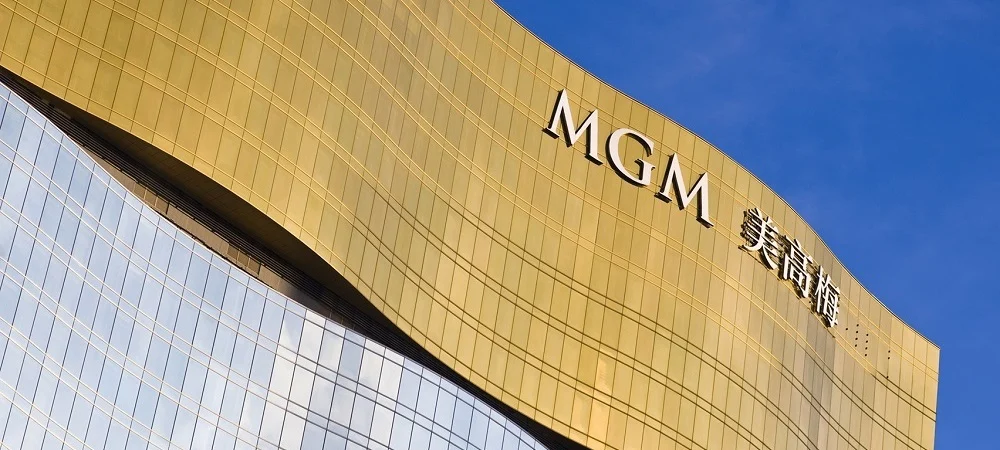
MGM Resorts reported record-setting Q2 revenue and same-store regional quarterly figures, yet concerns lingered regarding the health of Las Vegas and a potential $48.30-per-share takeover offer from Barry Diller's People Inc. This offer was submitted on June 1, shortly after rival Caesars Entertainment was acquired by Fertitta Entertainment.
CEO Bill Hornbuckle began the earnings call with analysts, indicating that an independent committee is still reviewing Diller's proposal. "I’m confident our board will pursue the course of action that’s in the best interest of the company and our shareholders," he stated, refraining from elaborating on the matter further.
MGM's group revenue for the quarter reached $4.5 billion, marking a 1% increase year-over-year and a record for Q2. Meanwhile, adjusted EBITDA fell about 6% year-over-year to $610 million, with net income sharply rising to $292 million from $49 million the previous year. As of the end of the quarter, the company held $2.5 billion in cash against $6 billion in long-term debt.
Revenue from Las Vegas totaled $2.2 billion, with adjusted EBITDA at $735 million, both reflecting a 3% rise compared to last year. Despite the positive figures, analysts pressed management for strategies to engage lower-end customers.
"Overall, I think we continue to see really strong strength in the luxury segment," said COO Ayesha Molino. She acknowledged the ongoing challenges faced by properties like Luxor and Excalibur, but noted that the introduction of all-inclusive packages has received a favorable response.
Beginning in March, MGM offered $330 all-inclusive two-night packages at Luxor and Excalibur. Hornbuckle emphasized that Las Vegas remains "a value destination," referencing a past controversy over pricing that sparked outrage online. He said that the all-inclusive deal has improved occupancy, having booked over 30,000 room nights, and has aided the company’s value perception on social media.
The company also posted strong casino results for the Las Vegas segment, with revenue up 17% year-over-year to $536 million, and hold rates at slot and table games at 9.6% and 29.6%, respectively, surpassing average hold rates reported on the Strip.
Hornbuckle, along with CFO Jonathan Halkyard, mentioned plans for room renovations at Aria and Cosmopolitan but did not provide specific details regarding costs or timelines.
In regional markets, MGM achieved a record same-store quarterly revenue of $904 million, although net revenue dipped 4% year-over-year to $924 million, with adjusted EBITDAR declining 9% to $280 million. The company recently sold its Northfield Park racino in Ohio for $546 million, following its exit from the New York casino license race last October. Hornbuckle noted that there are no imminent mergers or acquisitions on the table but confirmed upcoming renovations at Borgata in Atlantic City and Beau Rivage in Mississippi.
MGM is also monitoring the development of a new Sphere Entertainment venue near Washington, D.C., which Hornbuckle anticipates will boost tourism near MGM National Harbor.
In Macau, MGM China experienced stagnant revenue of $1.1 billion and a 15% drop in segment-adjusted EBITDAR to $257 million, partly due to the FIFA World Cup affecting high-roller attendance. CEO Kenneth Feng emphasized that their strategy focuses on optimizing revenue potential rather than solely on promotions.
On the digital front, MGM Digital's revenue rose 20% year-over-year to $196 million, though adjusted EBITDAR losses widened to $31 million from $26 million the previous year. These results include MGM’s LeoVegas subsidiary but do not encompass the BetMGM joint venture with Entain.
BetMGM's Q2 revenue reached $711 million, a 3% increase, driven by an 8% rise in iGaming revenue to $483 million. Online sports betting revenue remained unchanged at $228 million, while adjusted EBITDA fell 15% to $74 million. Hornbuckle dismissed concerns about maximizing BetMGM under the joint venture framework, affirming its stability.
Although MGM reported adjusted earnings per share of $0.59, below the expected $0.63, market analysts responded favorably to the overall performance. The company's stock closed at $45.66, virtually unchanged, but has surged approximately 22% over the past year. During the quarter, MGM repurchased about 4 million shares, valued at $164 million. As of June 30, approximately $1.4 billion remains under an April 2025 stock repurchase plan.
Analysts continue to offer optimism for MGM's future, with Macquarie's Chad Beynon maintaining an outperform rating and upping the target price to $54, citing MGM's strong Vegas portfolio and improving performance in Macau. Truist's Barry Jonas echoed this sentiment, highlighting solid regional performance despite some struggles in Macau and noting that Las Vegas results aligned with expectations.

