
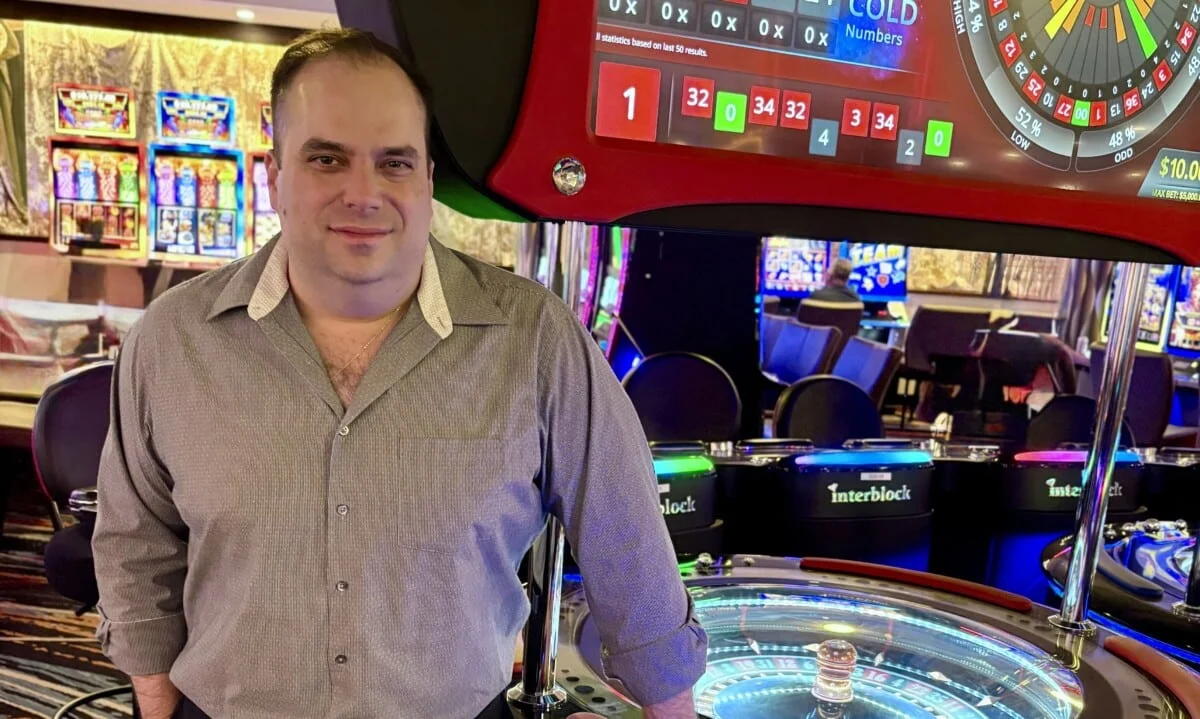
Triple zero roulette made its debut at the Venetian in Las Vegas during the fall of 2016, yet casual players might not even realize its presence. In casinos, logos often replace traditional zeroes to obscure their visibility. However, recent research led by Christopher Ingrassia, a Math and Computer Science Professor at Kingsborough Community College in New York, highlights the significant impact of this addition.
Ingrassia explained, "I chose roulette, not because I particularly love the game, but I really chose roulette because it's a very simple game. Once your bet is on the table, there's no further decision to be made. So, for any kind of mathematical analysis or for computer simulation, it's a very simple game to look at." He also noted that the house edge remains consistent across all types of bets.
While the house edge is stable, the inclusion of the triple zero notably elevates it. European roulette features a house edge of approximately 2.7%, while American double-zero roulette is about 5.4%. In stark contrast, the triple zero variant raises the house edge to 7.69%.
European roulette tables are increasingly hard to find in casinos, with their minimum stakes often soaring to around $100. Ingrassia examined whether casual players should pursue these tables for better odds or stick with lower stakes on the triple-zero roulette.
To explore this, he compared a player staking $10 per spin on the triple-zero table to another betting $100 per spin on the single-zero table. His experiment involved starting bankrolls ranging from $500 to $3,000, with 10,000 trials in total.
Three scenarios concluded the experiment: reaching a target profit level (20 to 100% of the bankroll), losing the entire bankroll, or exceeding 600 spins. Ingrassia explained, "I think a roulette dealer will probably spin the ball about one time per minute. It takes them time to settle the bets and so forth. So, one spin per minute, that's 10 hours of play, which I think is about the limit for a regular visitor to Las Vegas."
The results were striking and received significant attention during his presentation at the International Conference on Gambling & Risk Taking last month in Las Vegas. Gamblers playing the high-stakes game could expect to see a $100 profit from an initial $500 bankroll over 80% of the time. Conversely, the chances of success on the triple-zero table plummeted to around 20%.
Data indicated that players typically lost all their funds before reaching their profit goals. For instance, a player aiming for $100 from a $500 bankroll faced a 50% chance of losing everything. While some players might have some remaining funds after 600 spins, most would still end up at a loss.
The data also suggested that pursuing higher profits or extending playtime diminished winning odds. Raising the target from $100 to $200 drastically reduced the success rate from 20% to below 5%. Doubling an initial stake of $500 on the triple-zero game appeared nearly impossible, with only three successful instances out of 10,000 trials. In contrast, doubling a $500 stake in the single-zero game was achievable about 40% of the time. With larger bankrolls, profit generation became increasingly challenging; for example, starting with $3,000 lowered the likelihood of achieving a 20% profit to around 65%.
Ingrassia noted that different bet types yielded similar outcomes as the house edge remained consistent across all wagers. He plans to conduct further experiments on how often players can secure smaller profits with larger bankrolls, suggesting a player with $3,000 would have better odds of accruing a $100 profit than someone starting with $500.
"But if you're making the dealer change out $3,000, you're probably not going to want to walk away from the table after a $100 profit. You're probably going to shoot to make a little bit more than that," Ingrassia commented, emphasizing that aiming for a significant portion of the bankroll reduces winning chances.
His experiment was not intended to criticize casinos but rather to suggest that returning more to players could benefit both parties. Ingrassia stated, "I'm actually trying to help them, if anything. I believe that if the casinos gave back a little more to the players, the players would churn more over time. I think it would be a win-win situation for everyone. But I don't know if many of the executives feel the same way."
The house always wins, particularly with added features like triple zero. This phenomenon mirrors sports betting, where single-game parlays have a much higher edge for sportsbooks compared to single bets. Professors Robert Scott and Mikhail Sher advise avoiding high-risk bets to increase the chances of winning. Trevis Waters, CEO of PlayerProps.ai, echoed this sentiment, emphasizing the importance of discipline and searching for better odds.
Ingrassia's research underscores the necessity for gamblers to maintain discipline while pursuing bets with better odds. The greater the edge conceded to the house, the more evident the challenges become.

