
The saying, "Everything is Bigger in Texas," applies not just to the state's vast geography of 268,820 square miles—making it the second-largest state in the US after Alaska—but also to the state's larger-than-life culture and identity. This spirit is evident in the realm of prediction markets, where trading volume ranks among the highest in the nation. For instance, trading for the recent NFL game between the Dallas Cowboys and New York Giants last Sunday exceeded $208 million across US markets, according to data from Aldrin Research. Kalshi reported that this volume eclipsed any NFL regular-season game from the previous year.
This trend isn't confined solely to the professional level; it carries into college football, a passion in Texas. On September 12, in a highly anticipated matchup where Ohio State played Texas, the volume of contracts traded surpassed 50.7 million, as noted by prediction market tracker Odds Shopper. This bustling activity coincided with a legislative hearing held on September 15 in the Texas Senate, which set the groundwork for the state's consideration of prediction markets in the coming year.
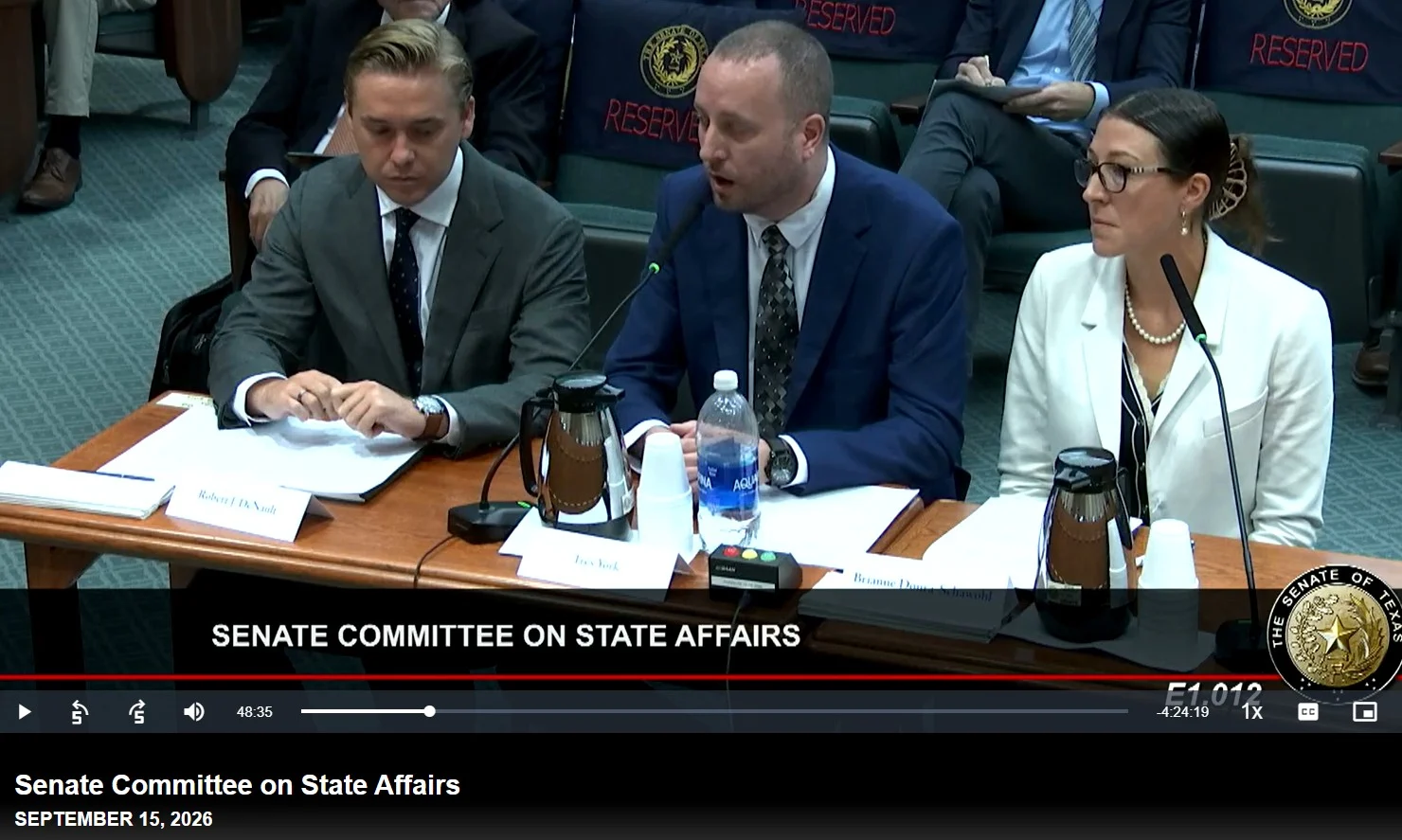
Convened by State Senator Bryan Hughes, the 62-minute hearing focused on the intersection of federally regulated derivatives markets and state laws against gambling. A report by Eilers & Krejcik Gaming revealed that 43% of activity regarding sports event contracts originated from Texas and California, although detailed data specific to Texas is not publicly accessible.
During the hearing, Tres York, Vice President of the American Gaming Association (AGA), and Robert DeNault, Kalshi's head of enforcement and legal counsel, presented their perspectives. The AGA, a vocal opponent of prediction markets, contended that an event contract betting on the Cowboys to triumph over the Giants is fundamentally analogous to a traditional wager at a sportsbook.
Currently, sports betting remains illegal in Texas. Governor Greg Abbott, seeking re-election in November, along with his lieutenant governor Dan Patrick, who opposes sports betting, underscores the significant political landscape influencing the future of gambling in Texas. Patrick has been a key figure in halting efforts to legalize sports betting following the 2018 PASPA decision.
In the race for Attorney General, Ken Paxton faces Democratic challenger James Talarico. His eventual successor could be Republican State Senator Mayes Middleton or Democrat Nathan Johnson, another state senator.
State Senator Bob Hall articulated a viewpoint that event contracts are merely different formats of gambling. "They’re different costumes on gambling," he remarked, likening them to varied types of attire such as high heels versus bikinis.
When Hall inquired how Texas should progress, York suggested implementing measures to geofence prediction market platforms from operating within the state and pursuing litigation in state courts, where he believes they would have a stronger chance of success compared to federal courts.
"Prediction markets think they can mess with Texas," York stated, urging the committee to hold them accountable.
DeNault countered, asserting that federally regulated prediction markets provide consumer protections that offshore platforms lack. "You can go the combative route and ban something that’s federally regulated," he warned, highlighting the risk that Texas customers may shift to unregulated platforms.
The committee also heard from Brianne Doura-Schawohl, a recognized expert on problem gambling, who mentioned a study revealing that 52% of Gen Z individuals view sports betting and prediction markets as part of their long-term financial strategies. She criticized a Kalshi competitor for a feature allowing minors over 17 to link accounts for trading event contracts, deeming it a "very dangerous" opportunity for vulnerable teens.
Separately, Kalshi achieved a milestone on September 15 by partnering with the Tunica-Biloxi Tribe of Louisiana, becoming the first prediction market to team up with a federally recognized sovereign nation. This partnership will launch a tribal prediction market app through SaltTrade Derivatives, which is a new division of a tribal-owned enterprise. Marshall Pierite, the Tunica-Biloxi Chairman, expressed pride in pursuing opportunities that elevate Native tribes to positions of ownership and leadership.
Ahead of an exciting college football game between the University of Mississippi and Louisiana State University, the announcement came as Kalshi prepared for Lane Kiffin's return to Oxford as the head coach of LSU. At Kalshi, the Tigers were favored at 59% for the game.
This collaboration was revealed during a week when leaders of the Indian Gaming Association met with CFTC Chair Michael Selig to discuss predictions markets, although IGA Chair David Bean deemed the discussions largely unproductive. Meanwhile, the Ninth Circuit Court of Appeals overturned a prior ruling in Blue Lake Rancheria v. Kalshi, asserting that Kalshi’s sports event contracts constitute unauthorized gaming under the Indian Gaming Regulatory Act when accessed on tribal land. Bean stated that the decision underscores the importance of adhering to federal laws concerning gaming on Indian lands.

