
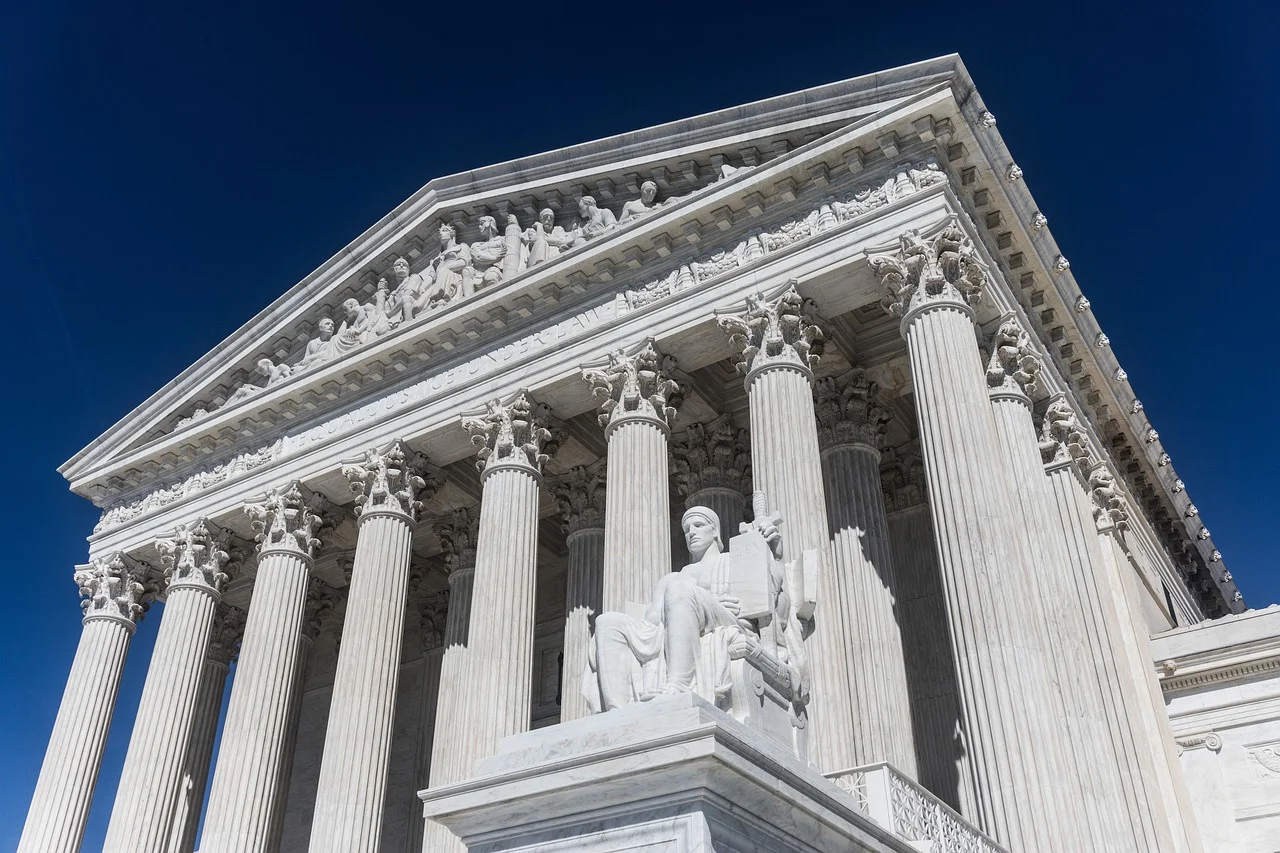
In recent weeks, the US Supreme Court has been deliberating several briefs that encourage the Court to examine a case that could significantly influence the future of sports event contracts. With the potential for around $1 trillion in notional value at stake, this debate is being characterized as a vital struggle for the sports wagering and derivatives sectors. A noteworthy development occurred on Wednesday as the NFL submitted an amicus brief to the Court, providing a considerable boost to states' rights advocates.
This 32-page brief, co-authored by former US Attorney General William Barr, urged the Court to take up the case of Flaherty v. KalshiEx, LLC, emphasizing the importance of maintaining the integrity of professional sports and protecting market participants.
The NFL highlighted the necessity of clarity in sports prediction markets to uphold sports integrity and establish consumer protections throughout the industry. As the US Commodity Futures Trading Commission (CFTC) pushes for exclusive jurisdiction over the regulation of derivatives, the NFL has engaged in discussions with prediction market operators over recent months.
However, the league stated in its brief that the CFTC and various operators have not acceded to the NFL's requests for "appropriate safeguards" regarding sports event contracts.
The NFL explicitly outlined several event contracts it finds objectionable. This reiterates the league’s previous arguments expressed in a brief to the CFTC during a comment period concerning proposed rules on derivatives. Among the contracts that the NFL identified as troubling are bets on whether a kicker will miss a field goal, the next penalty in a game, and various non-game related occurrences, such as phrases used during broadcasts.
The brief stated, "It is at best unclear whether the Commission has the appropriate regulatory framework, oversight capacity, and enforcement resources to ensure that prediction markets do not jeopardize game integrity."
Kalshi and Polymarket, two major players in the prediction market space, asserted their commitment to integrity. Polymarket stated that it shares the NFL’s dedication to game integrity, continuously improving its market surveillance capabilities. Kalshi expressed its intent to work collaboratively with the NFL to enhance market integrity, countering the NFL's claims by stating, "Contrary to the NFL's statements, Kalshi is actively policing sports-related markets. We hope they change their position and start engaging to help the integrity of sports."
While attending an exhibition game in Macau, NBA Commissioner Adam Silver discussed integrity issues within prediction markets and the importance of data collection in identifying "aberrational behaviour". Unlike the NFL, which advocates for state regulation of sports wagering and predictions, Silver favors a federal approach.
Market integrity remained a focal point at the Predict 2026 conference in Midtown Manhattan, one of the first conferences dedicated to this emerging asset class. Sean Patrick Maloney, President of the Coalition for Prediction Markets and a former New York Congressman, discussed strategies for combating insider trading during a panel. His remarks followed the arrest of US Army special forces soldier Gannon Van Dyke on insider trading charges. Van Dyke, indicted for allegedly profiting from classified information concerning Venezuelan President Nicolas Maduro, faces over two decades in prison if convicted. Maloney agreed with calls for a stern sentence should evidence show Van Dyke leaked classified information.
On another panel, Jack Murphy, senior counsel at Akin Gump Strauss, brought attention to various insider trading cases currently being monitored by white-collar defense firms in the prediction market sector, including cases involving a former Google engineer and ex-Congressman George Santos.
In a separate development, the Seminole Tribe of Florida, previously quiet amidst the rising legal disputes over prediction markets, made headlines this week by filing a lawsuit against DraftKings. The tribe announced the 72-page complaint in Broward County, Florida, personally naming DraftKings CEO Jason Robins.
The lawsuit claims that DraftKings is unlawfully operating sports betting in Florida, allegedly breaching the tribe's 2021 gaming compact. The Seminoles contested DraftKings' "Super App", which encompasses several features including predictions, sports wagering, and online casino elements, arguing that it deprives Florida of significant revenue and regulatory oversight along with crucial consumer protections.
In response, DraftKings asserts that its prediction platform complies with federal regulations as outlined in the Commodity Exchange Act. While expressing respect for the Seminole Tribe, DraftKings maintains confidence in its legal stance regarding sports event contracts.
Additionally, Kalshi announced partnerships with four tribes this week, including the Kletsel Dehe Wintun Nation, Alturas Indian Rancheria, and Greenville Rancheria in California, as well as the Alabama-Quassarte Tribal Town in Oklahoma.

