
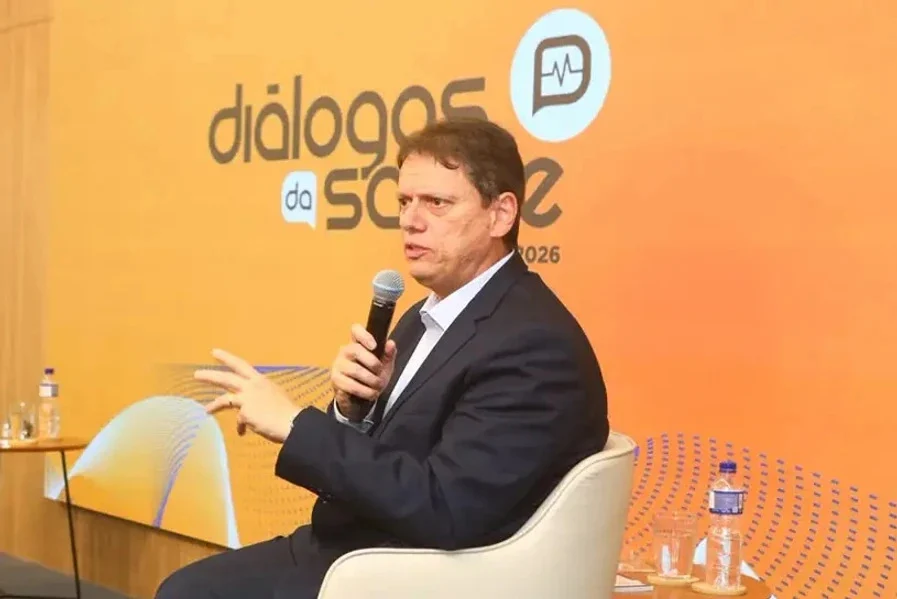
Tarcísio de Freitas, the incumbent governor of São Paulo seeking re-election, declared during a recent debate that Brazil must put an end to gambling. This statement aligns with a growing trend among conservative politicians criticizing sports betting.
With a favorable chance of staying in the Palácio dos Bandeirantes, Tarcísio remarked, “Either Brazil ends betting, or betting ends Brazil. We have to understand that this is a health problem.” His comments were made during the "Health Dialogues" debate hosted by the Union of Hospitals, Clinics and Laboratories of São Paulo (SindHosp).
The surge of online betting platforms has turned Brazil into one of the largest gambling markets globally, but Tarcísio argues that the situation has escalated beyond mere entertainment to a pressing public health crisis. He likened the current scenario to past efforts against smoking, emphasizing that addiction must be treated as a disease requiring specialized care.
The governor also suggested that the rise of gambling correlates with increased national debt, claiming that “20% of Brazilians’ income is committed to gambling,” although he did not specify his source for this statistic.
Tarcísio advocates for establishing a comprehensive, accessible, and digital national program aimed at addressing gambling addiction. “We were effective in getting people off tobacco,” he stated. “And so the question is: will we be able to be effective in freeing people from drugs? The challenges are the same now. Perhaps the challenges now are greater than the challenges of tobacco were in the past.”
The rise of online betting transcends economics, morphing into a moral, social, and political issue. Tarcísio's views reflect similar sentiments expressed by President Lula, who has also condemned betting practices.
Industry representatives have acknowledged their impending scrutiny during the election campaign. In a recent discussion with iGaming Business, Plínio Lemos Jorge remarked, “The industry will have to remain resilient during this period.” The president of the National Association of Games and Lotteries (ANJL) expressed optimism that “after this turbulent period, the market tends to become less of a target for criticism.”

