
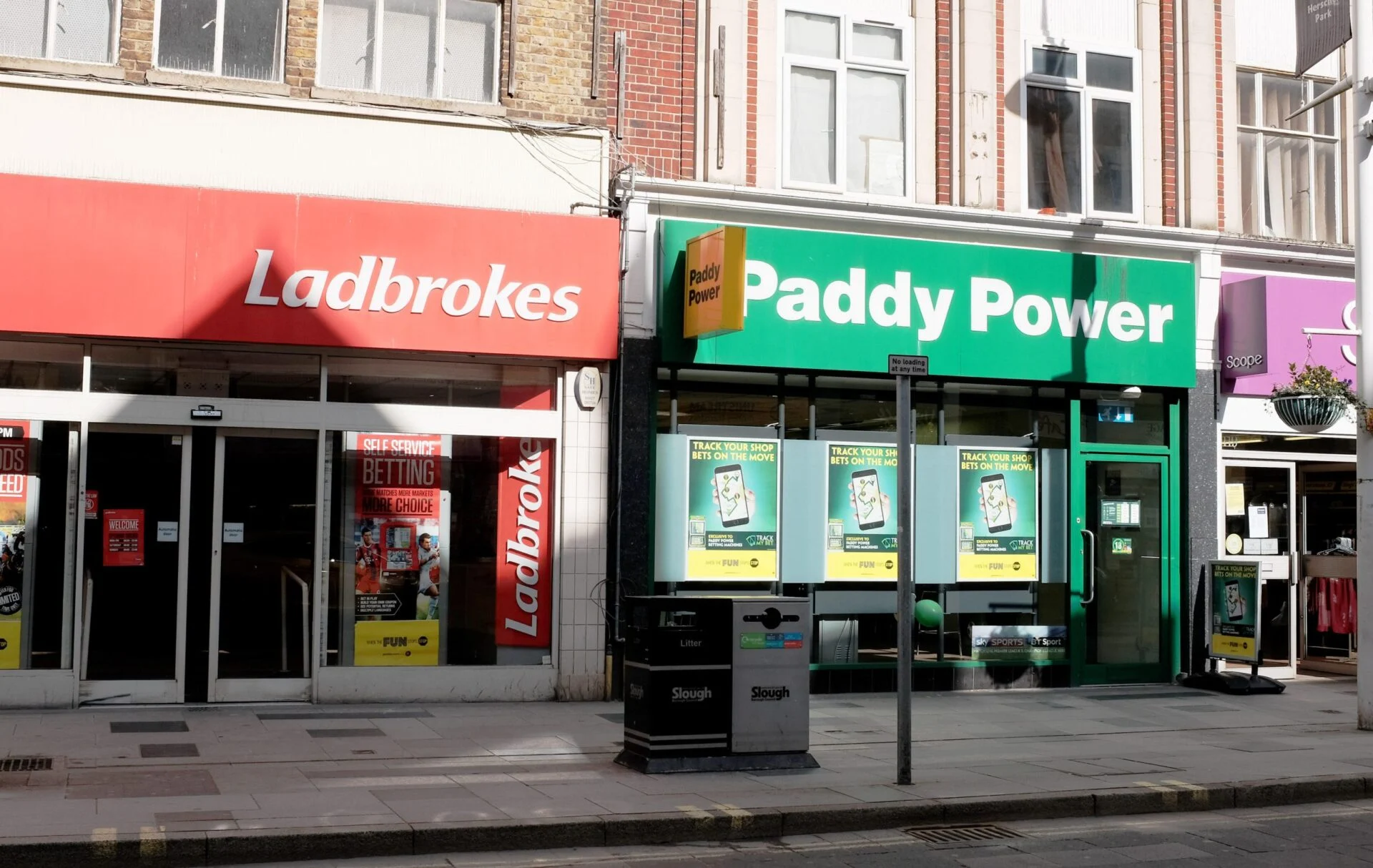
The gambling sector has expressed strong discontent following Prime Minister Andy Burnham's remarks that categorized betting shops alongside vape stores and illicit operators as contributing to the decline of British high streets.
Burnham’s administration plans to amend the Gambling Act 2005 by eliminating the “aim to permit” principle. This change aims to grant local authorities more authority to deny applications for new gambling venues, including adult gaming centers (AGCs), which will now require planning permission.
What particularly irked the gambling industry was Burnham’s wording, which suggested that betting and vape shops have taken the place of more desirable local businesses and community spaces. He characterized the government's initiative as a way of addressing unseemly enterprises.
Bookmakers quickly countered this narrative, arguing that it does not accurately reflect the realities of the industry. Currently, there are less than 5,900 betting shops in Britain, down from nearly 9,000 in 2015, indicating a contraction in the retail sector over the past ten years rather than unchecked growth.
Greg Knight, chief executive of JenningsBet, voiced his frustration, stating that the comparison to “dodgy businesses” undermines the hard work of employees and the industry’s contribution. He posed a pointed question, asking, “What sort of ‘dodgy’ business provides employment for 40,000 people, finances the entire British horseracing industry… and pays billions in taxes and rates?”
Knight highlighted his own company’s operations: despite opening four new shops this year, JenningsBet has closed three, resulting in a net growth of just one location, with most expansion coming from acquisitions. He raised concerns that the increased authority for councils might lead to a slowdown in new shop openings, with applications already dwindling. He suspects a misunderstanding among politicians regarding the distinction between betting shops and AGCs, which are separate entities despite being mentioned together in government discussions.
The AGC sector echoed these concerns. Alistair Gair, communications director of Bacta, noted that the number of AGCs has decreased from 1,610 in 2015 to 1,502 last year. He remarked, “This is a sector in decline, not one taking over Britain’s high streets.”
Gair added that AGCs often fill vacant commercial spaces, provide jobs, and offer low-stakes entertainment in controlled, alcohol-free settings. He cautioned that limiting licensed venues could push patrons toward unregulated alternatives, which do not have the same safeguards.
The notion that high streets are dying is further complicated by the fact that simply closing or restricting commercial properties will not necessarily revitalize them with other types of businesses, such as banks or bakers. Local councils can only select from businesses that are both willing and financially capable of operating in these spaces.
Christopher Snowdon of the Institute of Economic Affairs criticized Burnham’s stance, asserting that the Prime Minister has confused the symptoms of high street decline with its causes. He argued that betting and gaming establishments have become more prominent not due to displacing traditional retailers, but because decreased demand and lower rents allowed them to inhabit spaces left by shuttered shops. Snowdon pointed out, “The idea that the high street can be revived by killing off the few remaining businesses that are able to operate on it is just silly.”
He believes the changes in high streets are structural, driven by the rise of supermarkets and online shopping, which has permanently diminished the demand for retailers like banks and bookshops. The future high street may increasingly consist of essential services, such as cafés and repair shops, with some vacant units repurposed into residential housing.
Imposing further restrictions on legitimate businesses is unlikely to reverse these trends. Additionally, creating new regulations aimed at illegal activities in some vape shops or barbershops may simply replace needed enforcement with ineffective legislation.
Rank’s CEO Richard Harris offered a defense of the gambling industry’s role, expressing pride in their venues as “community assets” that provide safe entertainment. In recent company updates, Harris stated, “We try and look after our customers really, really well. That is the game that we are in. We will continue to offer them the best entertainment, the best fun that we possibly can.”
Some industry voices are calling for a more proactive approach. Patrick Jay, a former executive at William Hill turned consultant, suggests that the gambling sector has lacked leadership and has been outmaneuvered by opponents who have controlled the public discussion. He emphasized the need for a response team to counteract health-focused narratives, advocating for immediate pushback against misleading statements from critics.
While statistics alone may not capture the sentiment surrounding high streets, the gambling sector faces the pressing need to showcase its community value continuously, especially when under threat. The challenges that retail betting now presents have fallen into the lap of Vicki Foxcroft, the newly appointed minister for gambling. She takes on an industry that feels mischaracterized, a Prime Minister whose rhetoric is already set, and a policy whose introduction masks complex legislative issues ahead.
Navigating the path forward will undoubtedly be a significant undertaking for Foxcroft, much like asking for directions in Ireland and being told, “If I were you, I wouldn’t start from here.”

