
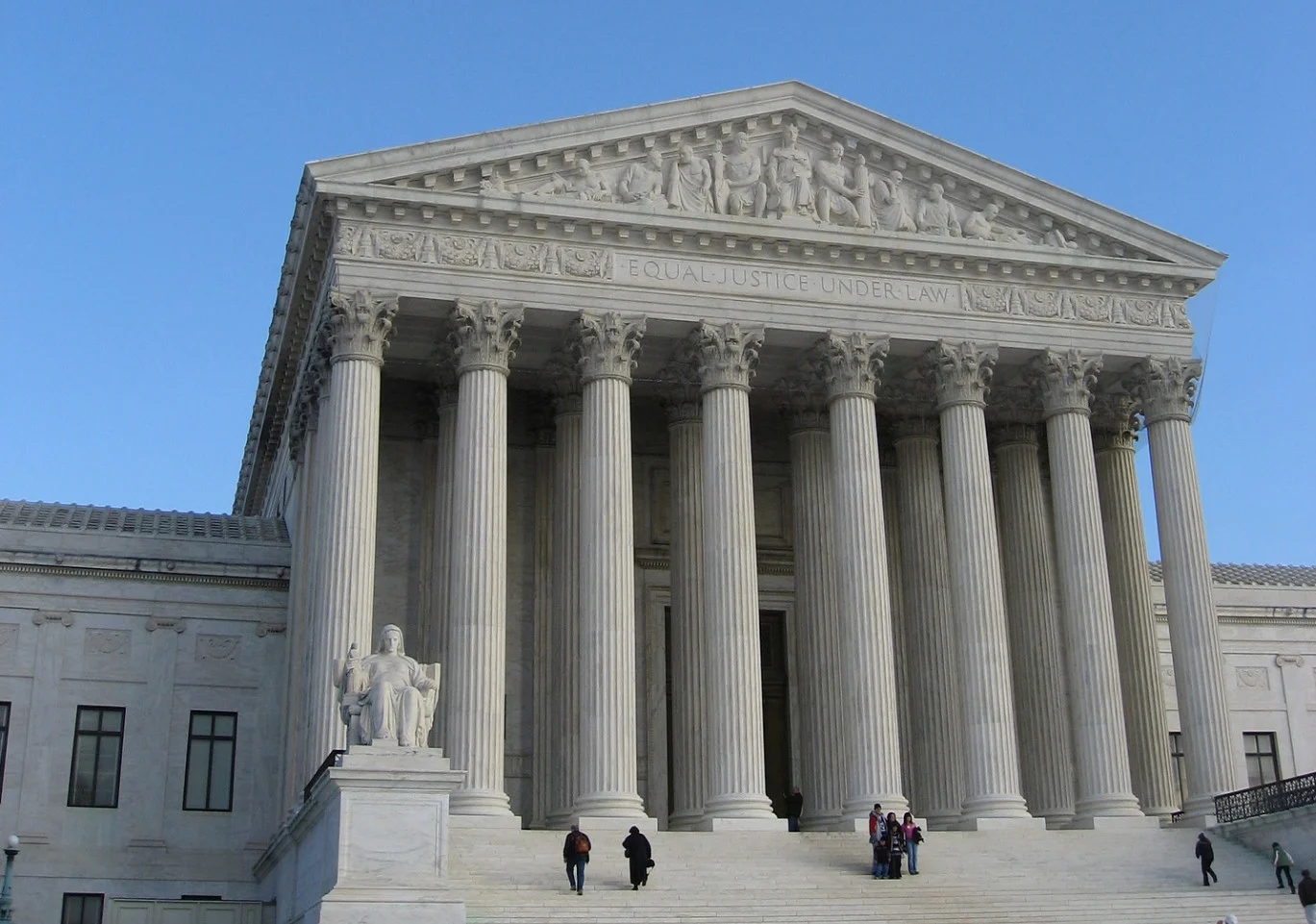
Eight years after it successfully lobbied the U.S. Supreme Court to invalidate the Professional and Amateur Sports Protection Act (PASPA), New Jersey has once again turned to the high court. This time, the state seeks to shield its sports betting market from rising prediction markets and sports event contracts.
On Wednesday, New Jersey Attorney General Jennifer Davenport announced that her office has filed a petition for writ of certiorari following a recent ruling in favor of prediction markets by an appeals court. Earlier this year, the Third Circuit Court of Appeals delivered a 2-1 decision on the matter, obliging New Jersey to submit its petition by Thursday.
In this petition, New Jersey argues whether the Dodd-Frank Wall Street Reform and Consumer Protection Act, enacted in 2010 in response to the financial crisis, "preempted states from regulating sports bets that occur within their jurisdictions if those bets are offered on markets registered with the Commodity Futures Trading Commission (CFTC)." Proponents of prediction markets maintain that their event contracts are classified as financial derivatives under CFTC regulation, while many states view them merely as a different form of sports betting.
Although there's no assurance the Supreme Court will accept the case, a recent ruling from a separate appeals court may increase its chances. On August 28, a three-judge panel from the Ninth Circuit ruled unanimously in favor of Nevada, creating a circuit court division, which often leads to Supreme Court involvement.
Davenport emphasized, "We’re calling on the Supreme Court to resolve this issue and recognise that Congress did not silently make the sports-betting industry immune from state law."
New Jersey has prior experience with high-stakes Supreme Court cases. The state managed to win only a single case in its efforts leading to the PASPA repeal, which underscores the gravity of the current situation where Kalshi has triumphed so far in both state court and the Third Circuit. Davenport’s petition references the key PASPA ruling, stating that eight years ago, the court asserted that "each state is free to act on its own" when regulating sports betting. In contrast, Kalshi, which claims to be "the first app for legal sports betting in all 50 states," believes it can operate without adhering to the sports-gambling laws of any state.
Kalshi spokesperson Dani Lever stated that the platform is "an open, nationwide, financial exchange" that "cannot be regulated by 50 different regulators." "Both the Third Circuit and the District of New Jersey side with Kalshi, because the CFTC’s exclusive jurisdiction prompts state law," she added, remarking that "nothing in New Jersey’s filing" alters that interpretation.
The Supreme Court term starts on the first Monday in October and runs through late June or early July. Typically, the court receives around 7,000 to 8,000 writ petitions each term, granting around 80. For a case to be accepted, four of the nine justices must vote in favor, with several justices involved in the earlier PASPA case still on the bench.
Currently, there are no SCOTUS-prediction market contracts on Kalshi, but Polymarket shows a 41% probability that the court will take up an event contract case by December 31.
This situation marks significant development, potentially the most crucial sports betting-related issue since PASPA. The increasing popularity of prediction markets, illustrated by their integration into mainstream culture—especially during the U.S. presidential elections in November 2024—has caught the attention of various gaming stakeholders. Kalshi and Polymarket, for instance, have seen their valuations reach $40 billion and $21 billion, respectively, prompting many of the major U.S. bookmakers to explore this emerging market.
According to 2025 reports, commercial sports betting generated nearly $17 billion in revenue across the nation, leading Davenport to stress that the stakes in this case are exceptionally high. In August, Kalshi and Polymarket processed over $45 billion in trading volume, despite a 15% drop from July attributed to the end of the FIFA World Cup.
The American Gaming Association estimates prediction markets have siphoned over $1.3 billion in potential tax revenues for states. Former New Jersey governor Chris Christie, a prominent advocate for the PASPA case, is among those leading the opposition to prediction markets.
This issue reflects an ongoing debate between federal authority and states' rights. While traditional sports betting is regulated by state authorities—with differing regulations and laws—the CFTC oversees federal derivatives and has up until now supported prediction markets, especially under recent administrations.
Legal complexities surrounding prediction markets have led Kalshi to restrict trading in several states, particularly in Nevada, with the CFTC taking extensive measures to protect its licensees, including litigation against multiple states and issuing emergency orders to negate statewide mandates.
CFTC Chairman Michael Selig serves as the sole sitting commissioner in an agency that traditionally consists of five members and has consistently defended the legitimacy of prediction markets as financial instruments. As the CFTC proposes new rules concerning prediction markets, critics argue that these adjustments might still permit sports contracts while tightening regulations to create a more favorable view for a potential Supreme Court review.
“It’s not a question of whether innovations like blockchain, artificial intelligence, and prediction markets will transform our markets. It’s a question of where this innovation will take place and who will write the rules,” Selig stated during a CFTC Innovation Advisory Committee meeting on August 20, which included CEOs of various gaming companies.

