
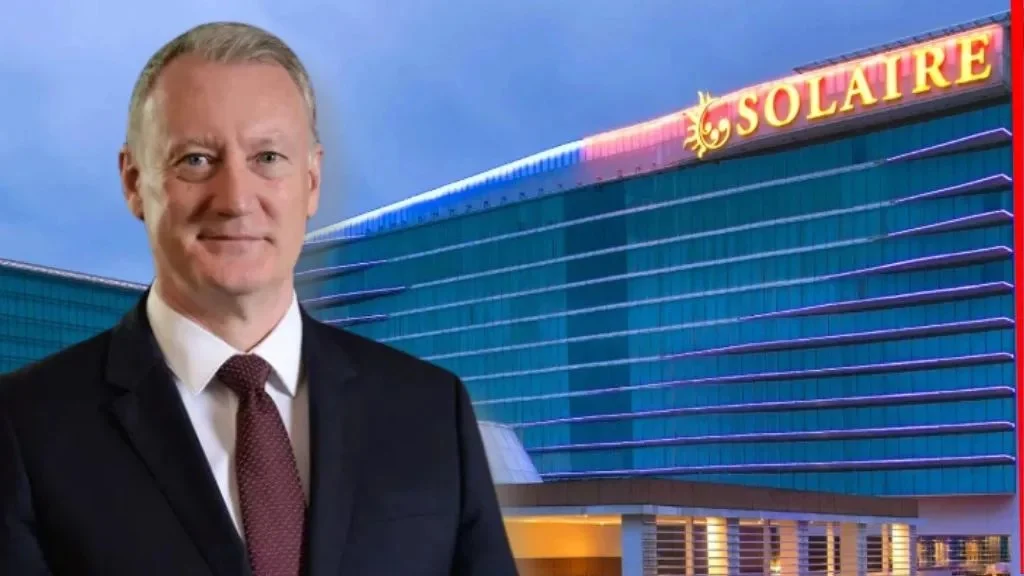
Last year, Greg Hawkins, who was then the chief operating officer at Bloomberry’s Solaire North integrated resort, was asked whether online gaming posed a threat. He responded, "It’s an opportunity." Now serving as Bloomberry’s group president and COO, Hawkins is focusing on capitalizing on that opportunity in Asia’s largest legal online gaming market. "Online presents very big upside if we can execute properly. And we’re at a point now where technically we have the ability to execute properly, which means effective marketing. So that’s a significant focus," Hawkins noted during an exclusive interview with iGaming Business.
In July, Bloomberry officially inaugurated FUNaloMAX, an online mass market platform developed using in-house technology.
"Online has been about ensuring that we have strong stability on the platforms that support our online consumer experiences," Hawkins explained. "Solaire Online, which is well established as an online brand, speaks to the Solaire premium gaming experience. Then FUNaloMax, which is a product of Solaire, gives it that credibility and is very much aimed at the broader mass online market."
Since being appointed acting president in December 2024 and formally recognized in June of last year, Hawkins has been reshaping Bloomberry’s online operations. In mid-2025, Bloomberry launched MegaFUNalo, a mass market gaming and entertainment platform, which complements Solaire Online, the first of its kind introduced in 2021 when the Philippine Amusement and Gaming Corporation (Pagcor) licensed Philippine Inland Gaming Operators (PIGOs) to assist land-based casinos affected by Covid-19 restrictions.
"We quickly recognized some technical teething problems, mainly concerning the guest experience," Hawkins admitted regarding MegaFUNalo, which utilizes third-party technology and offers live and digital casino games, arcade options, carnival games, and movies.
"Behind the scenes, we’ve been examining the platform that our online systems sit on," he said, adding that their transition to FUNaloMAX began late last year. "Solaire Online will transition to an in-house platform this quarter."
Hawkins stated, "We’re only stepping now into the active marketing of FUNaloMAX, which will ramp up significantly over the next couple of months into the new year, covering awareness branding and direct marketing offers to our database that includes rebates and other promotions to entice new gaming experiences."
According to the global iGaming market intelligence platform Blask, FUNaloMAX is regarded as "a fast-growing niche challenger" within the highly fragmented Philippine market. As of the end of July, just a month after launching, FUNaloMAX ranked 70th among 335 different brands tracked by Blask in the Philippines.
Bloomberry’s financial results for the second quarter indicate a resurgence following a full-year loss of PHP2.8 billion (US$45.4 million) in 2025, despite facing a tough market environment in the Philippines. Much of the losses incurred in 2025 were attributed to Solaire Entertainment City, long recognized as a leader in the Philippine gaming market, with Hawkins prioritizing its recovery.
Achieving profitability at Solaire Entertainment City necessitates, as Hawkins puts it, "a proper focus on cost management and capital expenditure management."
In the second quarter of last year, Solaire Entertainment City’s gross gaming revenue (GGR) dropped 27% year-over-year, with VIP gaming plunging 62%, mass tables down 9%, and slots decreasing by 16%. This year, however, GGR in the second quarter increased by 18%, with VIP gaming rising by 81%, mass tables advancing by 8%, and slot machines gaining 6%, even as cumulative GGR for the entire Entertainment City dipped by 1%. Last year’s second-quarter property EBITDA fell by 61% to PHP1.7 billion, but this year it surged by 40% to PHP2.4 billion, with margins improving from 20.8% to 26%.
According to Hawkins, "The relevant margins in the business require an appropriate focus on cost management and capital expenditure management. That’s been an area of focus from my perspective, ensuring we’re fully engaged across our management teams on cost and margins, just as we are with top-line and GGR growth."
Externally, Hawkins noted, "The broader economy and local economy has been softer than what it has been historically, and at the same time, we were still working our way through that post-POGO era." He was referring to the Philippine Overseas Gaming Operators, which had brought in hundreds of thousands of mainly Chinese expatriates to work in online gambling enterprises in the Philippines. In 2024, amid pressure from Beijing and allegations of widespread criminal activity, Philippine President Ferdinand “Bongbong” Marcos Jr. banned POGOs.
Hawkins remarked, "The post-POGO environment is very different. There's no doubt that a lot of the revenue generation wasn’t just confined to the VIP segment. It was quite a cash-rich environment at that time, filtering through to other parts of the business. The post-POGO scenario offers different opportunities for companies, and our focus is on our ability to adapt strategically."
Adding to the challenges, Hawkins pointed out that this year has been marked by conflict in the Gulf region. "When the Middle East crisis initially began, we felt the immediate impact. We’ve managed to adapt since then, yet we still closely monitor cost of living pressures, especially with fuel."
Hawkins emphasized the significance of the market potential in Metro Manila and the Philippines as a whole. "The scale of the market remains substantial due to population growth and the desire for entertainment and gaming experiences. With such a large population, the opportunity persists, whether it’s niche or large scale, given effective execution."
He reflected on the international market’s potential for significant growth, asserting that success requires effective country positioning, infrastructure development, and a collaborative approach. "Entertainment City was strategically conceived to develop a precinct aimed at boosting tourism into the Philippines while providing investment and job opportunities, stimulating both international and domestic tourism within the confines of a localized area."
Hawkins added, "The foundations are in place; the investments have been made. It’s about entering the next phase of enhancing the international stay profile for local properties, necessitating a concerted effort from both the government and the private sector."
Observing that most international tourists arrive in the Philippines through Manila only to head straight to resort islands, Hawkins sees untapped potential for creating two- to three-day stays at premium integrated resorts near the airport. "We need to attract more guests to the Philippines, offering compelling reasons to choose it over destinations like Vietnam, Singapore, and Indonesia. The Department of Tourism seeks to drive international tourism to facilitate city stays that lead to island experiences, all of which requires cohesive strategic execution and supportive infrastructure."
Solaire, entertainment venues in Entertainment City include City of Dreams Manila, owned by Belle Corp, and Okada Manila, owned by Universal Entertainment. The long-anticipated fourth integrated resort in the district, Westside City, managed by Travellers International Hotel Group, is set to open later this year.
Hawkins believes that Westside City will benefit Solaire’s visibility. "I don’t think it will necessarily hurt Solaire. Adding more critical mass and hotel rooms to Entertainment City is a net positive, driving awareness and likely broadening the demographics. It will enhance competition in the gaming and resort industry, and we expect that while closely monitoring what evolves there," he stated.
Deliberate efforts to maintain Solaire’s leading market position remain vital for Hawkins. "Our brand’s strength, particularly in focusing on the premium segment at Solaire Entertainment City, hinges on the reputation for quality guest experiences, safety, and personalized service that we aim to uphold."
Management has recently evaluated the resort’s market positioning, aiming to use its physical space more effectively to increase foot traffic, possibly by expanding entertainment offerings. This includes analyzing the previously VIP-dedicated space for conversion to either a more mass-oriented or premium mass setup, given that the VIP segment has markedly diminished in recent years.
Hawkins acknowledges, "The VIP segment has considerably shrunk in the Philippines over the past couple of years. Therefore, a property of this scale must adjust its strategic direction to adapt to current market shifts."
"This shift requires us to appeal more broadly to gaming and resort visitors seeking fresh and exciting experiences. The property must offer a wider range of entertainment options. We have a fantastic theater here, and we also created The Space, another versatile area for various events and entertainment-focused experiences, to boost guest turnout."
To enhance the appeal of its Broadway-style theater with 1,851 seats, Bloomberry has partnered with GMG Productions to host prominent local and international shows.
On the food and beverage front, Hawkins remarked, "We want to ensure that our exquisite restaurants reflect a diverse menu experience or different culinary shifts, refreshing the ambiance for our guests."
Solaire North, which Hawkins refers to as Bloomberry’s US$1 billion investment, is approximately an hour from Entertainment City and has marked its second anniversary in May. Hawkins highlights that this venue is more oriented toward local patrons, specifically those from Quezon City, Metro Manila’s largest municipality with three million residents.
In terms of performance, the property now called Solaire Quezon City saw Q2 GGR increase by 9% year-over-year amid a stagnant market for licensed casinos, with EBITDA climbing 19% to PHP1.3 billion.
Hawkins dismisses comparisons of Solaire North with category leaders like Hann Resorts in Clark. "I firmly believe in the first mover advantage," he asserted. "Progress into markets with substantial potential, coupled with a well-executed plan, fosters long-term shareholder value."
In July of last year, Hawkins’ promotion led to the hiring of Damian Quayle as COO for Quezon City. Quayle, who brings experience from Australia, Macau, and Manila, said, "The primary attractions here revolve around entertainment and fun."
The gaming floor is dominated by slot machines, which Quayle likens to a theme park. "I envision the slot floor resembling a theme park, featuring zones for various volatility models and a prize patrol celebrating wins."
With the ballroom hosting weekly bingo events infused with singing and dancing, Quayle remarked, "If I could bring that kind of entertainment to table games…"
Quezon City serves as a center for government and media, complemented by the forthcoming regional rail system. Quayle added, "Although government employees aren’t allowed to gamble, they enjoy our dining offerings, which include over a dozen options."
Last September, the Quezon Club opened its doors on the lobby level, showcasing Filipino talent in a supper club setting. Recent menu refreshes have taken place at the 38th-floor venues: Sky Bar and Finestra, Solaire’s premier Italian restaurant, alongside the Chinese restaurant Red Lantern and the Japanese eatery Yakumi.
According to Quayle, the two Solaire properties "work hand in hand," with Quezon City’s success in pickleball inspiring the formation of an Entertainment City sports club that includes padel and a golf simulator.
Bloomberry, owned by Philippine billionaire Enrique Razon Jr., a major global port operator, has been linked to expanding gaming opportunities globally, with interests spanning from Bangkok to Brazil to Jeju Island, where Bloomberry divested its casino operations in March.
In 2024, the company announced plans for a beachfront resort in Cavite, south of Metro Manila.
"Cavite remains an opportunity, but it’s not something we’re actively pursuing from my perspective right now," Hawkins stated. "Fixing our current issues takes precedence."

