
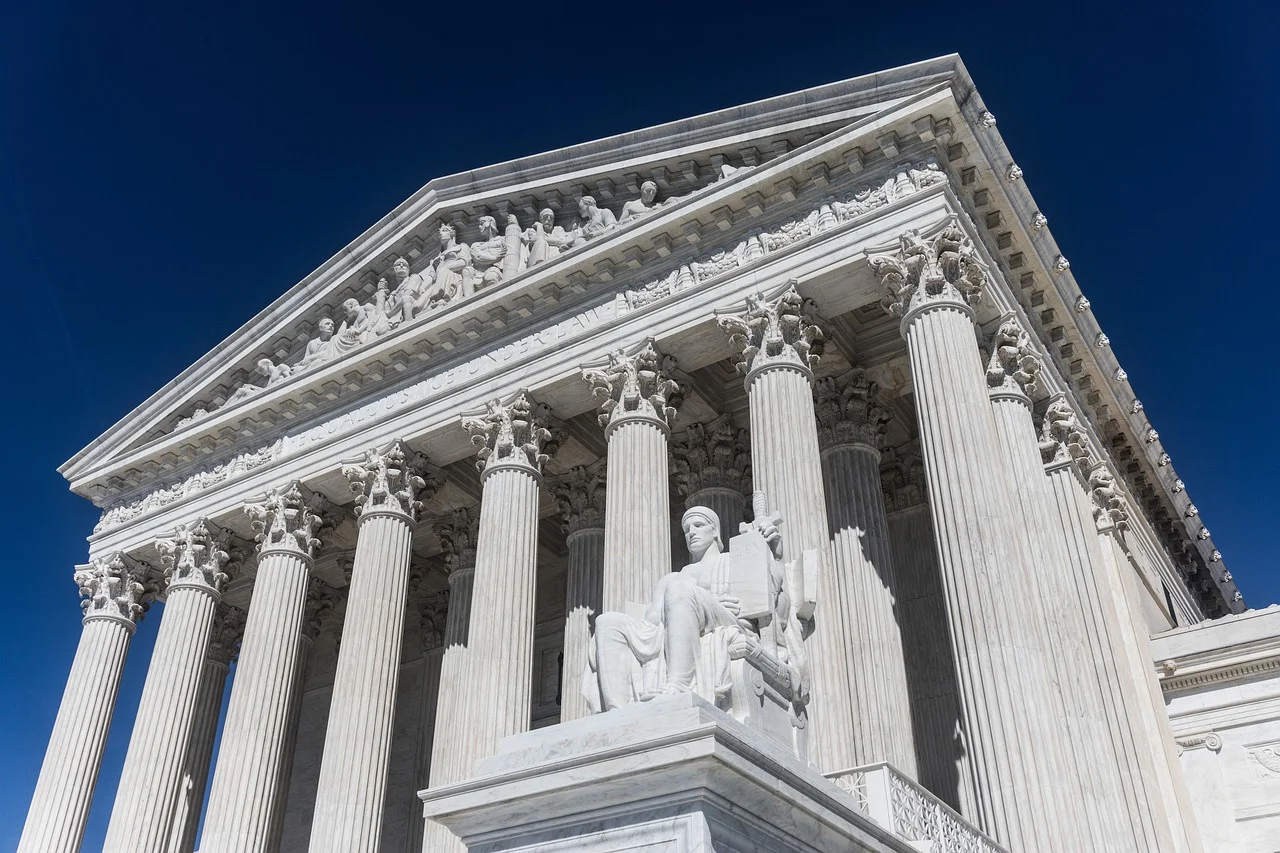
In recent weeks, the US Supreme Court has received numerous briefs urging it to address a significant case that could dictate the future of sports event contracts. This contentious battle has up to $1 trillion in notional value at stake, making it a pivotal issue for the sports wagering and derivatives sectors. Recently, advocates for states' rights gained some momentum when the NFL submitted an amicus brief to the Court.
The NFL's 32-page brief, co-authored by former US Attorney General William Barr, encourages the Court to review Flaherty v. KalshiEx, LLC to safeguard the integrity of professional sports and protect market participants.
The league asserts that clarifying sports prediction markets is essential for upholding sports integrity and consumer protection throughout the system. As the US Commodity Futures Trading Commission asserts its claim to exclusive regulatory jurisdiction over derivatives, the NFL has had ongoing discussions with prediction market operators.
In its brief, the NFL stated that the CFTC and various operators have not adequately responded to its requests to put in place necessary safeguards for sports event contracts.
The NFL's concerns center on several event contracts it considers objectionable. This includes contracts related to whether a kicker will miss a field goal, the next penalty in a game, and non-game-related topics like phrases mentioned during broadcasts. The league expressed uncertainty regarding the Commission’s ability to maintain the appropriate regulatory structure and oversight to ensure these prediction markets do not compromise game integrity.
Two key prediction market operators, Kalshi and Polymarket, maintain that they prioritize integrity in their businesses. Polymarket stated it aligns with the NFL’s commitment to game integrity and is continuously enhancing its market surveillance tools. Kalshi countered that it is proactively monitoring sports-related markets and hopes the NFL will engage constructively.
While attending an exhibition game in Macau, NBA Commissioner Adam Silver addressed the integrity issues surrounding prediction markets and stressed the need for better data collection when irregular market behavior is detected. Unlike the NFL, which supports state-level regulation, Silver advocates for a federal regulatory standard.
Market integrity was a prominent topic at the Predict 2026 conference in Midtown Manhattan, which is focused on the growing asset class of prediction markets. Sean Patrick Maloney, President of the Coalition for Prediction Markets and former New York Congressman, led a panel discussing strategies to tackle insider trading.
Maloney's participation followed a Senate testimony he provided in May on sports betting and predictions, and it coincided with the recent arrest of a US Army special forces soldier on insider trading charges. Gannon Van Dyke faces serious allegations for using classified information to influence Polymarket trades regarding Venezuela's political situation. His trades, totaling about $33,000, reportedly yielded him nearly $400,000. If convicted of all charges, he could receive a sentence of over two decades. When asked about appropriate sentencing, Maloney affirmed that leaking sensitive national security information warrants severe punishment.
Another panel featured Jack Murphy, senior counsel at Akin Gump Strauss, who highlighted the Van Dyke case, along with others involving insider trading in the prediction market space. Notable cases include those involving a Google engineer and a former Congressman.
In a legal twist, the Seminole Tribe of Florida recently entered the prediction market debate. After remaining on the sidelines as tribal gaming entities in California challenged sports event contracts claiming violation of tribal sovereignty, the Seminoles filed a 72-page lawsuit against DraftKings in Broward County, Florida. The tribe accuses DraftKings of engaging in illegal sports betting in breach of their 2021 gaming compact, particularly highlighting the "Super App" that combines multiple offerings, including predictions and sports wagering. According to the lawsuit, the app undermines Florida's revenue and regulatory oversight and lacks essential consumer protections.
DraftKings maintains that its prediction platform complies with federal regulations under the Commodity Exchange Act and expresses respect for the Seminole Tribe while remaining confident in its legal stance.
Additionally, Kalshi announced partnerships with four tribes: three in California—Kletsel Dehe Wintun Nation, Alturas Indian Rancheria, and Greenville Rancheria—and the Alabama-Quassarte Tribal Town in Oklahoma.

