
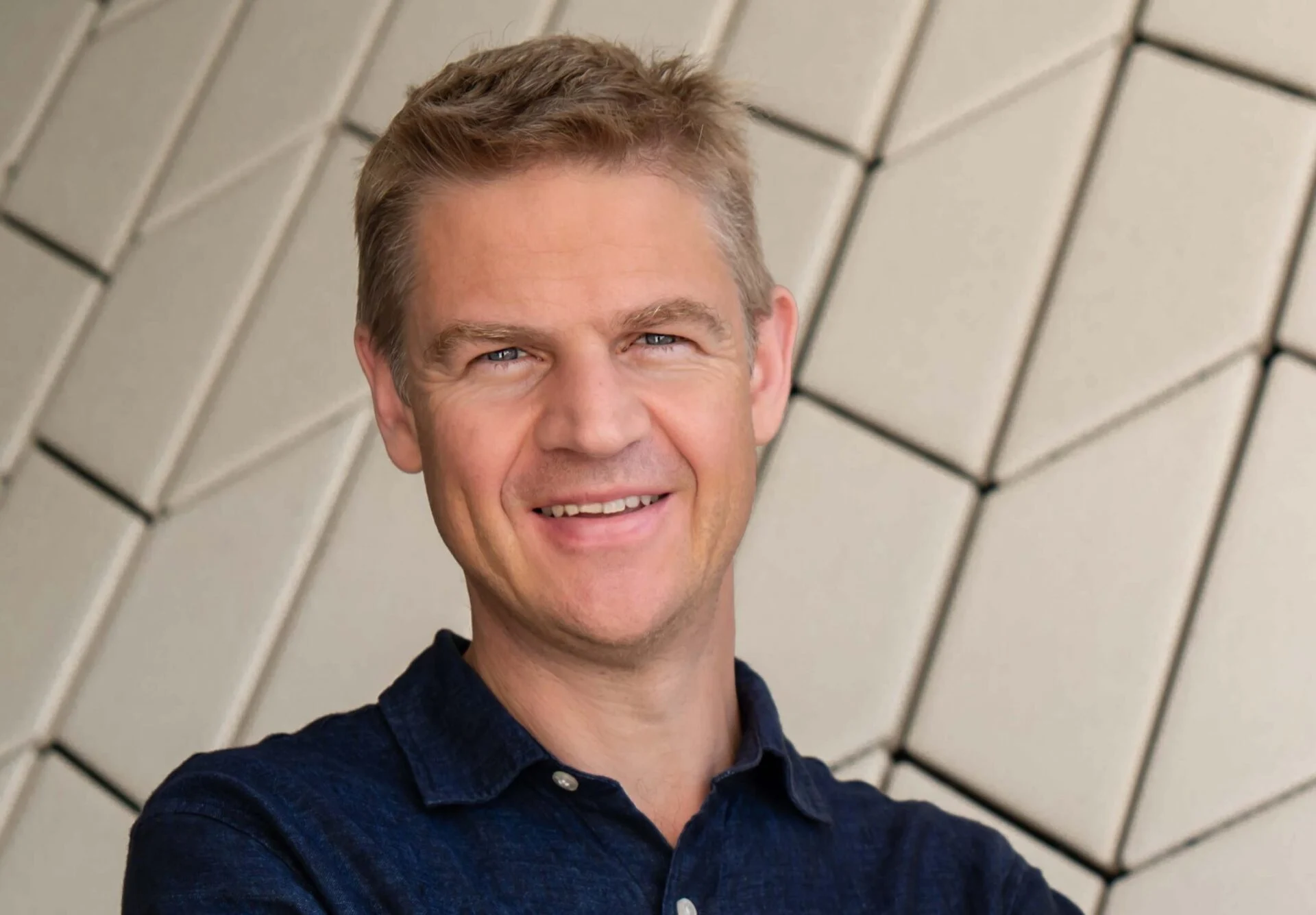
In the gambling industry, businesses often succumb to challenges like over-regulation, litigation, or sheer exhaustion. However, Nigel Eccles, a co-founder of FanDuel, has opted to voluntarily shut down BetHog, a crypto casino he established with several former FanDuel colleagues, on July 31. Despite the casino continuing to grow and function as a strong product, Eccles views this closure not as a sign of failure, but as a strategic refocus.
All of BetHog's resources, including its engineers and technology, will be integrated into Sentient Studios, a new venture that is focused solely on creating a photorealistic AI dealer. This AI dealer is designed to deal blackjack in real time, without any human presence or physical studio. Eccles sees this as perhaps the most significant opportunity of his 25-year career in gambling products.
"We ran the risk that if we didn’t put 100% behind it, we’d fail at AI live dealer – the one thing we were really excited about," Eccles said.
The decision stemmed from an understanding of the shifting landscape of online casinos. BetHog’s initial approach, devised with long-time collaborator Rob Jones, was based on the belief that creating a superior product would lead to success in the crypto gambling space. Unfortunately, this was not the case.
"I think we built a really great product," Eccles remarked, adding that in the competitive realm of crypto casinos, marketing often trumps quality. As Eccles pointed out, while there is potential to carve out a niche within crypto gambling, it only represents a small segment of the online casino market.
Last summer, the team began working on the AI dealer, initially introducing this technology to BetHog. The results were surprising; unlike traditional live dealer games—often associated with high rollers—the AI tables attracted a more diverse player base, including those who typically bet lower amounts.
"The game plays more like an original," Eccles noted, reminding that this quality aligns with the mass-market appeal that drives modern casino economics.
Player interviews shed light on this shift. Many find live human dealers intimidating, particularly newcomers. Eccles noted, "New players find it a little intimidating, because they think, ‘I don’t really know what I’m doing.'" In their interactions with the AI dealer, players felt more comfortable asking questions they would hesitate to pose at a human table.
The pivotal moment for the project came in April when Sentient Studios began discussions with various operators, including both crypto casinos and larger regulated entities facing unique challenges with traditional live dealer setups. Many of these major players have been frustrated by regulatory restrictions. Some regions ban live dealer games entirely, while others impose strict conditions, such as requiring streams from a physical casino, which led to significant complications in development.
Eccles explained that a major drawback of current live casino solutions is their inflexibility. For instance, if an operator wishes to rebrand a live studio, the process can take three to six months and incur substantial costs. In contrast, Sentient Studios could achieve the same rebranding in just one to two weeks. This flexibility includes adjusting characters’ appearances, dialogue, and even the number of tables in operation based on demand.
The team has already attracted interest, with several tier-one licensees anticipated to launch their services using this new technology later this year. With the excitement surrounding AI live dealer evolving, maintaining two separate companies no longer made sense for Eccles. His engineering team, consisting of 15 members, had already begun gravitating toward the AI project, leading him to conclude that a unified focus was essential.
Creating the virtual dealer proved to be a complex task. While generating photorealistic video has become relatively straightforward, creating responsive content within the requisite time constraints posed significant challenges. Eccles pointed out that when a player is dealt a hand, the AI dealer must process the situation, generate an appropriate response, select emotions, and synchronize movements—all in just seconds.
Early iterations of the dealer grappled with conveying emotions properly, with expressions sometimes coming across as exaggerated. The initial launch in October featured a more cartoonish design, while photorealism was achieved later in April. Ongoing updates have progressively enhanced the characters’ natural appearance.
As competition in the market grows, a pressing question for established companies like Evolution, a major player in live dealer gaming, is whether they will develop similar AI solutions. Eccles anticipates a wave of imitation but believes that current leaders face what is known as the innovator's dilemma. He draws parallels to De Beers, which initially attempted to undermine lab-grown diamonds before later embracing them.
Eccles predicts that as AI live dealers gain traction, in five years, up to 80% of live dealer games could feature AI avatars. Concerns about authenticity often arise in discussions about AI live dealers. Critics argue that the essence of live dealer games is their real-time nature. Yet, Eccles counters this notion by pointing out the often solitary interactions at public tables, where genuine communication is infrequent.
On the issue of trust, Eccles highlights that live dealers emerged in an era of skepticism regarding online gaming platforms. Although physical cards were meant to inspire confidence, Eccles suggests there are alternative ways to establish trust in gambling situations. Many players engage with slot providers without understanding the underlying random number generation systems, trusting them based on brand reputation.
In the case of Sentient Studios, trust has improved with enhancements in production quality, and the fairness of games can be objectively verified. Regulators have also shown an unexpected leniency towards the AI dealer model, as it essentially operates like existing RNG products while maintaining responsible gambling measures.
Eccles promises that any remaining balances from BetHog will be refunded to players and emphasizes that the new venture does not face challenges related to regulatory scrutiny. His ongoing lawsuit against FanDuel is separate and does not impact Sentient Studios’ operations.
One challenge Sentient is encountering relates to the quality of its AI dealers. Eccles explains it ironically: the high audio quality of the AI dealer’s interactions contrasts sharply with the subpar sound quality often found in live dealer games, leading to a need to adjust the output to create a more authentic experience.
Concerns about technological replacements for human roles are common. Eccles draws parallels to the initial apprehension people expressed toward ATMs and self-service checkouts, stating that players often cling to tradition until innovations naturally evolve within the industry. Those who may have once resisted the idea of playing against an AI dealer might soon find themselves engaging in just that.

