
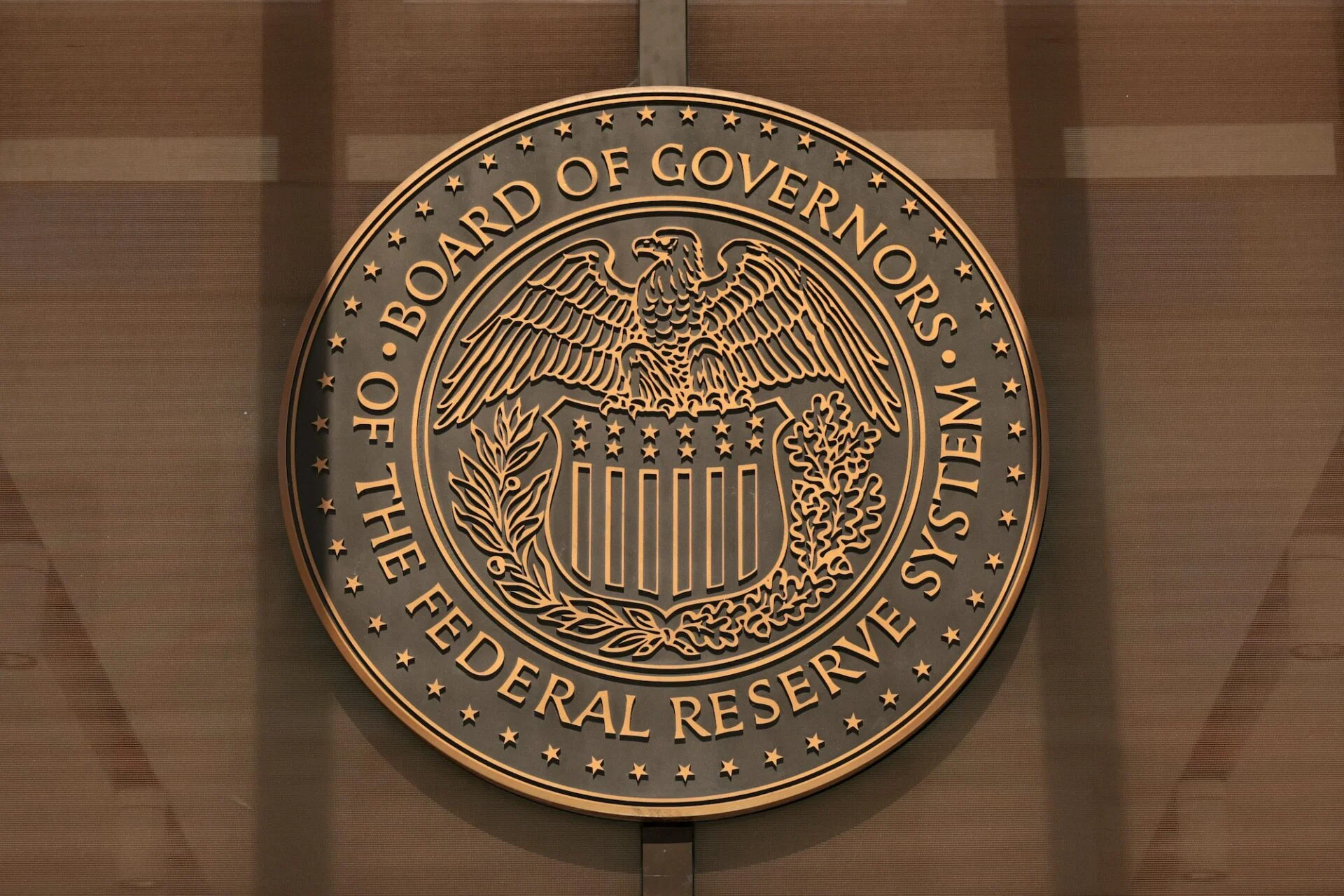
The US Federal Reserve raised the effective federal funds rate by 0.25%, bringing it to a range of 3.75%-4% on Wednesday. This marks the first rate hike in three years, occurring as the economy faces persistent inflation, soaring energy prices, and climbing bond rates, exacerbated by an ongoing conflict in Iran that began in February.
As 2026 began, investors were hopeful for multiple rate cuts that could stimulate capital markets and bolster deal-making activity. However, developments on February 28 altered this outlook following US-Israeli attacks on Iran, which significantly disrupted traffic through the Strait of Hormuz, a critical waterway responsible for transporting around 20% of the world’s oil.
Several key factors influenced the Fed's decision to raise rates. Current gas prices sit at an average of $4.36 nationwide, up from $3.18 last year, while diesel prices have reached a historic high of $6.31. Brent crude oil prices have surpassed $100 per barrel compared to about $68 a year ago. Inflation was reported at 3.4% in August, up from 2.9% the previous year, and long-term government bonds are yielding their highest rates in decades.
Kevin Warsh assumed the role of Fed Chair in May, during which the Fed maintained steady rates through his first three meetings despite growing pressure to increase rates due to inflation remaining well above the target of 2%. The decision to hike rates this month reflects that pressure amidst ongoing economic challenges.
"The decision we made today was the right decision to deliver on the remit that Congress gave us to ensure stable prices… Some months ago I said we will deliver stable prices, today’s action is consistent with that," Warsh stated at a press conference following the announcement.
For the gaming industry, this economic shift and a return to higher interest rates after a period of easing could dampen the optimism seen at the year’s start. Many gaming stocks have underperformed in recent years, with major mergers and acquisitions being primarily driven by private equity firms capable of leveraging low valuations. There had been hopes for declining rates to ease such pressures.
Chad Beynon, lead gaming analyst for Macquarie, remarked, "Publicly traded valuations are a reflection of the current interest rate environment. Whether it’s a long-term financial model on a growth company, you’re going to discount that back at a higher rate, or if it’s just a standard four-wall business, the cash flows in a higher interest rate environment are worth less."
Data reveals that the resort and casino sector has experienced a -41% decline over the past five years, in contrast to a +7% increase in the overall gambling sector, which includes major sportsbooks and online operators. Comparatively, the benchmark S&P 500 index saw a +71% rise during the same period.
This year saw significant moves in the casino sector, including Fertitta Entertainment’s acquisition of Caesars Entertainment in May, along with a takeover bid for MGM Resorts from Barry Diller’s holding company, People Inc. However, changes in market conditions could jeopardize these transactions.
In July, Fertitta's General Counsel, Steven Scheinthal, told the Nevada Gaming Control Board that while banks had shown willingness to finance the deal, the firm awaited improved borrowing conditions. Fertitta aims to assume approximately $12 billion in Caesars’ debts, with a commitment to a $6.6 billion financing package.
"Our hope is that in the next few months there will be a window of opportunity where the market will be hotter and [it’s] a more interest rate friendly environment where we can go raise the money and then just put it in an escrow account," Scheinthal noted.
That anticipated window appears to be closing. Caesars’ proxy filing revealed that during negotiations last spring, Fertitta limited his $31-per-share offer due to heightened financing costs and macroeconomic risks. Increased borrowing rates since late 2025 have resulted in additional costs of about $40 million annually since the beginning of the negotiation process.
Diller’s bid for MGM included an all-cash offer of $48.30 per share, which was proposed shortly after the Caesars deal. People Inc. had $1.1 billion in cash at the end of the second quarter, but financing is necessary due to the acquisition of 74% of shares and MGM’s long-term debt surpassing $6 billion. MGM has commissioned an independent committee to evaluate the bid but has not commented further.
Looking to the future, the recent rate hike may not be the last. Historically, during hawkish phases, the Federal Open Market Committee (FOMC) has paused rates after an initial hike only once since the 1990s, and the Fed typically raises rates six to seven times in an upward cycle. Warsh expressed confidence in the economy’s stability, stating, "Economic activity is expanding at a solid pace. While uncertainty remains elevated, owing in part to geopolitical developments, domestic spending has been resilient, productivity growth is strong, and capital investment is robust."
In the aftermath of the rate decision, the likelihood of an additional rate hike this year increased to 48% on Polymarket. A contract is tracking predictions for the Fed Funds Rate upper bound to hit 4.25% by year’s end, with a 21% chance that the Fed will maintain rates through the year, and a lower probability for reaching at least 4.5%.
According to Multiples.VC, the average enterprise multiple (EV/EBITDA) of leading US-listed gaming companies stands at 10x, contrasting with broader market averages of 23.9x overall and 19.7x among EBITDA-positive firms, indicating that the gaming sector is undervalued compared to other industries. In a recent report, Fitch Ratings noted that most North American gaming companies maintain a "Stable" outlook with "adequate rating headroom" despite facing consumer challenges.
Beynon echoes this sentiment, highlighting the gaming sector's resilience during economic downturns, such as the COVID-19 pandemic. He observed that bankruptcies in this industry have remained low compared to the broader market and suggests both land-based and digital gaming companies have optimistic prospects ahead. "It’s certainly not lost on us that this sector has underperformed for several years in a row just because it doesn’t have either the growth of, say, tech companies, or the perceived free cash flow-insulated businesses, which we believe it does. We’ve thought there’s been value in the sector for a few years, particularly this year," he stated.

