
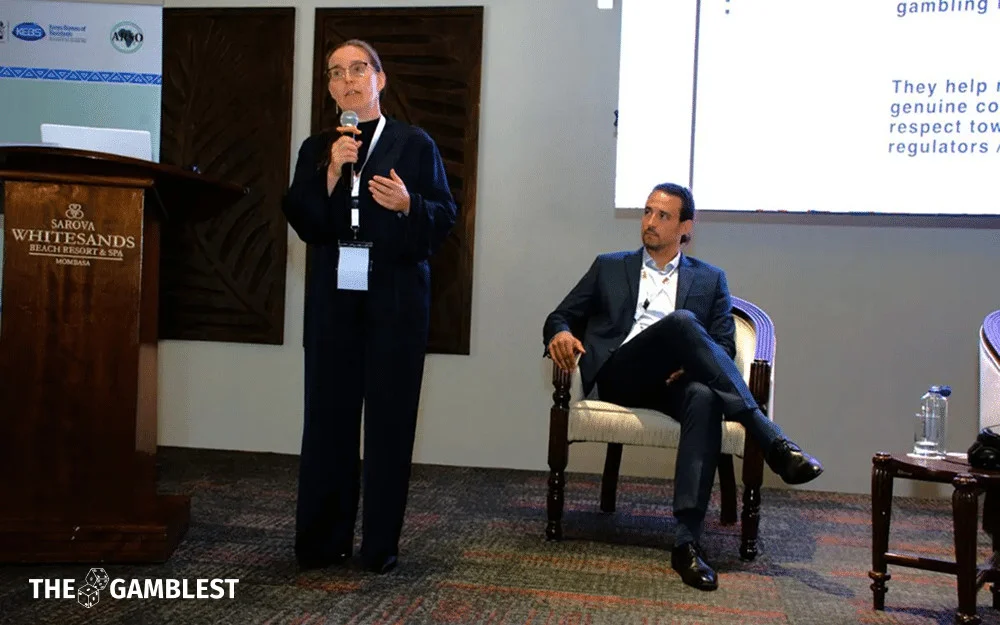
Šimon Vincze, who leads Sustainable and Safer Gambling at Casino Guru, along with Dr. Margaret Carran, the Assistant VP for Education Partnerships at St George’s, University of London, recently unveiled the Self-Exclusion Standards Project. This initiative aims to create clear and standardized guidelines for how online self-exclusion programs operate across various jurisdictions, with special attention to Africa.
Their presentation took place during the 32nd General Assembly of the African Organisation for Standardisation (ARSO), which was held in Kenya from August 24 to August 28. The event was co-hosted by the Kenya Bureau of Standards (KEBS). Vincze and Dr. Carran shared their plans for establishing comprehensive self-exclusion guidelines that can be implemented across borders to better protect consumers from gambling-related harms.
Vincze remarked on their focus:
"We focused on every aspect of the self-exclusion process and its implementation at operators to ensure that players are well-informed, able to find the right tool and use it at times when they are losing control. At the same time, we have sought to equip operators with appropriate procedures and safeguards to make sure they protect those who need it effectively."
The project is the result of thorough research and outlines a three-part, evidence-based approach based on consultations with workgroups and the public, aimed at establishing a universally accepted standard.
Dr. Carran added,
"Creating international standards for safer gambling tools and principles would bring enormous benefits to all stakeholders. The regulators and policymakers would have a reliable, evidence-based and robust source of what offers genuine protection; enforcement would become easier; players would benefit from a consistently high level of protection regardless of where they choose to gamble, and the public would gain confidence that the governments are indeed serious about protecting players from gambling-related harms."
The framework is intended to be easily integrated across state lines, with the potential for immediate benefits for player well-being and improvement in consumer protection measures. The authors of the initiative pledged to assist jurisdictions in implementing this framework to enhance local consumer safeguards.

