
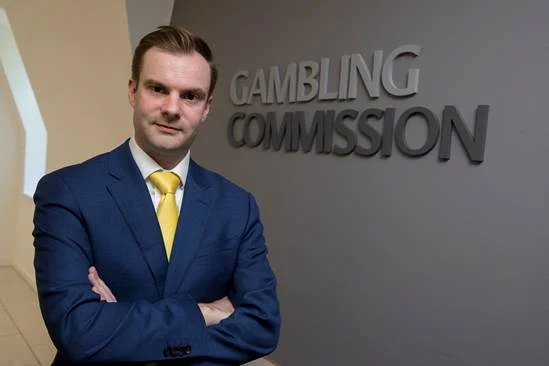
Tim Miller, who served a decade at the UK’s Gambling Commission, was instrumental in bringing forward the 2023 white paper reforms that cover a wide range of issues from age verification and game design to marketing controls and financial risk assessments. He also oversaw the launch of the Gambling Survey for Great Britain (GSGB).
Among his accomplishments, Miller takes particular pride in the establishment of the National Strategy to Reduce Gambling Harms. This initiative notably engaged the financial services industry in harm prevention and encouraged challenger banks like Starling to implement gambling blocks.
In June, Miller announced his departure from the Commission, which was finalized last month. He has since started GamReg Consulting, with early clients including Gaming Compliance International (GCI), known for providing transaction and market monitoring tools to regulators, and Spectrum Gaming Group. Feedback since his launch, especially after the recent G2E event in Las Vegas, has been overwhelmingly positive, according to Miller.
His exit coincided with a sensitive period for the Commission. Andrew Rhodes, the Chief Executive, had resigned at the end of April. Financial risk assessments (FRAs) were confirmed in July, with further implementation still on the agenda.
Miller emphasizes that his departure was not due to any issues with the Commission’s direction. "I wasn’t looking to escape the Commission; I was just ready for the next challenge," he states. Though his name surfaced as a potential successor to Rhodes, Miller never sought that position, noting the need for a long-term commitment of three years or more, which he was not prepared to make.
He interprets the recent spate of senior departures as coincidental rather than indicative of a deeper problem within the Commission, which comprises over 300 staff members. "As important as individual leaders are, they’re not more important than the whole," he remarked.
Miller identifies the illegal gambling market as the principal challenge for the Commission, cautioning against unrealistic expectations of what a regulatory body can accomplish alone. He compares illegal gambling to organized crime enterprises, such as the international drug trade, stating that it would be unreasonable to expect a small regulator based in Birmingham to tackle such extensive issues on its own. He stresses that law enforcement, governments, and technology companies need to contribute as well. "If people think a gambling regulator will defeat the illegal market by itself, we’re destined to fail," he warns.
Defense of the GSGB is another priority for Miller. Some industry critics argue it exaggerates gambling participation and harm, yet he points out that those critics often overlook the limitations of the Health Survey for England, which shows rising problem gambling rates, contrasting with the GSGB’s findings of relative stability. Miller asserts, "If anybody suggests there’s a single survey or a single piece of data that gives you the absolute definitive picture on an issue, then frankly, they’re kidding you."
Miller also addresses the backlash against FRAs, which generated significant opposition from the industry. He attributes this pushback to branding, as many critics conflated FRAs with affordability checks, the latter being something he himself believes would be challenging to implement effectively. The pilot studies revealed a cohort of individuals at risk of serious harm that existing methods failed to identify, many of whom contributed significant revenue. "Once you’ve got data that identifies those people, you need to do something about it, and that clearly could have a financial impact," he asserts.
He believes that correctly implemented financial risk checks could actually reduce documentation requests for consumers, leading to less friction in their experiences with operators. Miller believes this approach could benefit both consumer safety and ease of access, terming it a potential win-win situation.
In terms of the decision-making process at the Commission, Miller refutes any claims that the board delayed the approval of FRAs, calling those assertions "inaccurate." Initially, the assessment will only apply to larger operators dealing with customers whose net deposits exceed £5,000 within a rolling 24-hour period (£2,500 for those under 25), without any enforcement action in early phases. Ultimately, thresholds will adjust to £1,000 in 24 hours or £3,000 over 90 days.
When asked about the potential impact of these checks, particularly regarding high-value customers migrating offshore, Miller takes a measured stance. He acknowledges that there is always a risk of displacement due to regulatory requirements, but contends that operators' decisions can also drive players toward unlicensed sites. He notes complaints from successful punters who have faced betting restrictions, often forcing them to seek illegal alternatives.
Regarding Rhodes' transition to principal consultant at advisory firm Hawkbridge, which occurred alongside his own departure, Miller dismisses any conflict-of-interest allegations tied to his current consultancy work with companies providing regulatory monitoring tools. "No, not at all. I was very clear that I didn’t want to move into roles that would compromise my independence," he asserts, though he acknowledges he will not disclose any confidential information from his past role.
Miller regards his expertise as his own and is committed to maintaining his perspective as a regulator in his new consultancy role. He intends to focus on collaboration with governments, regulatory bodies, and tech firms, while also remaining open to working with operators on issues concerning the illegal market where interests align. Initially, his work will take place outside the UK, as he wishes to avoid lingering within a contentious debate he characterizes as "really toxic" at times, noting instances of personal threats made against his family through social media. His parting advice to the industry emphasizes the importance of maintaining passion while seeking constructive dialogue with those holding different views.

