
Betano made history in 2022 by becoming the first sports betting operator to partner with FIFA, an event that was more puzzling than envied within the industry. Fast forward four years, and the Greek-based operator is now an official tournament supporter for the upcoming FIFA World Cup 2026, which spans Europe and South America. This partnership marks Betano's third agreement with FIFA, formed for a monumental tournament expected to encompass 104 matches and already breaking sponsorship revenue records for a stand-alone sporting event.
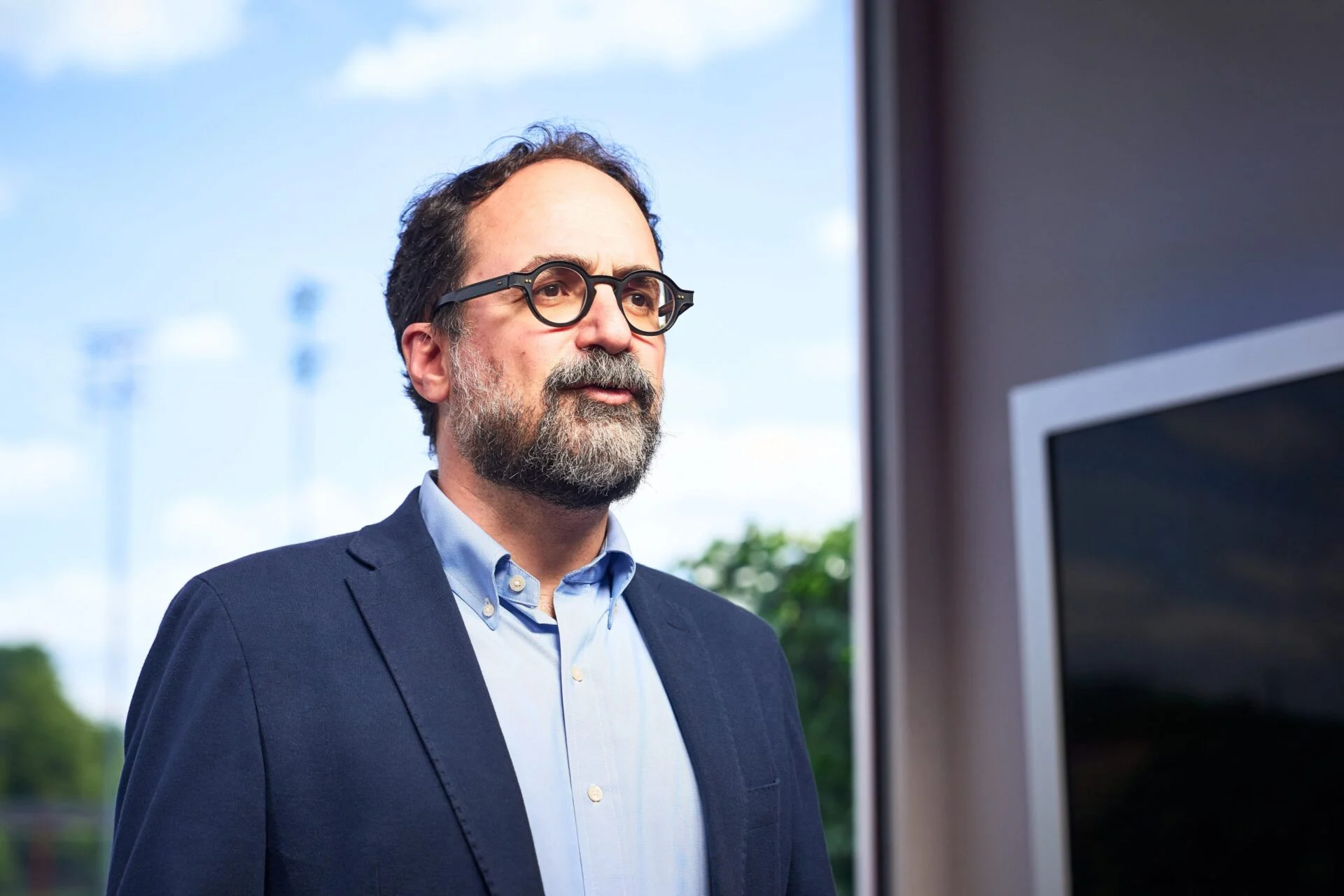
Julio Iglesias Hernando, Chief Commercial Officer of Kaizen Gaming, Betano's parent company, views the evolution into a FIFA partner as a narrative centered on building trust, as much as it is about financial gain.
"When we became the first sports betting operator to partner with FIFA in 2022, many in our industry questioned the move. The conventional wisdom was that FIFA would keep our industry at arm's length," Iglesias Hernando reflected. "However, we approached the issue from a different angle: we are a fully responsible and regulated operator, eager to collaborate and learn while working hard to earn society's trust."
He noted that the World Cup in Qatar was not just about activation but also about education. "It helped us grasp how FIFA engages with its audience, identify where our brand could genuinely contribute value, and explore ways to build trust. The FIFA Club World Cup 2025 in the United States served as a practical rehearsal, allowing Betano to test and refine our activation strategies on a significant FIFA stage before the largest event in football."
By the time of the 2026 tournament, the partnership had transformed into something fundamentally different.
"Having gone through three tournaments means we now approach this partnership with a clear activation framework: understanding how we can interact with fans, create meaningful experiences around the matches, and balance commercial objectives with responsible gaming principles suited to a partner of FIFA's standing," he explained.
Iglesias Hernando emphasized that the media exposure is not the most significant benefit of their partnership."The real value is not just the badge on broadcast. It’s the permission to engage authentically with the global football community and the standards it establishes for our operations in every market."
Kaizen Gaming has experienced rapid growth. When Iglesias Hernando joined from William Hill in February 2021, the company was active in just six markets. Now, it operates across over 20 regulated jurisdictions worldwide, has earned consecutive operator of the year titles, and leads Brazil's competitive online betting scene with a market share of approximately 23%, surpassing Bet365.
The sponsorship portfolio has expanded correspondingly: FIFA, UEFA club competitions, Bayern Munich, Flamengo, River Plate, FC Porto, and most recently, Tottenham Hotspur, following a two-season partnership with Aston Villa that concluded with the impending ban on gambling sponsorships in the Premier League.
"Our sponsorships create a strategic map of our markets," Iglesias Hernando stated. "Identifying the right partnership in the right territory and aligning with a suitable club for that audience produces results that generic global campaigns cannot match."
Yet, this raises the inevitable question from the CFO: what is the return on investment? Iglesias Hernando candidly discusses the aspects that can and cannot be quantified. Technology now provides genuine visibility into critical factors such as brand exposure under specific broadcast conditions, share of voice, and audience reach across various markets. Yet, some elements resist quantification, like the cumulative impact of being present during significant moments for fans or the brand credibility that comes from association with beloved clubs.
"We won’t always have a precise figure for our CFO relating to every component of our work, but we’re confident in our objectives and the results validate our strategy across markets," he acknowledges.
Regarding what makes or breaks a deal, Iglesias Hernando points out the necessity of trust. "If there’s no belief that a partnership can be long-term, the deal won’t happen. If I don’t trust you, I can't entrust you with my money. It seems quite obvious, but it's surprising how often that simple principle is overlooked. The rest is boringly commercial; if there’s no sound economic rationale, the deal won’t last."
The recent partnership with Tottenham, unveiled in July 2026, presents an intriguing element of their sponsorship portfolio due to its unique structure. Betano will serve as the club's training wear partner for the 2026/27 season, succeeding BetMGM, with plans to evolve into a European and Latin American betting partnership lasting through 2029.
Notably, Betano's logo will not appear on retail training merchandise, making this a live trial of a Premier League gambling sponsorship void of front-of-shirt advertising. Iglesias Hernando muses on whether this arrangement could set a precedent for sponsorship in a post-shirt-ban era: "We don’t know, but we’re eager to explore."
He dismisses concerns that reduced visibility equates to diminished value. "While the Premier League’s front-of-shirt restrictions limit visibility, we’ve secured invaluable positions: the association with a globally recognized club for three seasons, a prominent presence across training wear, and engaging partnership activations."
The regional dynamics are significant; Tottenham commands a global audience exceeding 600 million, while Betano has been focusing its efforts on Latin America. This newly formed betting partnership intricately links the two.
"The market has evolved," Iglesias Hernando said. To thrive, companies need to adapt and create value within the regulatory frameworks available instead of lamenting what is off the table. "Betano has been effectively doing this across various markets for years. The Tottenham partnership reflects that ability."
Treating regulation as an opportunity rather than a setback runs through Kaizen's operational ethos. The company only engages in regulated markets, which Iglesias Hernando phrases as a foundational choice. "While some may see regulation as a burden, we view it as the price of entry to the tier of the market we seek to compete in. Those relationships can't exist without a compliant regulatory environment."
His concern does not focus on specific restrictions, but on unevenly applied rules, stating, "A fair playing field is essential. It’s vital to take steps to eradicate the black market. Imposing restrictive regulations in areas where unlicensed gambling operators thrive will only drive consumers to them."
Has tightening regulation prompted a fundamental shift in strategy? Not fundamentally. "We’ve pivoted more than once, but we haven’t had to dismantle our commercial model entirely and start anew."
Looking ahead, Kaizen's expansion shows strategic intent. Ghana, which the company entered in February 2026 as its 20th market and second in Africa after Nigeria, is dominated by a competitor with a reported 60-65% share. Why enter such a market? "We consider each market as part of a unified portfolio," he explained. "The marginal costs associated with Ghana or Ecuador differ drastically for us compared to an operator starting from zero, as the platform, compliance frameworks, and even regional brand recognition often already exist."
Iglesias Hernando is acutely aware of the competitive landscape in Africa. "We approach Africa with clear eyes. Local contenders have cultivated loyal customer bases; we don’t take for granted that our brand alone will suffice. We believe Betano can provide a superior product: a more comprehensive sportsbook and an expansive gaming portfolio that remains underrepresented in many areas. Timing is also crucial; positioning oneself in a growth market should occur before consolidation, not after."
The United States remains a notable gap in Betano's strategy, even as the company sponsors a World Cup that will prominently take place on American soil. "Avoiding the US market has been a strategic choice," he stated. "We’ve observed many international brands incur massive losses trying to gain a foothold. However, the door isn’t closed; we continuously evaluate developments while gaining critical insights into the North American market through our presence in Ontario, Canada."
The company's ambitions remain grounded, as Iglesias Hernando reiterated its goal of becoming a top-three operator in every market where Betano operates.
Reflecting on his experience from the consumer goods industry offers a critique of the betting sector. "Our industry excels in digital expertise but often lacks fundamental marketing knowledge, where we can shine. Much of our field does not fully grasp their actions or, worse yet, they merely copy—sponsorship exemplifies this problem."
Looking towards 2030, he reveals that Kaizen focuses on a simple motto: NO FOMO. "No individual deal is critical enough for us to compromise our principles or framework. We view sponsorships as vital tools for brand development, with clear guidelines on what we should pursue and what we should avoid."
In an industry where sponsorship spending often appears reactionary—a competitor signs a club, so you sign the neighboring one—Kaizen's measured approach seems more unconventional. The ambition is to continue their strategy of exploration: "Flexibility and curiosity will guide us. We will adapt, experiment, fail, and learn. In essence, this is the only viable route forward.

