
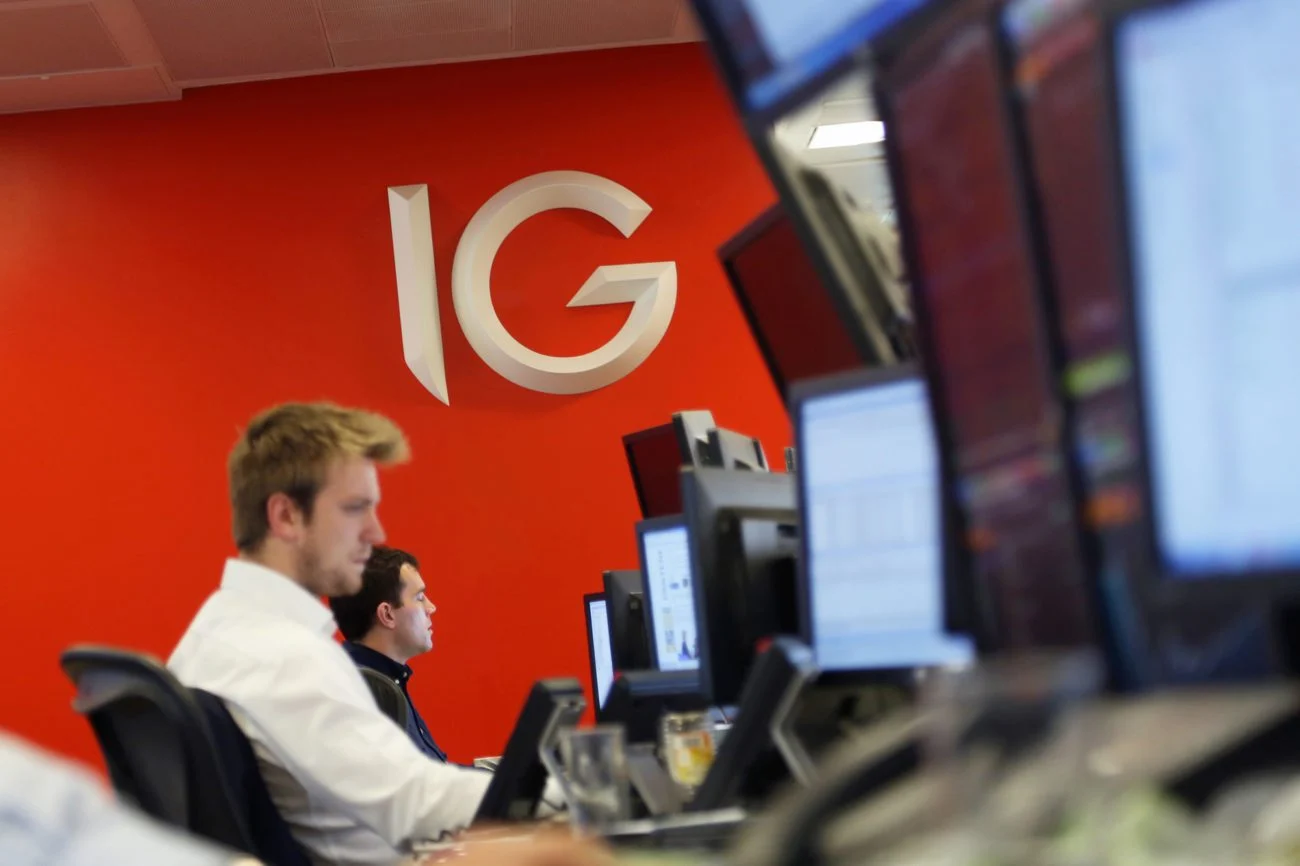
IG Group's recent acquisition of Underdog Sports Holdings has sparked discussions about the future of prediction markets. While the deal emphasizes that a financial-trading company can offer critical support to gaming firms—specifically in areas like capital, risk management, and innovative market approaches—there’s more to consider beneath the surface.
On July 30, IG Group announced its agreement to purchase Underdog for approximately $1.1 billion in upfront enterprise value, with an additional earn-out potential of up to $200 million for shareholders. Employees at Underdog stand to benefit as well, with a management incentive plan (MIP) that could amount to as much as $850 million, contingent on achieving significant future earnings. The deal is anticipated to close between late 2026 and early 2027.
The total projected cost of the acquisition, reported as $1.3 billion, warrants careful scrutiny. The $850 million MIP is not directly a payment to Underdog’s sellers but rather a performance-based incentive for management should the company achieve the ambitious growth IG anticipates.
This nuance is crucial. According to Ben Robinson, a partner at Corfai, the valuation does not seem as steep once examined closely: "IG is paying $1.1 billion, or about 2.4 times Underdog’s last twelve months’ revenue, which only rises to around 2.8 times if we consider the full earn-out." While this valuation is notable, it doesn't inherently indicate a significant commitment to the entire prediction-market sector on IG’s part.
For comparison, the nearest public example is PrizePicks, which Allwyn is purchasing for $2.5 billion, equivalent to about 2.9 times its last twelve months’ revenue. Underdog's valuation is lower in terms of revenue multiples but higher relative to its earnings due to its thinner margins.
Robinson notes, “It's a sensible deal structured around performance, meaning IG is saying: prove it first.” The real stakes of this acquisition become clearer when considering the contingent payments that lie ahead.
The first payment of the MIP activates at $140 million of EBITDA by 2028, contrasting with an anticipated annualized first-half run rate of approximately $115 million. To reach the highest potential payouts, Underdog will need to significantly accelerate its earnings to $400 million in 2028 and $700 million in 2029.
In terms of growth, Underdog has seen substantial increases, claiming a net revenue of $466 million for the twelve months leading up to June 2026, with a 21% year-on-year rise. Prediction markets comprised 54% of the business’s handle during the first half of the year, with the company reporting five million depositing customers and over 11 million registered accounts.
Yet there are signs of a slowdown, as growth in the first half of 2026 dipped to around 11%. This perspective raises further questions: Is the burgeoning popularity of prediction markets translating into new revenues, or is it simply transferring existing capital from daily fantasy sports (DFS)?
To attain the necessary EBITDA figures for 2028, Underdog will require a notable uptick in growth, explaining IG's emphasis on structured performance-based incentives.
Legal considerations also shadow the purchase. Sam Martin, a lawyer at Wiggin, indicates that the deal showcases IG’s anticipation of swift growth while hedging against potential regulatory challenges that could hinder prediction markets. With ongoing legal disputes centering on how federally regulated prediction markets should be classified—either as financial products or gambling—these uncertainties are intricately linked to the valuation discussed.
Ed Birkin, managing director at H2 Gambling Capital, cautions about the potential pitfalls of such a hefty valuation. He states, “I suppose the valuation makes sense if you believe that the market is going to continue to grow…if it gets shut down in many states, then things look very different.” In essence, the upside remains vast, but so does the uncertainty surrounding the market’s future.
The connection between Jeremy Levine, Underdog’s founder, and Breon Corcoran, IG’s CEO, adds another layer to the deal. Their professional relationship traces back to a previous acquisition in 2017, when Corcoran's then-company, Paddy Power Betfair, acquired Levine’s DFS business, DRAFT. This familiarity may lend confidence to their current collaboration.
Interestingly, Corcoran has a financial stake in Underdog, with ownership of about 0.34% of the company's equity through a mix of preferred shares and options. Although the board sanctioned his involvement in the deal’s negotiation, he abstained from the formal voting process.
The competitive landscape also poses challenges. Underdog currently trails behind rivals such as Kalshi and Robinhood in U.S. regulated notional-volume flow. Despite launching its exchange only recently, much of its initial growth has been through third-party platforms. IG Group aims to leverage its financial prowess to enhance Underdog's value capture but faces hurdles in achieving greater liquidity—a crucial factor for success in this market.
Oliver Jones of Partis Capital reflects a similar skepticism about IG Group's immediate competitive impact, stating, “I don’t see technical or institutional competence translating into a significant advantage for Underdog.” Furthermore, the current prediction market focus heavily revolves around sports, indicating a need for deeper pricing expertise in the long term.
The situation is dynamic, with traditional sportsbooks actively seeking ways to merge into the prediction market space. DraftKings and FanDuel have initiated their own ventures and partnered with established institutions to enhance their market position. With shifts already underfoot, Jones notes that operators are pursuing various strategies to secure a stake in this burgeoning sector.
Despite the potential competitive pressure from the likes of DraftKings and FanDuel, IG Group's investment represents a calculated risk within a broader landscape of evolving prediction markets. While IG Group’s history in spread betting may not position it completely as an outsider, the firm is banking on the expansion of prediction markets beyond sports and into domains involving crypto and macroeconomic events.
This ambitious venture comes amid a dip in IG’s share price, which fell roughly 20% after the announcement of the acquisition, signaling a disconnect between management’s optimistic outlook for growth and investors’ current sentiments. IG has also paused its £125 million share buyback program pending future capital assessments.
Thus, IG's decision to acquire Underdog emerges as a layered gamble—not merely a fixed investment but a complex interplay of future performance incentives and strategic positioning in a shifting regulatory landscape. It reflects a bet on substantial growth, favorable market conditions, and confidence in a founder with an established track record of success.

