
In June 1914, Lawrence Sperry soared over the Seine near Paris while demonstrating one of the first autopilots, flying with both hands raised as his mechanic climbed onto the wing. Today, autopilot technology plays a critical role in commercial aviation, where most flights are managed with automated systems, although pilots remain essential for setting flight paths, monitoring systems, and intervening when necessary.
The world of sports betting is evolving similarly, with prospects for automation resembling tools seen in other industries. Bettors might soon be able to assign an AI agent a fixed budget and specific instructions, allowing it to follow models for different sports, such as placing bets on cricket or monitoring NFL picks, all while managing the logistics of the betting process independently so that customers can focus on their day-to-day activities.
This anticipated innovation could draw a more diverse audience into wagering, making specialized tools and expert advice readily accessible. Prediction markets like Polymarket are already exploring this automated trading model, suggesting that sportsbooks may soon face pressure to adopt similar integrations into their platforms.
Automated betting isn't a new concept, as it has already been leveraged by professional racing syndicates that utilize computer-assisted wagering to meld probability models with software capable of placing bulk bets into pools. Betfair has also integrated automated betting through its Exchange API, solidifying the trend.
AI agents hold the potential to make these functionalities even more accessible. Users who lack the technical know-how to create a betting bot can now convey their strategies in simple language for the software to execute. Traditional bots typically abide by strict guidelines to place bets based on tipster inputs, but an AI agent can interpret broader strategies, sourcing relevant information such as team news and weather forecasts. For cricket, this could mean analyzing available odds alongside predictions from specialist models before making a wager.
AI agents may also utilize established betting strategies, analyzing price momentum or anticipating reversals after substantial market shifts. Market-making bots have the potential to enhance liquidity in betting markets, benefiting both the bettors who engage with these tools and the sportsbooks through increased trading activity.
Several consumer-facing products employing these AI technologies are already operational. Olas launched Polystrat in February, allowing users to fund an agent and define a strategy, with the software trading on Polymarket as conditions change. Similarly, Forkast’s ATLAS utilizes Telegram for users to receive trade proposals and approve them before execution.
As advertising suggests, the allure of automated “trade while you sleep” capabilities is gaining traction on social media platforms. While these tools often highlight profitable trades, such promotions don’t always guarantee sustained returns. Bettors are encouraged to check publicly available trading records on Polymarket to scrutinize the profitability of various accounts and trading strategies, enabling them to adapt or replicate successful approaches without needing programming knowledge.
One immediate advantage these agents offer is dependable execution. For instance, a casual bettor might treat a $25 stake on a $2.20 bet similarly to one at $2.50. However, a $2.20 bet suggests an expected loss while the $2.50 selection implies a profit before fees. With preset probabilities and staking rules, the software can adjust stakes according to changing prices and uphold spending limits, enhancing bankroll management. While automation provides consistency and saves time, it cannot compensate for a flawed strategy.
Ultimately, customers still chart their courses, needing to trust their AI agents more significantly if they allow for autonomous betting. Many prefer to approve individual trades beforehand; some, like a contact utilizing a Telegram bot for Australian racing, swiftly calculate qualifying bets before confirming them with a quick response.
Professional betting teams will prioritize the precision of these tools, closely assessing their implementation, error management, and strategy confidentiality to protect their competitive edge.
The market is likely to become crowded as numerous AI agents chase the same betting opportunities. This surge could lead to increased order activity influencing the odds adversely, mirroring concerns raised by industry veterans like Bill Benter regarding independently developed models in horse racing, which may decrease profit margins for everyone involved.
Mimicking a successful account’s picks is simpler than replicating its profitability. Dispersing efforts across multiple accounts could lead to an incomplete picture and less favorable entry prices, complicating strategy execution. Agents must also affirm whether available prices reflect true value.
As the competitive landscape for AI agents heats up, the importance of unique data and specialized analysis in betting is expected to rise. AI agents could aid in widening the audience for tipsters by acting on selections that customers might typically overlook—assuming they can still secure advantageous pricing.
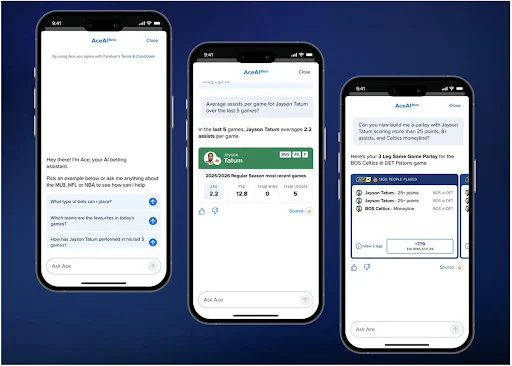
With rising expectations for tailored tools in the betting experience, operators face decisions about whether to create their technology internally or to leverage existing solutions. FanDuel has developed AceAI to enable customers to conduct market research and generate bets through interactions without relinquishing control over the final transaction. They have since shared their technological advancements with sibling brand Sportsbet.
Investing in specialist providers offers operators a strategy to cut down on research and maintenance costs, especially when combined with exclusive data or insights challenging to replicate. Waterhouse VC sees this as an opportunity to support suppliers who can innovate products that outpace operator-developed offerings in quality and affordability.

