
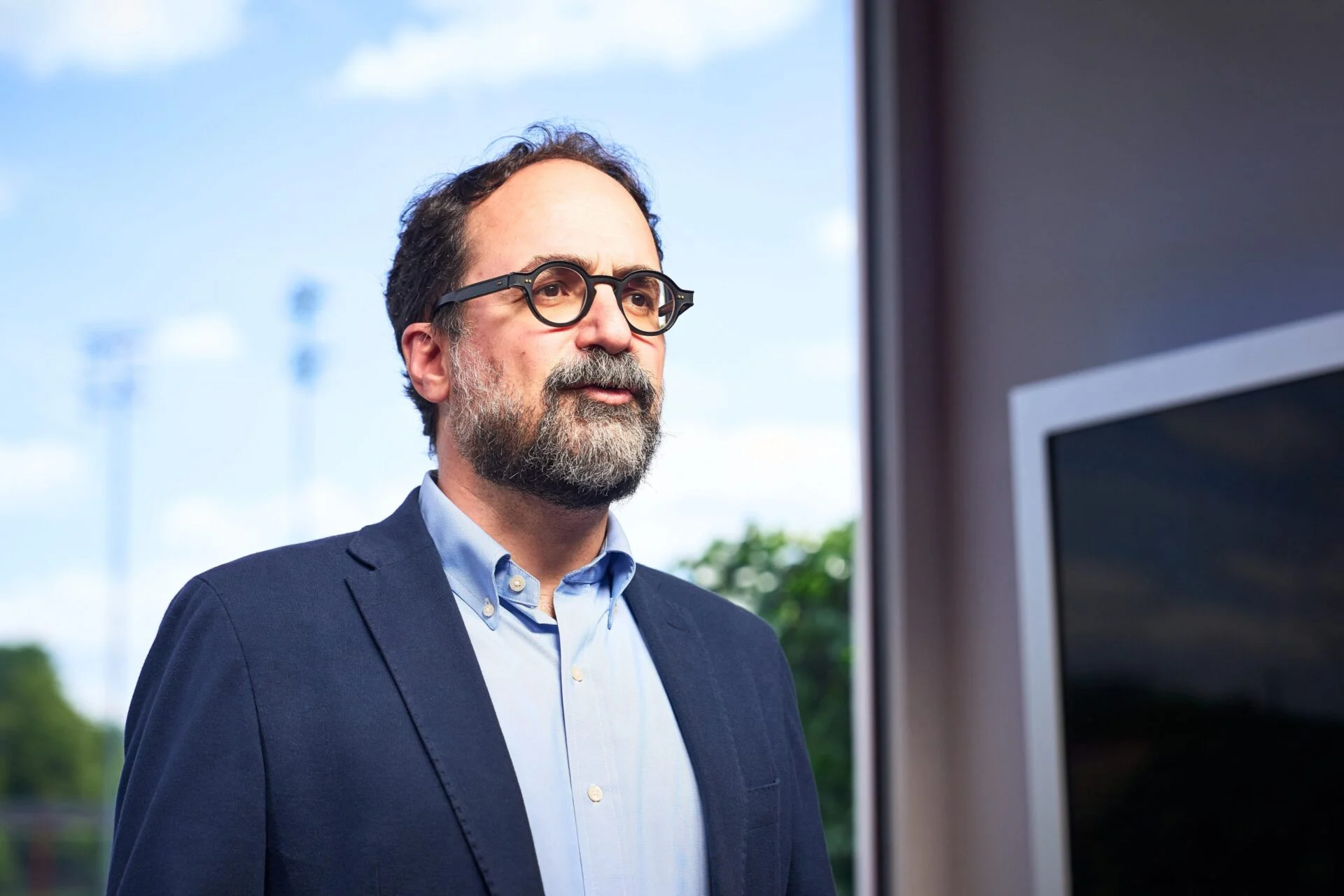
In 2022, Betano made headlines by becoming the first-ever sports betting operator to partner with FIFA, a move that generated more questions than envy within the industry. Fast forward to 2026, and the Greek-founded Betano is again stepping into the spotlight as an official tournament supporter for the FIFA World Cup, set to take place across Europe and South America. This marks the company's third agreement with FIFA, coinciding with a tournament expected to feature 104 matches and already recognized for breaking sponsorship revenue records for a standalone sporting event.
Julio Iglesias Hernando, Chief Commercial Officer of Kaizen Gaming, Betano's parent company, describes the organization's transition into a recognized FIFA partner as rooted in trust as well as financial strategy. “When we became the first sports betting operator to partner with FIFA in 2022, many in our industry questioned the move. The conventional wisdom was that FIFA would keep our industry at arm’s length,” he said. “But as usual, we tried to find a different angle to the problem: we are a fully responsible and regulated operator, willing to collaborate and learn, working hard to maintain society’s trust to operate.”
Reflecting on the insights gained from the Qatar 2022 tournament, Hernando emphasized the importance of education paired with activation. "It helped us understand how FIFA communicates with its audiences, where our brand could add genuine value, and how to build trust.” The FIFA Club World Cup in 2025 also served as an important practice run, allowing Betano to refine its activation strategies ahead of what many regard as football’s pinnacle event.
After three tournaments, the partnership has transformed fundamentally. Hernando noted, “Three tournaments of experience mean we now approach the partnership with a clear activation framework: how we show up for fans, how we create meaningful moments around the matches, and how we balance commercial goals with responsible gaming principles that a partner of FIFA’s stature rightly demands.”
For Hernando, the most significant aspect of the partnership is not just brand visibility. “The real value of this relationship isn’t just the badge on the broadcast,” he elaborated. “It’s the permission it gives us to engage with football’s international community in ways that feel authentic, and the standard it sets for how we operate everywhere we do business.”
Kaizen Gaming's rapid growth is notable. Hernando joined the company in February 2021 having previously worked at William Hill, Heineken, Kellogg's, and Philip Morris. At that time, Kaizen operated in six markets, but it has now expanded to more than 20 regulated jurisdictions across four continents. Winning back-to-back operator of the year honors, the company currently dominates Brazil’s competitive online betting market with a 23% share, outpacing Bet365.
The company's sponsorship portfolio reflects this growth, with key partnerships including FIFA, UEFA club competitions, Bayern Munich, Flamengo, River Plate, FC Porto, and the newly secured agreement with Tottenham Hotspur, following a two-season front-of-shirt sponsorship with Aston Villa that concluded due to the Premier League’s ban on gambling sponsorships. Hernando remarked, “Our sponsorships are a deliberate map of our markets. The right partnership in the right territory, with the right club for that audience, does work that a generic global campaign simply cannot replicate.”
Naturally, this raises the question of returns for these costly endorsement agreements. Hernando candidly addresses the challenges of quantifying brand exposure, noting, “Technology now offers genuine visibility into fundamentals like brand exposure under specific broadcast conditions, share of voice, and audience reach across markets. But some things can’t be captured in numbers: the cumulative effect of being present at the moments that matter to fans, the brand permission that comes from association with clubs people love.” He acknowledges, “We won’t always have a clean number to put in front of our CFO for every element of that work, but we know why we’re doing it, and the results across our markets continue to validate this conviction.”
When asked about what drives a successful sponsorship deal, Hernando offers a straightforward explanation: “If there is no trust that the partnership has the potential to be a long-term one, there is no deal.” He adds that without trust in a partnership, financial trust is compromised. The commercial aspect is also crucial, “If there is no economic logic behind any deal, it will be a short one.”
The partnership with Tottenham, announced in July 2026, stands out as a notable example in their sponsorship playbook. Betano will act as the club’s training wear partner for the 2026/27 season, replacing BetMGM. This arrangement will then transition into an official betting partnership in Europe and Latin America lasting through 2029. Historically, Betano's logo will not feature on retail training merchandise, indicating a significant shift in how gambling sponsorships are approached amid the Premier League’s regulations. Hernando stated, “We don’t know if this is a blueprint for gambling sponsorship in the post-shirt-ban era, but we are willing to try.”
Despite concerns about reduced visibility, Hernando maintains that the value remains intact. “Yes, the Premier League’s front-of-shirt restrictions reduce certain visibility… Nonetheless, we have secured invaluable assets: the association with one of the Premier League’s most globally recognized clubs for the next three seasons, a prominent presence across training wear, and highly engaging partnership activations.”
Tottenham is known for its large global audience, reportedly exceeding 600 million, and Betano, increasingly focused on the Latin American market, finds a fitting alignment through their partnership in Europe and Latin America. Hernando comments, “The market changed. The companies that thrive are those that find ways to adapt and create value within whatever regulatory framework they’re operating in… Betano has been doing exactly that across multiple markets for years.”
Kaizen’s commitment to fair regulation is clear. Hernando emphasizes that they operate only in regulated markets, framing regulation not as a challenge but as an entry point into competitive markets. He expressed concern not over specific regulations but over uneven enforcement, stating, "A level playing field is non-negotiable. It is equally critical that action is taken to eliminate the black market.”
Despite the need for adjustment in strategy due to regulatory changes, Hernando insists they have never needed to overhaul their fundamental commercial model. Looking ahead, the company’s growth plan involves careful market positioning. Earlier this year, Kaizen entered Ghana, its second African market, where competition is fierce, with one incumbent holding a 60%-65% share. Hernando explained, “We don’t view each market in isolation, but as part of a consolidated portfolio. The marginal cost of being present in Ghana or Ecuador looks very different for us.”
He recognizes the competitive landscape, stating, “We’re clear-eyed about Africa. There are strong local champions who have built loyal customer bases. We’re not walking in assuming our brand alone is sufficient.” Betano aims to offer its superior products in regions that lack depth in sportsbook offerings. Hernando added that positioning in high-growth markets should occur before consolidation takes place, not after.
In contrast, the U.S. market poses its own complexities. Hernando notes that avoiding the U.S. has been a strategic choice, as many overseas brands have faced considerable losses. Yet, he remains open to opportunities, emphasizing the importance of learning through Kaizen's experience in Ontario, Canada.
The company's ambition is to become a leading operator in every market where Betano is active. Hernando’s background in consumer goods shapes his perspective on the industry. He critiques the sector for its focus on technical digital skills while lacking fundamental marketing know-how, especially in sponsorships. He shares, “Our industry has amazing technical expertise… but an appalling lack of knowledge of marketing fundamentals.”
As the company looks toward 2030, Hernando shares a guiding principle: "NO FOMO." He asserts that no deal is worth compromising their principles, emphasizing their belief in sponsorships as a means of brand development guided by clear criteria. The strategic plan involves remaining flexible, inquisitive, and willing to experiment and learn from failures.

