
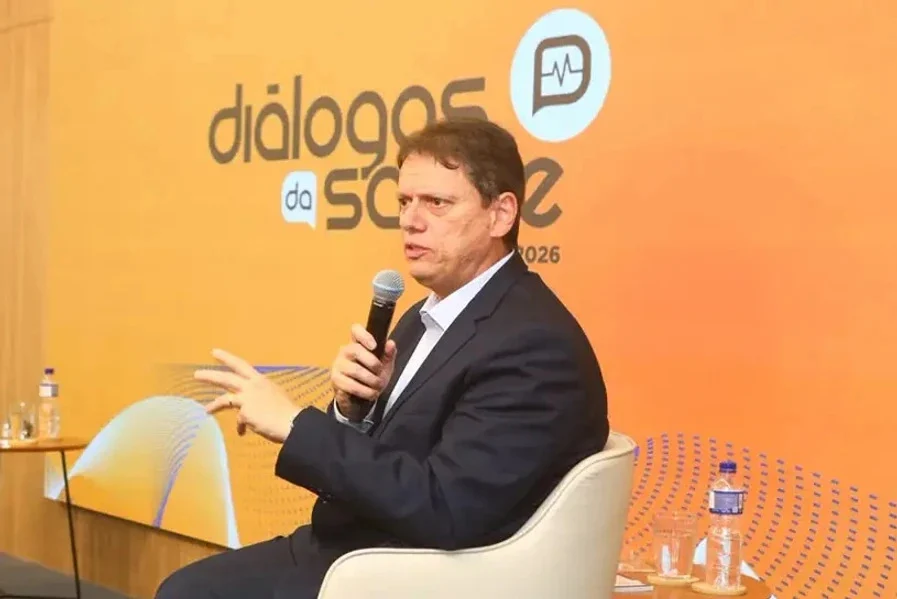
Tarcísio de Freitas, the incumbent governor of São Paulo and a candidate for re-election, made a bold declaration at a recent debate, urging for a ban on gambling in Brazil. This statement forms part of a broader effort by him and other notable politicians to attract conservative voters by voicing opposition to sports betting.
With a good chance of continuing his tenure at the Palácio dos Bandeirantes, Tarcísio remarked, "Either Brazil ends betting, or betting ends Brazil. We have to understand that this is a health problem," during the “Health Dialogues” debate hosted by the Union of Hospitals, Clinics and Laboratories of São Paulo (SindHosp).
The rapid rise of online betting platforms has positioned Brazil as one of the largest gambling markets globally. However, Tarcísio argues that this trend has transcended mere entertainment to become a significant public health concern that requires immediate action.
He has consistently drawn parallels between current online gambling issues and the historical battle against smoking addiction. In his view, gambling addiction warrants treatment as an illness, advocating for the establishment of a comprehensive, accessible, and digital national programme aimed at addressing gambling addiction.
Tarcísio claimed that gambling significantly impacts the financial wellbeing of Brazilians, stating that "20% of Brazilians’ income is committed to gambling," although he did not cite the source of this statistic.
“We were effective in getting people off tobacco," he said, framing the challenge of combating gambling addiction similarly. He added, "The question is: will we be able to be effective in freeing people from drugs? The challenges are the same now. Perhaps the challenges now are greater than the challenges of tobacco were in the past.”
The conversation surrounding online gambling has evolved beyond economic implications to encompass moral, social, and electoral dimensions. Tarcísio’s remarks resonate with those made by President Lula, who has also expressed concerns regarding betting.
Representatives from the gambling sector are aware that they will likely face scrutiny during the electoral campaign. In a recent discussion with iGaming Business, Plínio Lemos Jorge commented, "The industry will have to remain resilient during this period." He further noted that the market might emerge from this challenging phase with less criticism than it currently faces, according to his perspective as president of the National Association of Games and Lotteries (ANJL).

