
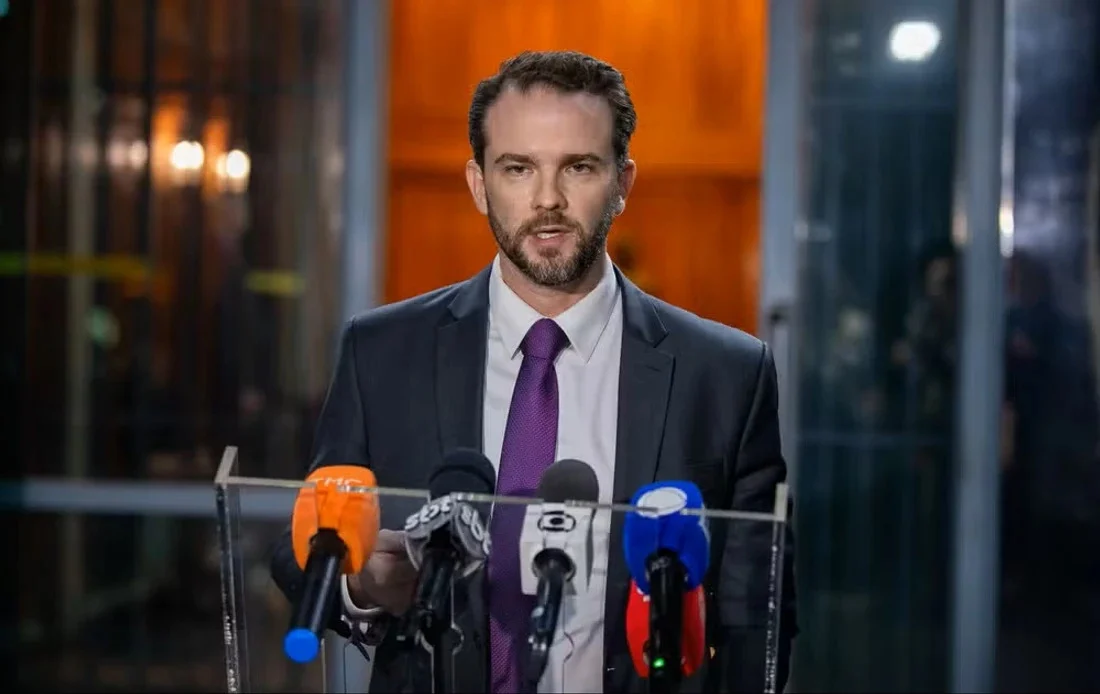
Brazil's Minister of Finance, Dario Durigan, announced on Thursday that new regulations regarding advertising practices for betting companies will be published on Friday. These changes stem from a government decision made in late June to overhaul how these companies promote their services.
One of the key additions to these regulations will be a requirement for all betting advertisements to display warnings from the Ministry of Finance, akin to those seen in tobacco and alcohol advertisements. The warnings will state:
– Betting makes you lose money.
– Betting can cause addiction.
– Betting is not an investment.
Additionally, a separate ordinance, created in collaboration with the Ministry of Justice, will address illegal betting operators. Durigan underscored the government's commitment to combatting illegal activities, stating that media platforms are banned from advertising any companies not authorized to operate in Brazil.
"We are imposing restrictions on betting advertisements in the country," he remarked. "I don’t need to state – as it goes without saying – that we have zero tolerance for illegal operators. Therefore, illegal betting operations are not authorized in any way, and neither advertisers nor media outlets are permitted to run any advertising involving a company not authorized to operate in the market."
The new rules will also prohibit companies from creating a sense of urgency, misrepresenting betting as an investment, or using the allure of potential winnings to entice consumers. Advertisers must refrain from misleading messaging that could distort the nature of betting.
In a bid to protect consumers, the advertising rules will restrict commentators and experts from making misleading statements about betting. “It is not permissible to mix commentary from an expert with statements claiming that a particular bet is the best choice or that a specific path should be taken, thereby inducing the consumer to adopt a certain practice,” emphasized Durigan.
Commentators, experts, and play-by-play announcers are banned from leveraging their authority to encourage betting activity. Durigan added, “No displaying winnings as bait, no selling betting as a way to make easy money, or as an investment or financial solution for families.”
As for penalties, Durigan indicated that non-compliance with these rules could result in fines reaching 20% of a betting operator's revenue, along with possible suspension of operations for up to 180 days. In severe cases of repeated violations, companies could lose their authorization to participate in the online betting market. National Consumer Secretary Ricardo Morishita mentioned that the maximum fine for illegal betting advertisements could be BRL14 million ($2.7 million).
The new regulations will also hold companies accountable for any irregular advertisements promoted by contracted influencers, allowing the government to remove such content.
In terms of enforcement, Durigan noted that authorities had already shut down 56,000 betting websites and nearly a thousand influencer profiles. The government has effectively self-excluded close to a million bettors from accessing these platforms due to statutory violations. “There is a ban preventing beneficiaries of government programs from accessing these sites – a Supreme Court ruling,” Durigan explained. This ban extends to individuals involved in Desenrola, a debt renegotiation initiative introduced by the Lula administration.
Durigan acknowledged that sanctioned betting firms have been cooperative in reporting illegal operations. He also outlined a timeline for betting authorizations in Brazil:
– 2018: Authorization to operate, but without established rules.
– 2023: Congress establishes general rules.
– 2024: Ministry of Finance establishes the Secretariat of Prizes and Bets to oversee the sector.
– 2025: Government begins collecting licensing fees and enforcing rules.

