
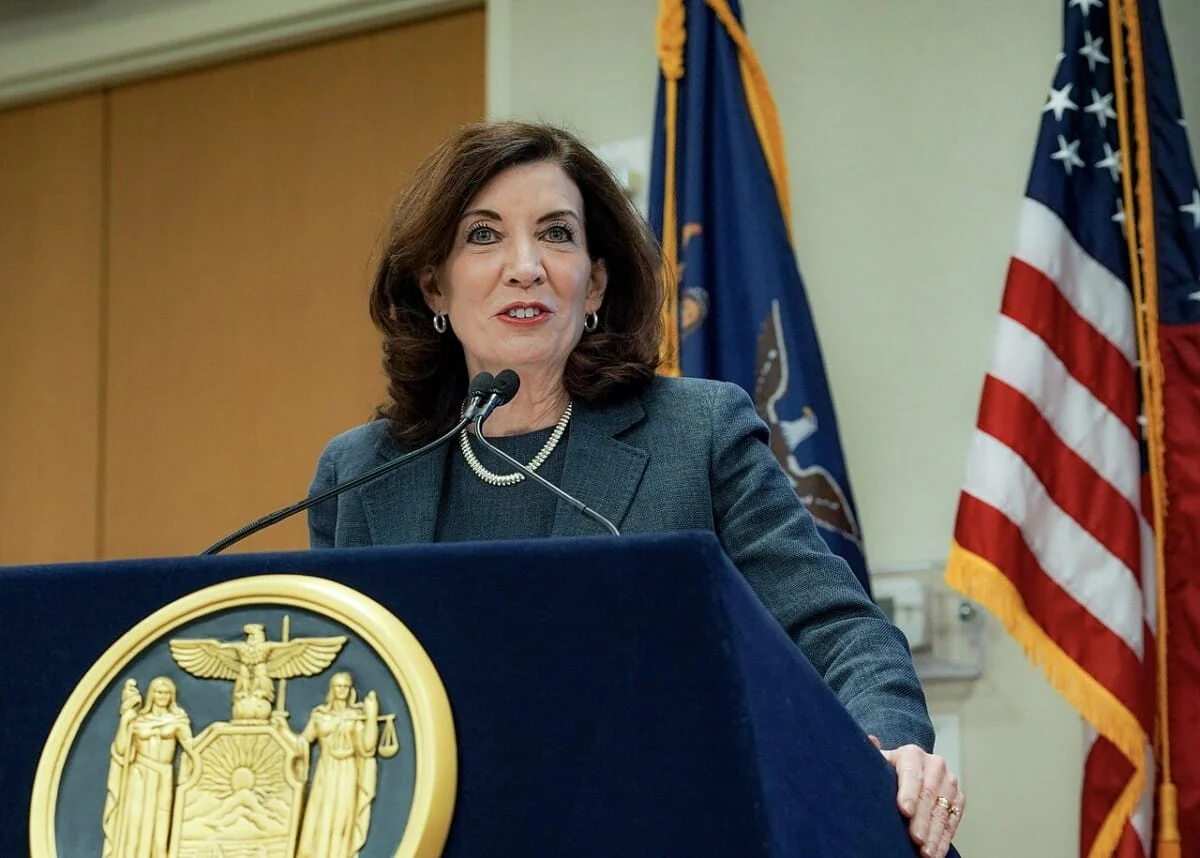
New York's Governor, Kathy Hochul, and Attorney General, Letitia James, have initiated a lawsuit against Kalshi, demanding $36 billion in damages. The Commodity Futures Trading Commission (CFTC) has stepped in to support Kalshi by filing a motion for a temporary restraining order aimed at halting New York's enforcement actions against the company.
This legal action follows a recent decision by the Second Circuit, which denied Kalshi's request for an injunction to stop New York from moving forward with enforcement measures.
"Kalshi has chosen to ignore New York’s gaming laws, which exist to protect consumers, prevent problematic gambling, deliver funding for critical public services, and ensure that every company plays by the same rules," Governor Hochul stated.
The $36 billion demand includes three times the profits made by Kalshi, in addition to $100,000 for each sports market the platform has offered within New York state. Hochul emphasized, “New York is taking action to stop this illegal behavior and bring Kalshi into compliance, because no company is above the law."
The state's lawsuit also includes a motion for a temporary restraining order, which could result in Kalshi being barred from operating in New York.
Responding to these developments, the CFTC has filed for an emergency restraining order to prevent New York from pursuing any criminal or civil enforcement actions against Kalshi that pertain to event contracts listed on CFTC-regulated designated contract markets (DCMs). Gaming attorney Daniel Wallach referred to this move as a "Hail Mary filing."
Adding to the controversy, Attorney General James pointed out that Kalshi is allowing users aged 18 to 20 to access its markets, despite the legal gambling age in New York being 21. James stated, "New York’s gambling laws protect children from underage betting and help combat gambling addiction. By ignoring our laws, Kalshi is running an illegal operation and harming New Yorkers in the process. We are taking them to court to uphold our laws and protect New Yorkers."
The lawsuit could potentially lead to refunds for users who have engaged in trading on Kalshi's platform. A group of individuals identifying as gambling addicts has also filed a lawsuit against Kalshi, asserting that the losses incurred on the platform should be annulled.
The conflict between New York state officials and Kalshi dates back to October of the previous year when the New York State Gaming Commission (NYSGC) issued a cease-and-desist letter to the company. The timeline of events outlines the escalation:
– October 24: NYSGC sends cease-and-desist letter to Kalshi.
– October 27: Kalshi responds with a lawsuit against the NYSGC, seeking an injunction.
– October 28: NYSGC agrees to halt action until the court adjudicates the injunction.
– April 21: AG James sues Coinbase and Gemini.
– April 24: CFTC sues New York.
– July 7: Judge denies Kalshi’s injunction request.
– July 8: Kalshi appeals to the Second Circuit.
– July 29: Second Circuit denies Kalshi’s injunction.
– July 30: CFTC files for an emergency restraining order against NY enforcement.
– July 30: New York files its lawsuit against Kalshi and a motion for a temporary restraining order.
The ruling from the Second Circuit is not final; while the court opted against granting an injunction, it referred the matter to a three-judge panel. Should the judges decide in favor of Kalshi, this could halt New York's enforcement actions.
A judge in Minnesota recently sided partially with Kalshi, preventing the state from introducing legislation aimed at banning prediction markets, although Minnesota may still pursue action against the operator’s sports markets, which has been the primary focus for New York.

