
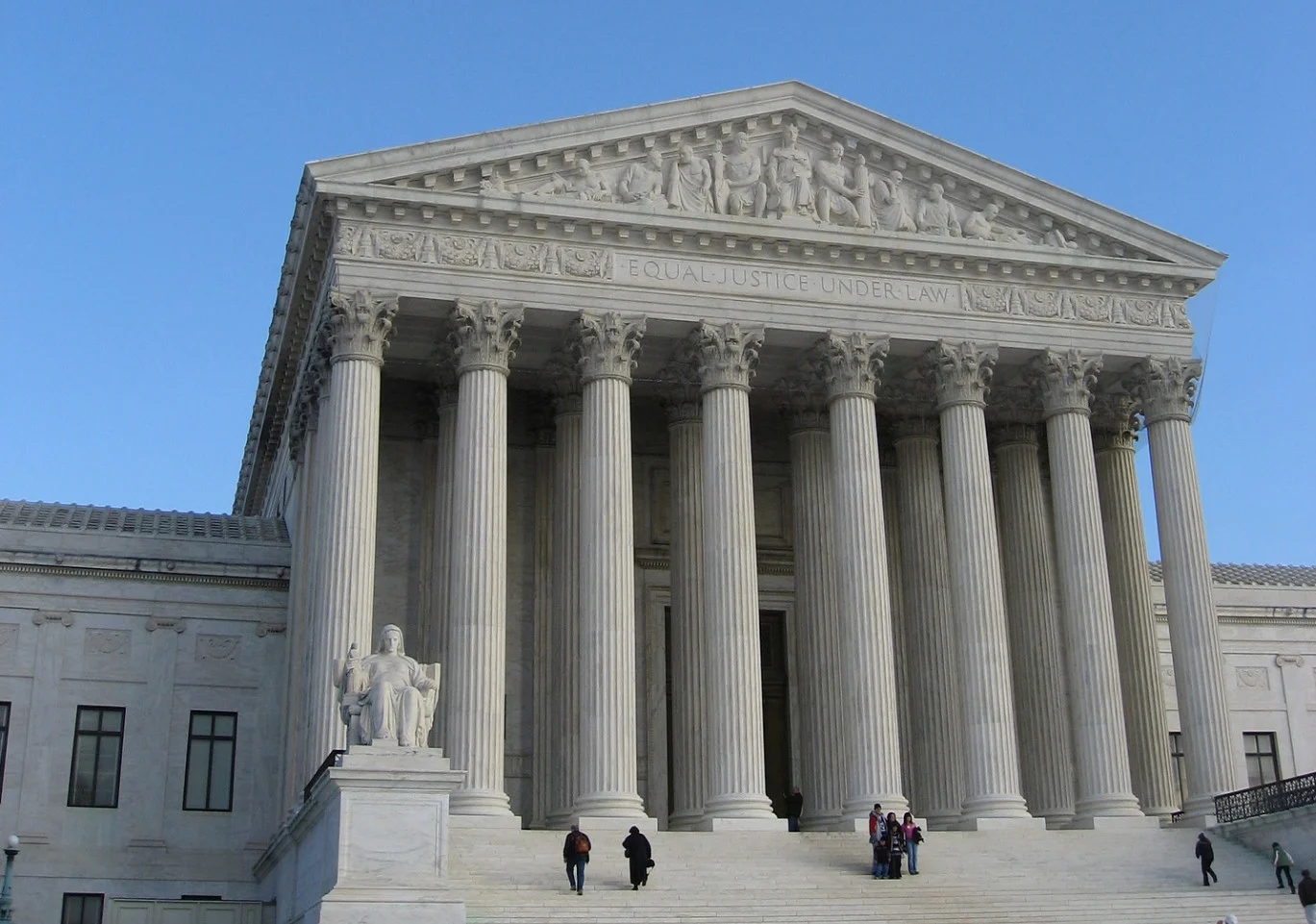
New Jersey is once again seeking the attention of the US Supreme Court, this time to safeguard its sports betting framework as prediction markets evolve. Attorney General Jennifer Davenport announced on Wednesday that her office has filed a petition for writ of certiorari in response to a recent Third Circuit Court of Appeals decision favoring prediction markets, which determined last April that the Dodd-Frank Wall Street Reform and Consumer Protection Act may limit states' authority to regulate sports betting occurring on markets registered with the Commodity Futures Trading Commission (CFTC).
The core of the petition is whether states can control sports bets when those bets are part of prediction markets, which argue their contracts are financial derivatives under CFTC oversight. New Jersey asserts that these prediction markets are just a different name for traditional sports bets.
Although there's no certainty the Supreme Court will take up the case, a ruling from the Ninth Circuit on August 28 lends weight to its chances. The unanimous decision there favored Nevada, resulting in a circuit split often favoring Supreme Court interest.
"We’re asking the Supreme Court to clarify that Congress didn’t intend for the sports betting industry to be shielded from state regulations," Davenport said.
New Jersey stakeholders are aware of the stakes involved. The state faced numerous losses leading up to the 2018 PASPA repeal, except for the pivotal case that ultimately changed the landscape of sports betting. In the current petition, Davenport referenced that earlier case, emphasizing that states should retain control over sports betting.
"Just eight years ago, the court recognized that each state is free to regulate sports betting, but Kalshi has a contrary stance. They promote themselves as ‘the first app for legal sports betting in all 50 states’ while bypassing state laws entirely," the petition details.
Kalshi represents itself as a national financial exchange, asserting that it cannot be managed by fifty disparate regulatory environments. Its spokesperson, Dani Lever, noted, "Both the Third Circuit and the District of New Jersey have sided with Kalshi, emphasizing the CFTC's exclusive authority over these matters."
As the Supreme Court's term starts on the first Monday in October and concludes by early July, it typically processes around 7,000 to 8,000 petitions, approving only about 80. Four of the nine justices were also present during the PASPA case.
Currently, there are no SCOTUS-prediction market contracts on Kalshi, but Polymarket suggests a 41% chance that the court may address an event contract case by the end of December.
The anticipated hearing could mark the next significant development in sports betting, uniting various stakeholders in the industry. Following the rise of prediction markets surrounding the 2024 presidential elections, platforms like Kalshi and Polymarket have skyrocketed in valuation, reaching $40 billion and $21 billion respectively. Many top US bookmakers have made strides to enter this market, either developing their own platforms or acquiring existing ones.
In 2025, commercial sports betting amassed nearly $17 billion in revenue nationwide, prompting Davenport to highlight the significant implications of this case. Kalshi and Polymarket reported over $45 billion in trading volume in August, a decrease attributed to the end of the FIFA World Cup.
The American Gaming Association estimates state losses of over $1.3 billion in tax revenue due to prediction markets, with former New Jersey Governor Chris Christie invigorating the fight against these platforms.
At the heart of this situation lies the debate over federal versus state control. While state authorities manage traditional sports betting, the CFTC oversees federal derivatives, having accepted prediction markets under the Trump administration after previous refusals. The complexities of jurisdiction continue, with Kalshi limiting its market activities in certain states, notably Nevada. The CFTC has actively protected its licensees, even taking legal action against multiple states and issuing emergency directives.
CFTC Chairman Michael Selig is currently the sole commissioner of an agency that traditionally includes five members. He has consistently defended both the legitimacy of prediction markets as financial instruments and the CFTC's authority over them. Under his leadership, the CFTC has initiated a series of proposals affecting prediction markets, although critics argue these moves may tighten regulations ahead of a Supreme Court review.
Selig remarked, "Innovation like blockchain and prediction markets will transform our markets; the debate is where these innovations will occur and who sets the rules."

