
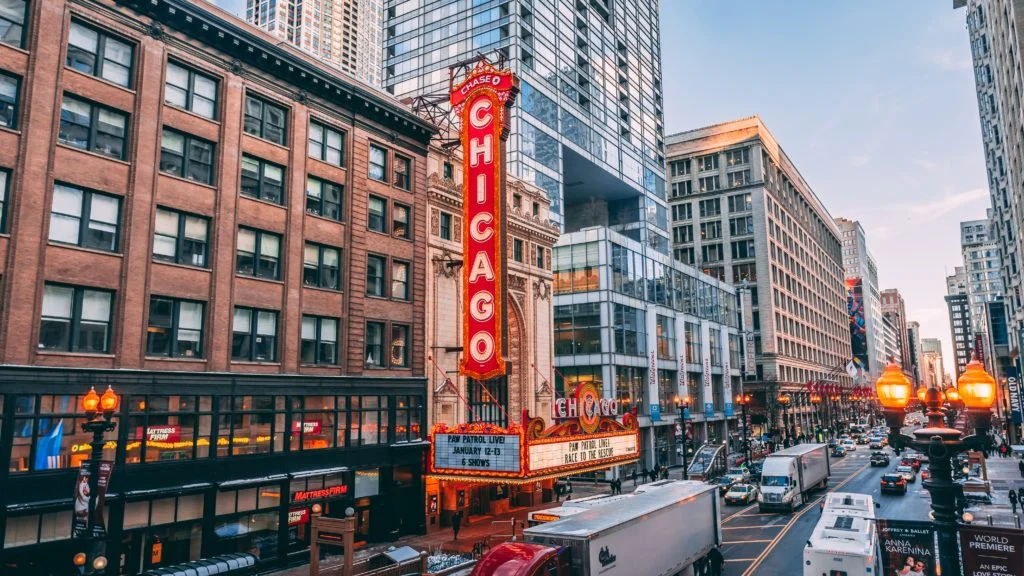
Bally’s $1.7 billion permanent casino project in Chicago is now facing delays, with the company announcing on the weekend a "reset" in the pace of construction for certain elements due to the recent legalization of video gambling terminals (VGTs).
On Saturday, Bally’s informed the Chicago Community Builders Collective, the contractor managing the construction, that work on non-gaming components, such as the hotel tower, event center, and restaurants, would be halted for the time being. Despite this, Bally’s confirmed that the anticipated opening for the casino remains on schedule for early 2027, as previously indicated.
In its statement, Bally's expressed concern about what it termed the "uncontrolled proliferation" of VGTs within the city, which the company views as a violation of its Host Community Agreement (HCA) with Chicago. The agreement includes commitments that could be threatened by an expansion of local gambling, including an annual payment of $4 million.
Bally’s noted, “We do not take this lightly because of the potential impact on many of the 1,500 union trades people who have been working hard to build Bally’s Chicago,” adding, “We will continue to assess our options, which we hope will include more productive discussions with the mayor’s office and city council.”
This latest development marks the fourth significant construction delay for Bally’s as the holder of Chicago’s sole casino license. The project has previously faced interruptions, including one due to debris falling into the Chicago River and another involving unapproved contractors appearing at the site. Additionally, potential disruptions to city water lines prompted a major redesign of the hotel before construction even commenced.
The recent legalization of VGTs in Chicago emerged from a contentious budget process overseen by Mayor Brandon Johnson last year. His budget proposal was replaced by a $16.6 billion alternative, which was passed by the city council and allocated more than $6 million in licensing revenue for VGTs. This could lead to over 2,500 licenses issued to local businesses.
Illinois legalized VGTs in 2009, and they launched in 2012, quickly evolving into the state’s most profitable gaming sector. For instance, tax revenue from Illinois' 17 licensed casinos reached $430 million in 2025, whereas VGTs generated over $1.1 billion. Until the recent budget approval, Chicago was among the few municipalities in Illinois without VGTs.
Bally’s has consistently opposed the introduction of VGTs since the alternative budget passed, proposing to install slot machines at Midway and O'Hare airports to counter potential revenue losses. Bally’s estimates that VGTs could lead to a $74 million reduction in revenue and possible job losses in the hundreds. A June hearing on VGTs was cut short due to conflicts among city officials.
As it prepares for a possible lawsuit against the city regarding the VGT situation, Bally’s engaged Fahner Rosenberg PLLC in June. The firm includes former Chicago mayor Lori Lightfoot, who faced criticism for granting Bally’s the exclusive Chicago license in 2022. Bally’s stated the hiring is part of its efforts to safeguard its investment in the city.
Earlier this year, Bally’s reached a resolution on a different issue impacting its Chicago operations. The company was facing a September 9 deadline to open its permanent casino, as its temporary license was set to expire. Failure to meet the deadline would have necessitated closing the temporary casino at Medinah Temple.
An extension bill (HB4437) filed in January did not pass before the Illinois legislative session ended on June 1. However, the proposed language was incorporated into the state’s omnibus revenue bill (SB3019), which was approved. With the extension, Bally’s now has until September 9, 2027, to open the permanent casino. Given the ongoing construction disputes regarding non-gaming elements, it remains possible that the casino may be the only aspect operational by that date.

